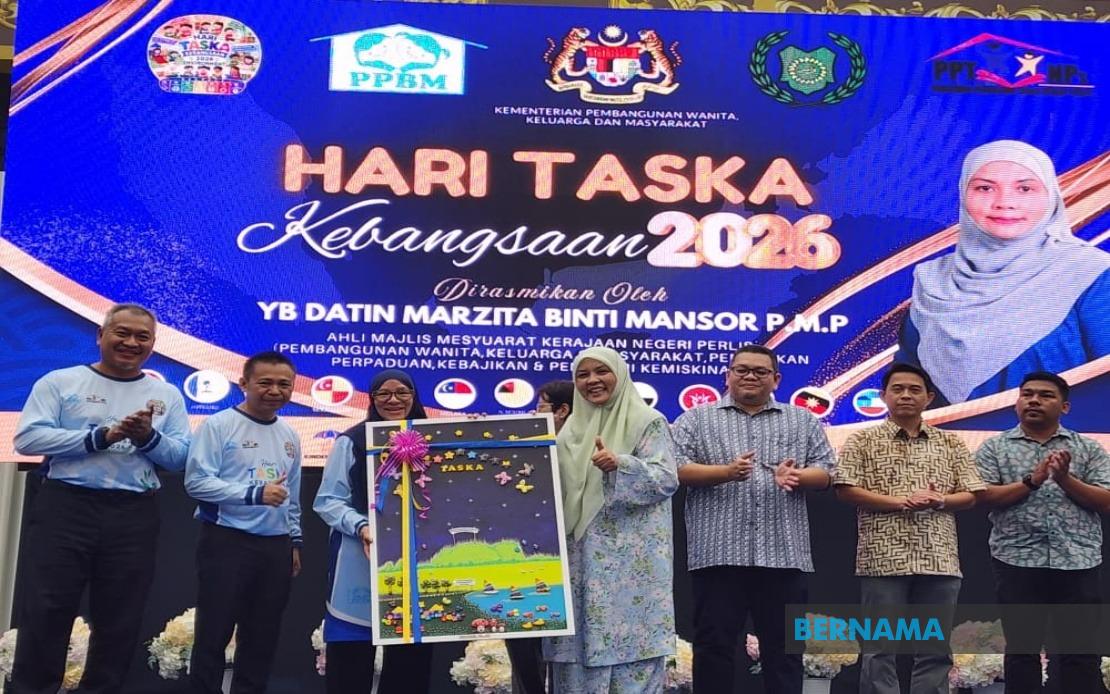
The Association of Registered Childcare Providers Malaysia has issued a strong call to elevate childcare standards across the nation, arguing that quality provision must be fundamentally grounded in the Convention on the Rights of the Child rather than limited to basic custodial functions. Speaking at the 2026 National Childcare Day celebration in Kangar, the association's president Adjunct Professor Norsheila Abdullah outlined a vision where childcare centres operate as spaces that safeguard children's holistic development and respect their inherent dignity.
The remarks come at a time when Malaysia grapples with balancing workforce participation—particularly among women—against ensuring that the youngest citizens receive care that genuinely supports their wellbeing. Norsheila's intervention reflects growing recognition within the childcare sector that standards in Malaysia must evolve beyond the conventional metrics of cleanliness and nutrition. Instead, the association argues for frameworks that integrate emotional security, cognitive stimulation, and relational warmth as non-negotiable components of quality provision.
The comprehensive definition advanced by PPBM encompasses protection from harm, cultivation of positive relationships, delivery of emotional support alongside structured learning experiences, and consistent affirmation of each child's individuality. This perspective challenges providers and policymakers to ask deeper questions about their operations: whether children are truly protected, genuinely heard, and given genuine opportunities to flourish as rights-bearing individuals rather than merely supervised or managed. Such questions carry particular weight in Southeast Asia, where rapid urbanization and increased maternal workforce participation have expanded childcare demand faster than regulatory frameworks have adapted.
The association underscored that creating supportive childcare environments constitutes a shared responsibility extending across childcare practitioners, parents, extended families, neighbourhoods, and broader society. This distributed accountability model recognizes that quality cannot be imposed top-down but must emerge through commitment across multiple stakeholders. For Malaysian policymakers, this framing suggests that regulatory compliance alone proves insufficient; genuine transformation requires cultivating a culture wherein all parties recognize their role in advancing children's rights and development.
Critically, PPBM invoked the principle of "no child left behind," arguing that childcare centres must adopt inclusive models responding sensitively to children's diverse requirements, including those needing additional developmental or behavioural support. In Malaysia's multicultural context, where children from varied linguistic, socioeconomic, and cultural backgrounds attend childcare facilities, such inclusivity carries particular significance. Centres that fail to accommodate these differences risk perpetuating early disadvantage, particularly for already-marginalized children. The association's emphasis on inclusive environments thus represents both a human rights imperative and a pragmatic investment in social cohesion.
Safety emerged as an equally paramount concern, with Norsheila stressing that vigilance against abuse, neglect, and environmental hazards cannot be compromised under any circumstance. She called for all childcare professionals to remain alert to warning indicators and respond decisively, ensuring every centre functions as a genuinely protective space. This emphasis reflects ongoing concerns about inadequate oversight in some Malaysian childcare settings and the vulnerability of young children unable to report mistreatment. Building protective cultures requires not just written policies but genuine training, supportive supervision, and cultural transformation within facilities.
The association articulated a compelling developmental rationale for prioritizing early childhood investment, observing that children cultivated in secure, nurturing environments develop substantially stronger capacities across physical, emotional, social, cognitive, and linguistic domains. Such foundational advantages compound across the lifespan, influencing educational trajectories, earning potential, and social participation. For Malaysia, where competitive positioning within the knowledge economy demands increasingly skilled workforces, investing robustly in early childhood represents far more than a welfare consideration—it constitutes essential economic strategy.
The Perlis Women, Family and Community Development, Education, Unity, Welfare and Poverty Eradication Committee chairman Datin Marzita Mansor's presence at the ceremony signalled government acknowledgment of these issues, though the extent to which her attendance translates into policy action remains unclear. Malaysian policymakers face choices about whether to expand regulatory oversight, strengthen training requirements, improve caregiver remuneration to attract talent, or establish clearer national childcare standards aligned with international best practices. Without corresponding resource allocation and implementation mechanisms, even well-intentioned rhetoric risks remaining aspirational rather than transformative.
For Malaysian families navigating increasingly complex childcare arrangements, the association's advocacy carries immediate relevance. Parents making placement decisions can reference these standards as benchmarks for evaluating facilities beyond superficial appearances. Centres claiming alignment with children's rights frameworks can be questioned about concrete evidence of inclusive practices, emotional responsiveness, and genuine protection mechanisms. This transparency benefits children while incentivizing continuous improvement within the sector.
The emphasis on children's rights represents a significant reframing within Malaysian childcare discourse, shifting focus from viewing young children primarily as objects requiring management toward recognizing them as rights-holders deserving agency and respect. This philosophical shift, while gaining traction globally, remains relatively novel in some Southeast Asian contexts. PPBM's articulation thus contributes to expanding the vocabulary available to Malaysian stakeholders advocating for quality childcare and positions the sector within broader human rights frameworks rather than as merely a logistical component of family policy.
Moving forward, the central challenge involves translating these principles into operational reality across Malaysia's geographically diverse childcare landscape, where facilities range from formal centres in urban areas to informal arrangements in rural communities. Achieving quality cannot mean implementing uniform models insensitive to local contexts; instead, it demands supporting providers with resources, training, and oversight while respecting contextual variation. The association's 2026 National Childcare Day initiative, themed around environmental responsiveness to holistic development, suggests growing sophistication within the sector regarding what quality genuinely entails and offers Malaysian policymakers a foundation upon which to build more comprehensive national childcare strategies.

