China is intensifying its scientific engagement with Iran through a new initiative focused on rare earth exploration and processing, a development that underscores Beijing's strategic interest in securing alternative supply routes for materials vital to modern defence systems and technology. The collaboration, coordinated through China's National Natural Science Foundation and Iran's corresponding agency, represents a significant deepening of bilateral ties in a sector long dominated by Beijing and viewed with increasing concern in Washington.
The financial architecture of this partnership reflects both nations' commitment to sustained engagement. Each workshop conducted under the expanded framework will receive 30,000 yuan—approximately US$4,200—allocated towards operational costs encompassing venue arrangements, participant accommodation, and domestic transportation. The Iranian side commits to funding international travel for its researchers visiting China, while also hosting Chinese scientists conducting fieldwork within Iran. This reciprocal funding structure demonstrates a formal commitment extending beyond rhetorical cooperation, embedding institutional mechanisms that could facilitate technology transfer and knowledge exchange.
The timing of this initiative carries geopolitical weight. The announcement arrives as the Trump administration has signalled its determination to reduce American dependence on Chinese supply chains for critical materials essential to military manufacturing. Last month, Washington revealed a US$3 billion investment package targeting development of domestic capacity in critical minerals and battery production, with explicit aims to replenish military stockpiles and insulate defence contractors from potential supply disruptions orchestrated by Beijing. This American defensive posture has created strategic space for China to cultivate relationships with alternative partners possessing rare earth resources.
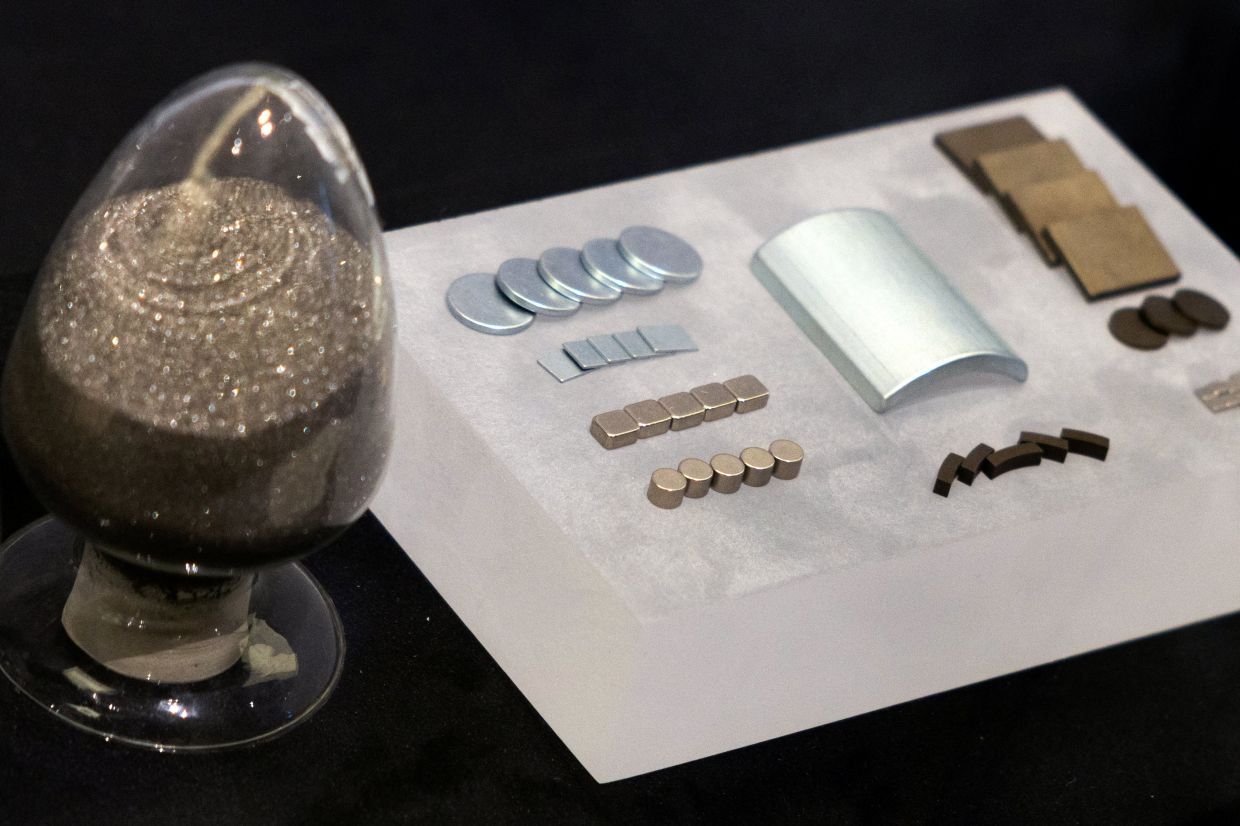
Rare earth elements—a group of 17 metals exhibiting distinctive magnetic and electronic properties—occupy a foundational role in contemporary warfare and advanced technology. Modern missile systems, fighter aircraft, radar installations, and sophisticated electronic warfare equipment all depend critically on these materials. China's stranglehold on global production and processing capacity, combined with its increasingly restrictive policies on technology export, has long been a source of Western anxiety. When Donald Trump's initial trade war with Beijing prompted Chinese retaliation through rare earth export restrictions, the vulnerability of American manufacturers became starkly apparent, catalysing Washington's current push towards domestic sourcing and processing capability.
Iran's geological potential in this domain remains substantially underdeveloped but potentially consequential. The country's mineral formations—particularly extensive iron ore and phosphate deposits—create favourable conditions for rare earth concentration. Research documented by the Netherlands-based Hague Research Institute identified rare earth anomalies distributed across approximately 7,000 square kilometres of Iran's central regions, suggesting reserves of meaningful scale. However, the gap between geological potential and industrial extraction remains formidable. Iran currently lacks the sophisticated processing infrastructure required for commercial-scale production, representing both a constraint and an opportunity for Chinese technological involvement.
The institutional foundation for this collaboration extends back to 2017, when China's National Natural Science Foundation and Iran's equivalent established a memorandum of understanding in Beijing. This arrangement has gradually expanded into a multi-disciplinary research partnership encompassing mathematics, biological sciences, medicine, renewable energy, materials science, climate research, and artificial intelligence. The relationship reflects China's explicit framing of Iran as a strategic partner within the Belt and Road Initiative framework, a positioning that carries implications for broader regional dynamics and great power competition in Asia.
The rare earth workshop programme itself launched in 2024 as an evolution of earlier bilateral scientific engagement. Initial iterations focused on climate change, artificial intelligence, advanced materials, and manufacturing technologies, with each workshop allocated 150,000 yuan in combined funding. This year's expanded call for proposals extends beyond rare earths into complementary domains including nanomaterials for disease detection, environmental monitoring systems, seismic-resistant construction methodologies, and cleaner manufacturing processes. This diversification suggests the partnership is designed for durability and expanding relevance across multiple technological frontiers.
For Southeast Asian nations, this development warrants careful monitoring. China's success in deepening ties with Iran on critical materials could reshape global supply chains in ways affecting the region's technology sector, defence procurement, and industrial competitiveness. Malaysia, as a significant rare earth processor itself, faces potential pressure as Chinese-Iranian cooperation advances. The calculus extends to broader considerations: Beijing's willingness to share processing technologies with Tehran raises questions about how such knowledge transfer might eventually proliferate to other jurisdictions, potentially fragmenting China's current monopolistic position.
The implications for regional stability merit consideration as well. Enhanced Chinese technological capabilities within Iran could indirectly strengthen Tehran's indigenous capacity for weapons development and electronic systems manufacturing, with secondary effects on regional security dynamics. Meanwhile, the American counter-strategy of investing heavily in domestic critical mineral production and potentially diversifying suppliers—including through partnerships with allied nations—creates competitive pressure on China to lock in relationships with resource-rich countries before alternative arrangements crystallise.
This scientific collaboration also reflects deeper structural changes in great power competition. Rather than crude confrontation, Beijing and Washington are competing through institutional embedding and technological partnership. China's provision of funding, expertise, and processing know-how to Iran creates mutual dependency and strategic alignment that transcends individual transactions. For Iran, access to Chinese scientific capabilities and potential processing technologies offers pathways toward economic diversification and reduced isolation, even as it deepens reliance on Beijing in a critical economic sector.
The expansion of this partnership arrives as global supply chains for advanced materials face unprecedented scrutiny. Companies and governments throughout the developed world are reassessing their exposure to Chinese processing monopolies, with particular urgency in defence-related applications. China's cultivation of Iranian cooperation represents a calculated response: if Western nations restrict Chinese access to advanced technologies or rare earth markets, Beijing retains the ability to develop alternative relationships and processing hubs that maintain its strategic advantage in materials that underpin modern military capability. For Malaysia and other regional economies, the evolution of this axis warrants close attention as it reshapes the geometry of technological interdependence in Asia.

