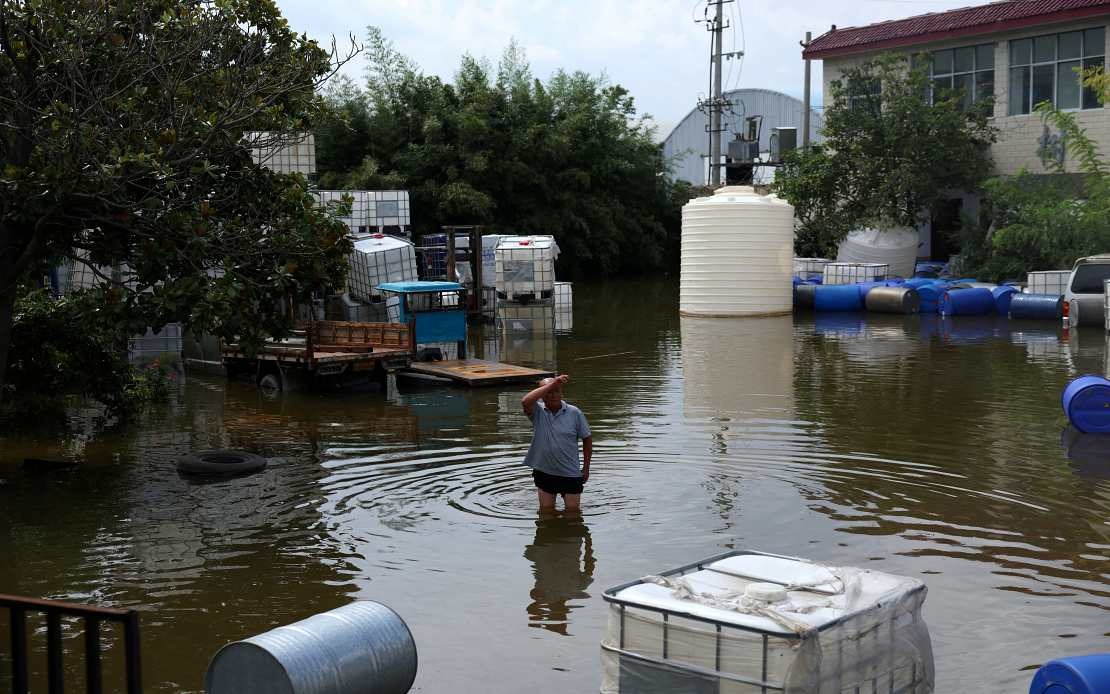
China's Ministry of Emergency Management has launched a comprehensive emergency response after Typhoon Dolphin caused a catastrophic breach in a levee protecting Zhoukou City in Henan Province. The structural failure occurred late Thursday evening around 11 pm local time, following days of torrential rainfall brought by the storm system as it tracked inland across central China. The breach represents a serious escalation in the humanitarian crisis unfolding across multiple provinces, with authorities racing to contain the damage and protect vulnerable populations in densely populated areas downstream of the affected levee.
The scale of the rescue deployment underscores the severity of the situation facing Chinese emergency services. The Ministry of Emergency Management dispatched 200 specialised engineering rescue personnel drawn from China Anneng Group, accompanied by 110 large engineering units equipped with the heavy machinery necessary for emergency repairs and stabilisation work. These specialist teams arrived on Friday and immediately integrated into ongoing emergency operations coordinated by provincial and local authorities. The rapid mobilisation reflects standard protocols for managing large-scale infrastructure failures that threaten civilian populations.
Typhoon Dolphin, officially designated as the year's 13th typhoon, has proven far more destructive inland than forecasters initially predicted. The storm system's remnants produced exceptional rainfall across Henan Province and neighbouring regions, overwhelming river systems and hydraulic infrastructure designed for normal seasonal variations. Engineers are investigating whether the levee failure resulted from structural deficiencies, inadequate maintenance, or simply the unprecedented volume of water the system encountered. Such incidents typically expose longstanding vulnerabilities in aging infrastructure across inland provinces.
The National Commission for Disaster Prevention, Reduction and Relief responded by activating a Level-IV national disaster relief emergency response on Friday, placing Henan under heightened federal coordination. This classification indicates serious but not catastrophic national impact, though the determination may be revised as flood impacts continue developing downstream. The commission's response mechanism triggers automatic coordination between multiple ministries and automatically releases pre-positioned resources held at national and provincial stockpiles.
China's central government has already committed substantial relief resources to support affected residents across the impacted region. Authorities allocated 30,000 items of emergency supplies including folding beds, summer quilts, and family emergency kits for distribution to displaced populations in Zhoukou, Xuchang, and other severely affected areas. The National Food and Strategic Reserves Administration worked with the Ministry of Emergency Management to dispatch these materials on Friday, ensuring rapid delivery to communities where residents have lost homes or face extended displacement.
The situation in Henan carries particular significance for regional stability across central China, where population density and industrial concentration create cascading consequences from environmental disasters. A significant levee breach threatens not only residential areas but also critical infrastructure, agricultural production zones, and transportation corridors that serve as economic arteries for the broader region. Previous major flood events in Henan have displaced hundreds of thousands of people and caused billions in economic damage, highlighting the stakes involved in this current emergency.
For Malaysian observers monitoring regional developments, the Henan flood response demonstrates both China's capacity for large-scale emergency mobilisation and the persistent vulnerability of inland Chinese provinces to extreme weather events amplified by climate change. Southeast Asian nations face similar infrastructure challenges as monsoon seasons intensify, making Chinese emergency management protocols and technological responses relevant case studies for regional preparedness planning. The levee breach also illustrates how aging infrastructure inherited from earlier development phases creates accumulating risks as weather patterns shift toward greater extremes.
The involvement of multiple central government ministries in coordinating the Henan response reflects China's hierarchical approach to disaster management, where central authorities rapidly assume control of major incidents to ensure standardised responses and resource allocation according to national priorities. This centralised model contrasts with more decentralised systems elsewhere in Asia, each approach presenting distinct advantages and limitations depending on local governance capacity and infrastructure reliability.
China's state media reported the emergency response details through Xinhua, the official news agency, indicating sustained attention to the crisis at the highest levels of government. The detailed disclosure of personnel numbers and equipment deployed suggests authorities are managing public messaging carefully, providing sufficient transparency to demonstrate governmental capacity while maintaining strategic control over narrative framing. This communication approach typically continues throughout multi-day emergency responses to manage public expectations and coordinate civilian cooperation.
As rescue operations continue in Zhoukou and neighbouring areas, authorities face immediate challenges stabilising the compromised levee section, preventing secondary breaches in weakened adjacent sections, and managing flood waters now spreading across previously protected agricultural and residential zones. The medium-term challenge involves providing shelter, medical care, and livelihood support for potentially hundreds of thousands of displaced residents while beginning reconstruction of destroyed infrastructure and agricultural systems essential to local economies.

