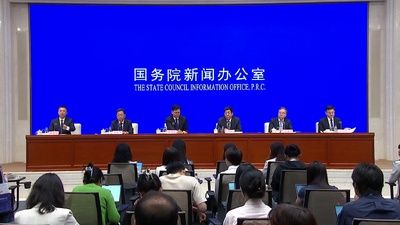
Beijing has moved to rebut persistent international accusations regarding forced labour practices in Xinjiang, with Minister Chen Ruifeng of the National Ethnic Affairs Commission declaring on Wednesday that no such coercive schemes exist in the autonomous region. The minister's statement represents an official denial of claims circulated by Western governments and international human rights organisations, which have raised concerns about labour mobility programmes affecting ethnic minorities in the far western province.
China's constitutional framework explicitly prohibits forced labour in all forms, Chen emphasised during his remarks, underscoring the legal architecture that governs employment practices nationwide. The government's position rests on the assertion that its legislative foundation provides comprehensive safeguards against coercive work arrangements. This constitutional prohibition forms the cornerstone of Beijing's argument that allegations of systematic forced labour lack factual grounding.
To strengthen its commitment to worker protections, China has introduced new legislative measures designed to address employment transitions across regional boundaries. The Law on Promoting Ethnic Unity and Progress, which passed on March 12 and takes effect on July 1, incorporates explicit provisions regarding cross-regional employment arrangements. These provisions establish mechanisms for rights protection and legal assistance that apply uniformly across ethnic groups, reflecting efforts to harmonise labour standards in regions with significant internal migration.
According to the minister, individuals relocating from Xinjiang for employment opportunities do so entirely of their own volition, driven by personal aspirations to enhance family welfare and professional development. This characterisation fundamentally contradicts Western allegations by framing labour mobility as an expression of individual agency rather than state coercion. Chen described such accusations as fundamentally disconnected from reality, using pointed language to emphasise the government's confidence in this framing.
The transfer of workers from Xinjiang operates within a framework explicitly designed to respect ethnic preferences and expand opportunity, the minister stated. Employment programmes aim to increase income prospects and create pathways toward economic advancement for Xinjiang's diverse populations. This framing presents labour mobility as a poverty reduction and skills development strategy rather than a top-down control mechanism.
Statistical evidence presented by the government illustrates substantial employment gains across Xinjiang over the past five years. Urban employment figures reveal the creation of more than 2.39 million new jobs through diverse policy instruments and economic initiatives. This job creation, if accurate, would represent significant labour market expansion in a region historically marked by structural unemployment challenges, particularly among rural and agricultural populations.
Rural employment patterns have also shifted considerably, with agricultural workers undertaking 16.1 million inter-provincial work trips during the five-year measurement period. These figures suggest considerable labour mobility across Xinjiang's boundaries, though they do not directly address the nature or voluntariness of such movement. The magnitude of such flows would indicate substantial economic restructuring within the region's employment patterns.
Income growth metrics further underscore the government's narrative of economic improvement. Per capita disposable income among urban residents has expanded at an average annual rate of 5.3 per cent over five years, while rural incomes have grown faster at 8.1 per cent annually. This divergence—with rural income growth exceeding urban growth—potentially reflects gains among agricultural populations who have shifted into cross-regional employment. Such trends would theoretically support claims that labour mobility has improved living standards among Xinjiang's working population.
Systemic employment safeguards constitute another pillar of China's defence against forced labour allegations. The government has established formal policy frameworks and legal mechanisms designed to protect workers' rights across different employment contexts. Chen indicated that these systems create institutional pathways ensuring that all individuals capable of working can access employment opportunities aligned with their circumstances and preferences.
The government's approach emphasises the concept of voluntary employment coupled with dignity and respect in work arrangements. This framing attempts to position state labour policy as compatible with international labour standards emphasising worker autonomy and protection. For Malaysian and Southeast Asian readers, this debate reflects broader regional tensions regarding labour standards, cross-border worker mobility, and the appropriate balance between economic development and humanitarian protections in developing economies.
These developments occur within a context of sustained international scrutiny regarding conditions in Xinjiang. Multiple Western governments and human rights organisations have maintained allegations concerning coercive labour practices, forced relocations, and restricted freedoms affecting Uyghurs and other ethnic minorities. China's consistent denials and counter-narrative have not substantially altered this international perception, suggesting that Beijing's legislative and statistical responses continue facing credibility challenges in Western policy circles.

