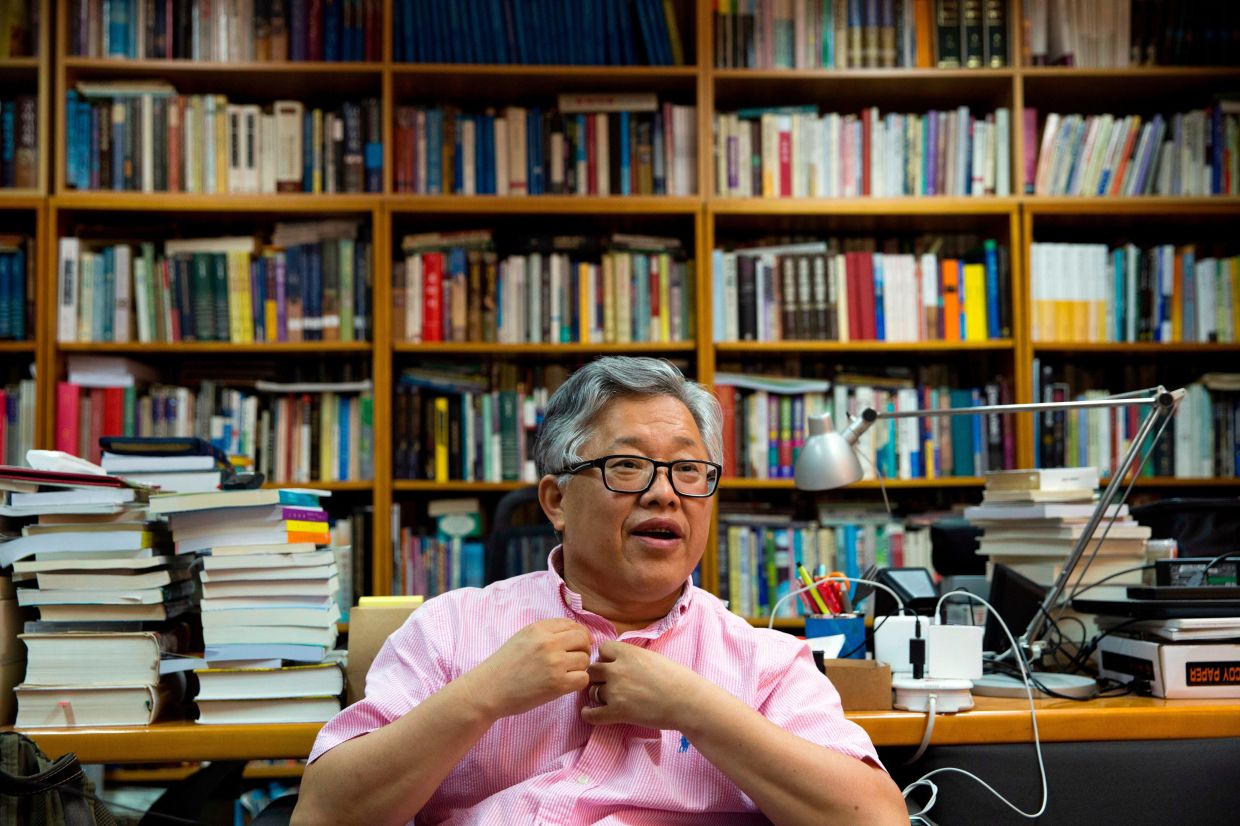
China's government has released Ezra Jin, the founding pastor of Zion Church, an unregistered religious congregation that operates outside state oversight, after he spent nearly nine months in detention. The Zion Church and Jin's family confirmed his release to international media outlets on Sunday, revealing that the pastor had arrived safely in Los Angeles after being freed from Chinese custody. The development marks a rare diplomatic success in what has become an increasingly tense relationship between Beijing and Washington over religious freedom and human rights.
Jin, who is also known by his Chinese name Mingri, was apprehended on October 10 alongside multiple fellow church members on accusations of illegally operating information networks—a charge commonly levelled against religious groups that maintain online communications and digital presence. The specific allegation reflects Beijing's approach to regulating unregistered churches, using broadly construed laws about technology and communications to restrict their activities. Zion Church itself represents the broader landscape of underground Christianity in China, where millions of believers worship outside the framework of state-approved religious institutions, viewing independent congregations as spiritually and theologically superior to government-regulated alternatives.
The breakthrough in Jin's case came after US President Donald Trump personally advocated for his release during a visit to Beijing where he met with Chinese President Xi Jinping in May. Trump had publicly stated at the time that Xi would "strongly consider" securing Jin's freedom, lending significant political weight to the pastor's case. This direct engagement by the American president underscores how religious freedom has become entangled with broader geopolitical competition between the United States and China, with Beijing willing to make strategic concessions on specific detainees to improve diplomatic relations.
According to statements from ChinaAid, a rights monitoring organisation, Jin was explicitly informed by Chinese officials that his release had been negotiated as a goodwill gesture between Trump and Xi, timed deliberately to coincide with America's Independence Day celebrations. This explicit framing by Chinese authorities is significant, as it demonstrates Beijing's willingness to publicly acknowledge diplomatic concessions on religious matters while maintaining its broader crackdown on unregistered churches. The move balances the government's desire to improve relations with the Trump administration against domestic political imperatives to control religious organisations outside state structures.
Jin's daughter Grace responded to her father's release with gratitude, stating: "We thank God for this tremendous miracle" and expressing hope that the case signals "a positive turn for people of faith in China and relations between our two nations." Her statement extended appreciation to Trump and his administration for their leadership on the matter. The emotional resonance of the case—Jin had not seen most of his family, including two young sons, for more than seven years before his detention—highlights the personal cost of China's religious restrictions on families separated by state action and the barriers imposed on international contact.
However, Jin's release represents merely a single exception to an intensifying pattern of government pressure on independent religious communities across China. Beijing's Communist Party leadership has consistently maintained deep suspicion of organised religion, particularly groups that operate outside state supervision and licensing frameworks. Under President Xi Jinping's governance, this wariness has crystallised into systematic crackdowns that target unregistered churches, Buddhist temples, and Islamic congregations with increasing frequency and severity. The authorities have justified these actions as necessary measures to prevent the spread of "illegal religious activity" and maintain social stability.
Recent months have witnessed coordinated raids and harassment of multiple underground churches, demonstrating that Jin's detention was not an isolated incident but part of broader enforcement efforts. In June, authorities raided a service conducted by Early Rain Covenant Church in Sichuan province and detained two church leaders, following earlier arrests of several other leading figures from the same congregation in January. That same month, government officials in Zhejiang province removed the cross from Yayang church and scaffolded the building, preventing worshippers from accessing the premises. These actions reveal a multi-pronged strategy combining physical intimidation, detention of leadership, and destruction of symbolic religious infrastructure.
Eight members of Zion Church who were detained alongside Jin remain in custody, a fact that complicates the narrative of China's supposed goodwill gesture in releasing the pastor. The persistence of these detentions suggests that Jin's liberation may be more accurately characterised as a selective concession motivated by diplomatic considerations rather than a fundamental shift in Beijing's stance toward independent churches. The church's ongoing struggle underscores the precarious position of underground congregations in contemporary China, where government tolerance depends heavily on political calculation rather than legally protected rights.
Zion Church itself has endured a dramatic trajectory that exemplifies the challenges facing unregistered congregations. Founded in Beijing in 2007, the church expanded rapidly to approximately 1,500 members before being forcibly shuttered in 2018 under government pressure. Rather than disappearing, the congregation adapted by establishing a robust online presence that proved particularly valuable during the Covid-19 pandemic, when physical gatherings became restricted. By maintaining digital connections, Zion Church cultivated a geographically dispersed following spanning 40 Chinese cities, demonstrating how technology enables religious communities to circumvent geographical isolation and government surveillance.
Jin's personal sacrifice to maintain his ministry illustrates the ideological commitment that characterises many underground church leaders. After his family relocated abroad following the 2018 shutdown, Jin made the deliberate choice to return to China to continue shepherding his congregation, despite knowing this decision would subject him to government scrutiny and likely detention. He subsequently faced a travel ban that prevented him from leaving the country or reuniting with his family—a form of administrative punishment that reflects Beijing's arsenal of control mechanisms beyond formal criminal prosecution. This separation lasted more than seven years, during which Jin's two young sons grew up without their father's presence.
For Malaysian and Southeast Asian observers, the Jin case illustrates several important dynamics shaping religious governance in the region's largest neighbour. First, it demonstrates that religious freedom remains contingent on state tolerance rather than constitutionally protected rights in authoritarian systems, making diplomatic intervention one of the few effective mechanisms for securing releases. Second, it reveals how underground churches adapt and persist despite prohibition, using modern technology to build networks that authorities struggle to fully suppress. Finally, it underscores the reality that individual concessions for prominent cases do not signal systemic change, as demonstrated by the continued detention of other church members and the ongoing pattern of government harassment across different religious communities throughout China.

