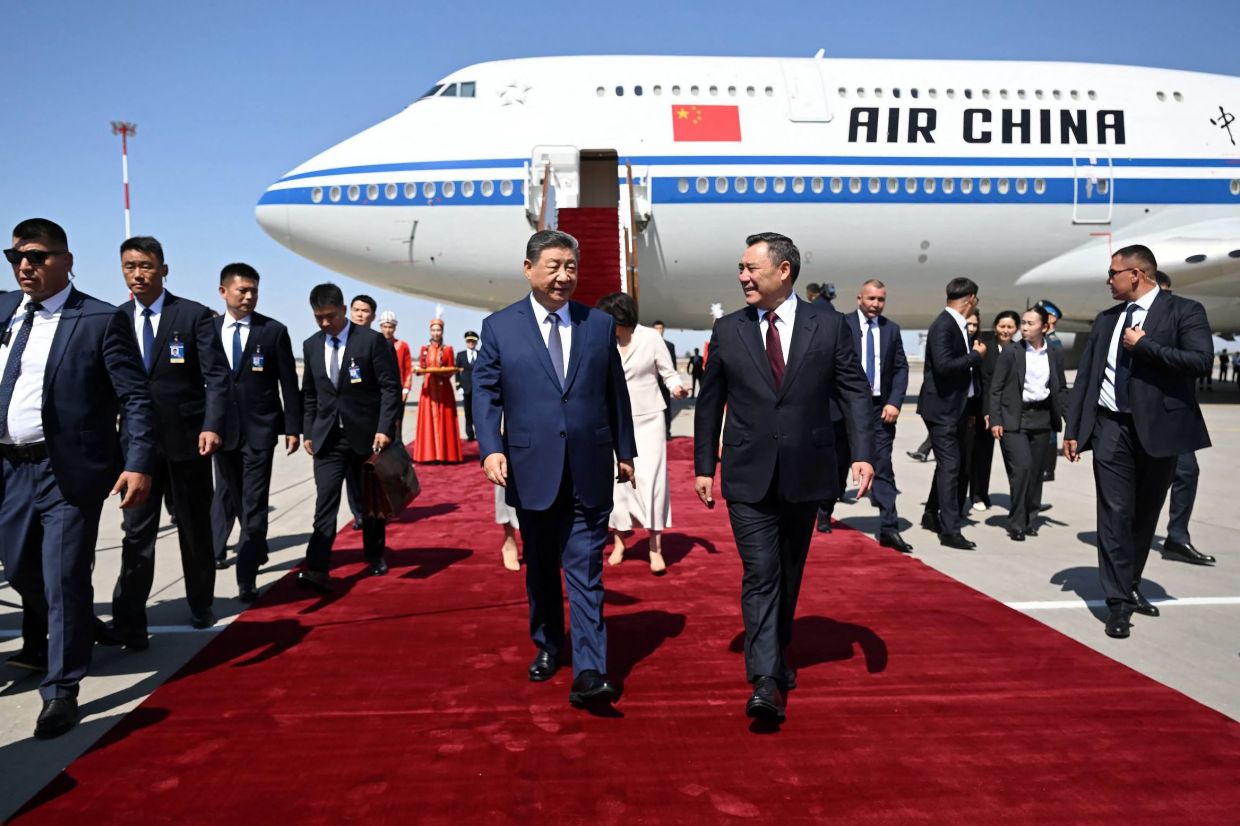
The Shanghai Cooperation Organisation is holding its latest summit in Bishkek this week, bringing together Chinese President Xi Jinping, Russian President Vladimir Putin and Indian Prime Minister Narendra Modi in what observers view as a demonstration of coordinated resistance to Western-centric global governance. The gathering represents a critical juncture for the organisation, which has positioned itself as a meaningful counterbalance to institutions like the G7 and the structures undergirding American strategic interests across Asia and beyond.
Founded in 2001 as a regional security arrangement between China, Russia and four Central Asian nations, the SCO has substantially expanded its membership and ambitions over the past two decades. Today it comprises ten full members including India, Iran, Pakistan, Belarus, Kazakhstan, Kyrgyzstan, Tajikistan and Uzbekistan, with numerous additional countries holding dialogue partner status. This expansion reflects Beijing and Moscow's deliberate strategy to construct an alternative framework for international cooperation that emphasises non-interference and multipolarity rather than the liberal democratic values underpinning Western alliances.
The timing of this summit carries particular weight given the current geopolitical landscape. Russia, now deep into its fourth year of full-scale military operations in Ukraine, views the forum as essential for maintaining diplomatic legitimacy and strengthening ties with nations that have resisted Western pressure to isolate Moscow. Similarly, Iran's recent conflict with the United States and Israel has made the SCO platform invaluable for demonstrating its continued integration into a broader coalition of non-Western powers. These two nations especially see Bishkek as an opportunity to deepen relationships with partners who operate outside Washington's sphere of influence.
China has emerged as the primary architect of the SCO's evolution into a comprehensive platform for cooperation spanning security, development and financial assistance. Beijing has framed the organisation's trajectory as evidence of successfully charting "a new path for regional cooperation" distinct from Western-dominated systems. Alongside Russia, China consistently promotes the SCO as a building block for an emerging multipolar world order in which Beijing and Moscow exercise comparable influence to that traditionally held by Atlantic powers. This narrative appeals to many developing nations seeking alternatives to structures they perceive as favouring established Western economies.
For countries like India, the summit represents a delicate balancing act with significant strategic dimensions. Although India maintains traditional security relationships with the West and participates in anti-China coalition arrangements, the SCO provides New Delhi with a regional platform where it can protect its interests, observe shifting alliances and maintain a seat at the table as larger powers compete for influence across Central and South Asia. Security analysts note that Indian participation allows the country to project itself as a reliable stakeholder capable of independent foreign policy rather than being perceived as automatically aligned with Washington. The summit gives India firsthand intelligence on regional developments while enabling it to hedge its strategic position.
Yet the organisation should not be mistaken for a unified political or military bloc operating with singular purpose. Significant tensions persist among member states, particularly between India and Pakistan, both of which are SCO members, and between India and China, which competes with New Delhi for regional leadership. These internal contradictions constrain the organisation's capacity for coordinated action on major geopolitical questions. Analysts argue that despite the summit's symbolic importance, substantive outcomes remain limited by these competing national interests and the absence of binding enforcement mechanisms.
Turkey's position within the SCO framework illustrates the complex calculations driving regional powers' engagement with the organisation. Although holding only dialogue partner status, President Recep Tayyip Erdogan has repeatedly signalled Ankara's aspiration toward full membership. Turkey views the SCO as a mechanism for maintaining balanced foreign policy positioning—preserving its NATO commitments and European trade relationships while simultaneously strengthening its influence and economic ties across Eurasia. This strategic ambiguity reflects Turkey's broader effort to position itself as a bridge between Western and non-Western power centres rather than as unambiguously aligned with either camp.
The scheduled bilateral meetings during the summit reveal the underlying diplomatic priorities. Putin and Xi's Monday engagement signals the continued centrality of the Russia-China partnership despite occasional tensions over regional influence. The Russian leader's separate talks with Iran's Masoud Pezeshkian on Tuesday underline Moscow's commitment to deepening ties with Tehran amid international isolation. These bilateral conversations, conducted in the summit's margins, often carry greater weight than plenary sessions in determining actual outcomes and shaping future cooperation.
The SCO's fundamental challenge lies in translating its anti-Western positioning into coherent institutional performance and tangible benefits for members. While the organisation's vague mandate and low international brand recognition reflect its flexibility in accommodating diverse national interests, these same characteristics limit its effectiveness as a genuine alternative to Western-led multilateral frameworks. For member states, participation serves important signalling functions—demonstrating non-alignment, strengthening bilateral relationships and projecting influence regionally—even when the organisation itself produces few binding agreements.
The Bishkek summit arrives at a moment when the global order's architecture faces genuine contestation from emerging powers. China and Russia have invested considerable diplomatic and financial resources in portraying the SCO as a model for twenty-first-century cooperation grounded in respect for sovereignty and national interest rather than ideological conformity. Whether the organisation can evolve from a symbolic platform for expressing anti-Western sentiment into an effective mechanism for delivering development, security and prosperity to its members remains an open question that will partly be answered by this week's discussions in Kyrgyzstan.

