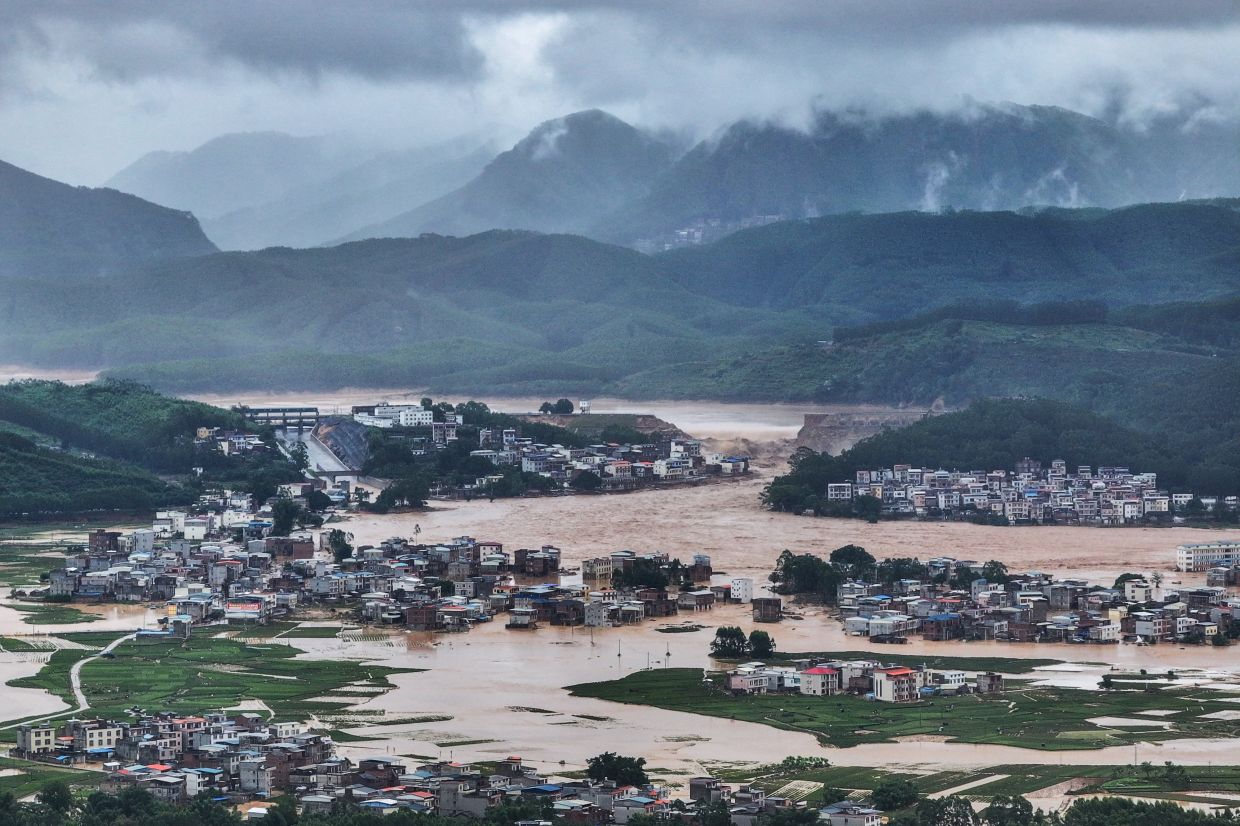
China's authorities have turned to ordinary citizens for help in unravelling the circumstances surrounding the collapse of Liulan Reservoir in Hengzhou, Guangxi Zhuang autonomous region, a disaster that claimed at least 26 lives when Typhoon Maysak unleashed record-breaking rainfall across the southern region on July 6. The State Council investigation team has established a dedicated hotline for public submissions and set an August 15 deadline for written contributions, signalling a significant effort to gather detailed accounts beyond official channels.
The decision to solicit public testimony represents a deliberate investigative strategy employed routinely by Beijing when major disasters generate widespread concern and speculation among the population. The inquiry explicitly aims to reconstruct the complete sequence of events leading to the catastrophe, establish the underlying causes of the dam failure, identify systemic weaknesses in disaster preparedness and emergency response protocols, and extract operational lessons to forestall comparable incidents. This comprehensive mandate suggests the authorities recognise the need for thorough examination given the scale of destruction and loss of life involved.
The Liulan Reservoir disaster unfolded with alarming speed after the typhoon dumped unprecedented volumes of rainfall across Guangxi. The overwhelming water pressure triggered severe erosion that carved a massive breach in the dam structure, releasing a torrent of floodwater that cascaded downstream with devastating force. The sudden unleashing of the reservoir's contents necessitated emergency evacuations affecting tens of thousands of residents living in vulnerable areas below the dam, with many households given minimal warning to gather belongings and flee their homes.
Official casualty figures released on the morning of July 9 documented 26 confirmed deaths and seven people still unaccounted for from the Liulan collapse itself. The broader flooding catastrophe affected multiple reservoirs throughout the region, with dam breaches at other facilities contributing an additional 13 deaths and leaving two further residents missing. Since these initial announcements, the government has released no updated casualty statistics, creating an information vacuum that has spawned unverified claims on social media of significantly higher fatality numbers, allegations that local officials have consistently and emphatically refuted.
The absence of transparent casualty updates has catalysed substantial online discussion and rumour-mongering about the true scale of the disaster. At least one resident has faced police action for allegedly disseminating false information regarding death tolls, highlighting authorities' sensitivity to narratives they consider misinformation. Beyond casualty speculation, internet users have engaged in sustained debate about potential technical failings that rendered the dam vulnerable to catastrophic failure, with particular focus on whether the structure received adequate maintenance and safety inspections prior to the typhoon.
Significant controversy has also emerged around the evacuation process itself, with numerous accounts questioning whether residents received sufficient advance notice to escape safely. The speed with which the reservoir failed after the rainfall began suggests that early warning systems, if they existed, may have provided compressed timeframes for people to reach higher ground. This dimension of the disaster resonates painfully with Malaysian audiences familiar with flooding vulnerabilities and evacuation challenges in our own monsoon-prone regions, where similar tensions between natural disaster speed and human reaction times create acute risks.
The State Council dispatched its investigation team to Nanning, the regional capital, where they convened their initial working session on July 24. The timing of this probe, occurring roughly three weeks after the catastrophe, follows the established Chinese template for examining major industrial and natural disasters that capture public attention and generate questions about institutional accountability. The investigators are expected to examine not merely the physical engineering failure but also the administrative, policy, and personnel dimensions of the response.
Historical precedent offers instructive guidance on likely investigative outcomes and consequences. When authorities examined the 2021 Zhengzhou floods in neighbouring Henan province, a disaster that claimed over 300 lives during unprecedented rainfall, they ultimately identified instances of official negligence and dereliction of duty among responsible administrators. The Zhengzhou investigation concluded that certain flood-related disasters were preventable had officials diligently performed their assigned responsibilities. This accountability extended beyond administrative censure, with dozens of officials including the Communist Party chief and mayor of Zhengzhou facing disciplinary measures and legal prosecution.
Applying this precedent to the Guangxi situation suggests that investigators will likely examine whether reservoir maintenance schedules were observed, whether warning systems functioned properly, whether evacuation protocols were adequately communicated, and whether emergency response resources were appropriately mobilised. Any findings of official failures or dereliction could expose senior administrators and engineers to disciplinary consequences ranging from demotions and salary reductions to criminal charges depending on the severity of culpability determined.
The public submission mechanism serves multiple political purposes beyond gathering factual details. It allows authorities to demonstrate responsiveness to public concern, channels citizen input into official processes, and potentially pre-empts alternative narratives by crowdsourcing information directly from affected communities. For Southeast Asian observers, the approach reflects China's ongoing navigation between opaque governance and public disclosure demands, particularly when disasters trigger social media backlash and speculation.
The Guangxi investigation also carries implications for regional disaster management standards. As climate change intensifies precipitation patterns and extreme weather events become more frequent across Southeast Asia, neighbouring countries including Malaysia may benefit from examining how investigation processes address systemic vulnerabilities. The State Council's willingness to investigate dam infrastructure and emergency response procedures provides comparative perspective on accountability mechanisms and lessons-learning frameworks that other governments employ following natural disasters.
For Malaysian readers particularly sensitive to flooding risks given our geographic and climatic circumstances, the Guangxi experience underscores the critical importance of transparent casualty reporting, timely public communication, and systematic investigation of institutional failures following major disasters. The emphasis on determining whether officials adequately performed their duties reflects a recognition that engineering structures and natural hazards form only part of the equation; human systems, decision-making, and warning mechanisms ultimately determine survival outcomes and collective safety.

