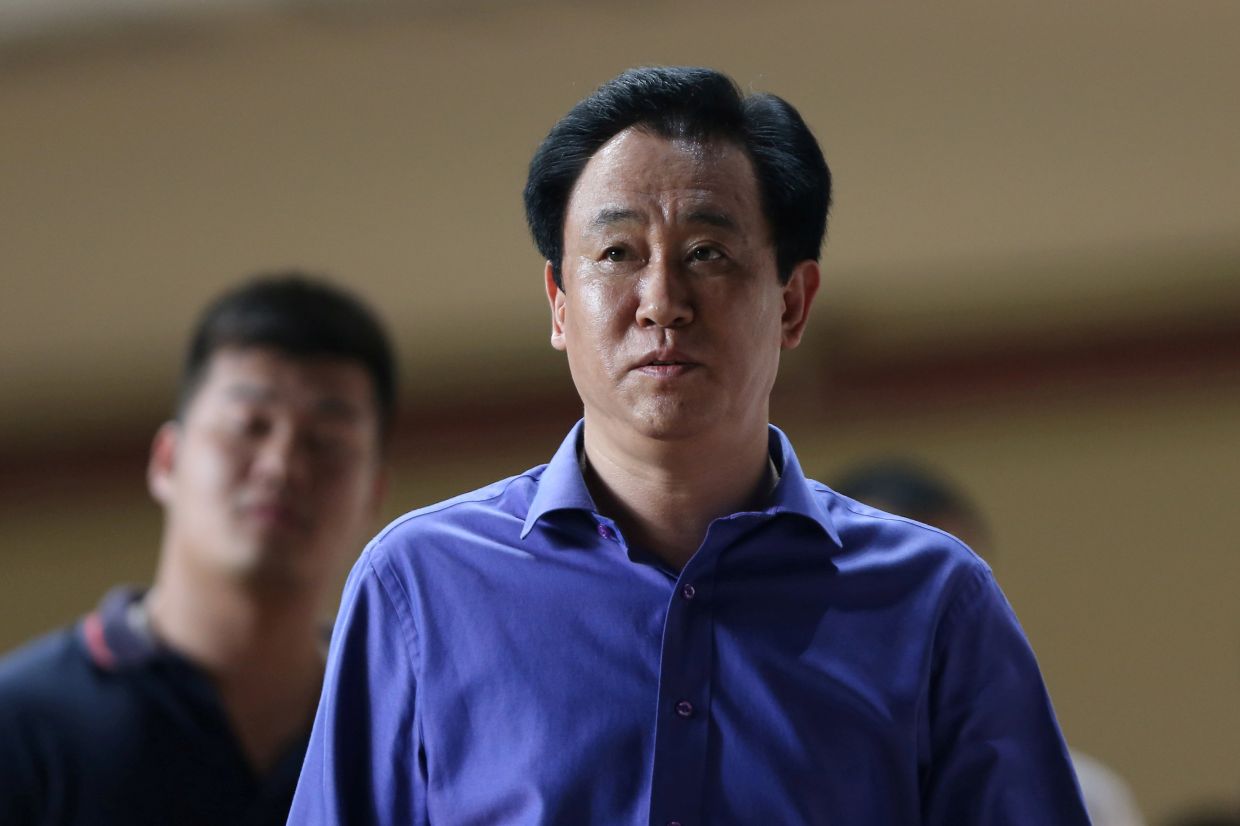
China's Shenzhen Intermediate People's Court delivered a decisive legal reckoning on Thursday, handing down a life sentence to Evergrande Group founder Xu Jiayin and imposing financial penalties exceeding US$2 billion on the company and its affiliated real estate arm. The judgment represents the most severe accountability measure yet for the property developer whose spectacular implosion has reverberated through China's financial system and reshaped the nation's entire real estate sector over the past five years.
The court imposed a combined fine of 15.82 billion yuan on Evergrande and its real estate subsidiary, while stripping Xu of his political rights for life and ordering the confiscation of all his personal assets. The 59-year-old founder, who was once celebrated as a visionary entrepreneur piloting one of China's largest property companies, faced multiple charges ranging from large-scale financial fraud and embezzlement to bribery. Xu had previously pleaded guilty in April to the charges brought against him, paving the way for what legal observers anticipated would be a substantial prison term.
Evergrande's trajectory from market darling to cautionary tale illuminates the structural vulnerabilities that plagued China's property sector throughout the 2010s. For decades, the company exemplified the explosive growth of Chinese real estate, capitalising on surging urbanisation, favourable credit conditions, and the cultural aspiration toward homeownership that gripped the nation. The developer expanded aggressively across multiple provinces, diversified into electric vehicles and other sectors, and became synonymous with the modernisation wave sweeping through Chinese cities. However, this expansion rested increasingly on financial engineering and aggressive borrowing strategies that ultimately proved unsustainable.
The precipitating catalyst for Evergrande's downfall emerged when Beijing moved decisively to curtail what it perceived as excessive speculation and leverage in the property market. Regulatory authorities implemented stricter controls on developer borrowing, effectively closing the credit taps that had fuelled growth. Facing tightened access to financing and unable to generate sufficient cash from operations, Evergrande spiralled into a liquidity crisis. The company defaulted in 2021 on its obligations to creditors, shocking investors and customers who had assumed that a firm of Evergrande's scale and prominence would navigate the regulatory environment successfully.
The court's findings revealed that between 2016 and 2021, Evergrande and Xu engaged in systematic financial misconduct to mask the company's deteriorating condition. Prosecutors documented that the company inflated assets on its balance sheets while simultaneously concealing liabilities, creating a misleading picture of financial health that sustained investor confidence and enabled continued fundraising. The strategy extended to gaining control of financial institutions through bribery, though the court did not publicly identify the targeted institutions. This conduct underscored not merely aggressive business practices but deliberate fraud designed to deceive stakeholders.
Five other senior executives at Evergrande Group received prison sentences ranging from six to eighteen years, reflecting the court's determination to hold multiple tiers of management accountable for the company's misconduct. The staggered penalties suggest that responsibility was distributed across the leadership structure, though Xu bore ultimate responsibility as founder and chairman. The verdicts signal Beijing's commitment to prosecuting white-collar crime in the property sector and establishing legal consequences for executives who participate in fraudulent schemes, even those operating companies of immense economic significance.
The implications for Malaysia and Southeast Asia warrant consideration, particularly given the interconnected nature of regional financial markets and property sectors. Chinese developers have established substantial property portfolios throughout Southeast Asia, and the Evergrande collapse has prompted reassessments of exposure to Chinese real estate interests. Malaysian institutional investors and developers with ties to Chinese counterparts have faced scrutiny regarding the integrity of their financial relationships and the reliability of statements from Chinese partners. The sentencing reinforces broader concerns about corporate governance standards and the reliability of financial disclosures from Chinese companies operating internationally.
Moreover, the case demonstrates Beijing's willingness to prosecute major corporate figures regardless of their prior status or wealth, signalling that the Communist Party's anti-corruption campaign extends to the private sector and prominent entrepreneurs. This has created a sobering lesson for other developers and business leaders throughout Asia who may have assumed that market size or economic importance offered protection from legal jeopardy. The political and economic dimensions of Evergrande's collapse thus transcend the company's immediate stakeholders, influencing risk assessments across the region's investment community.
The real estate sector in China continues adjusting to the post-Evergrande landscape characterised by stricter regulations, constrained borrowing capacity, and heightened regulatory scrutiny. Xu's life sentence and the substantial corporate fines represent Beijing's determination to prevent a recurrence of the excessive leverage and fraudulent practices that destabilised the sector. For Malaysian observers, the case underscores the importance of conducting rigorous due diligence when engaging with Chinese business partners and maintaining scepticism toward financial representations from companies operating within China's regulatory environment, where enforcement mechanisms and corporate governance standards may diverge substantially from international norms.

