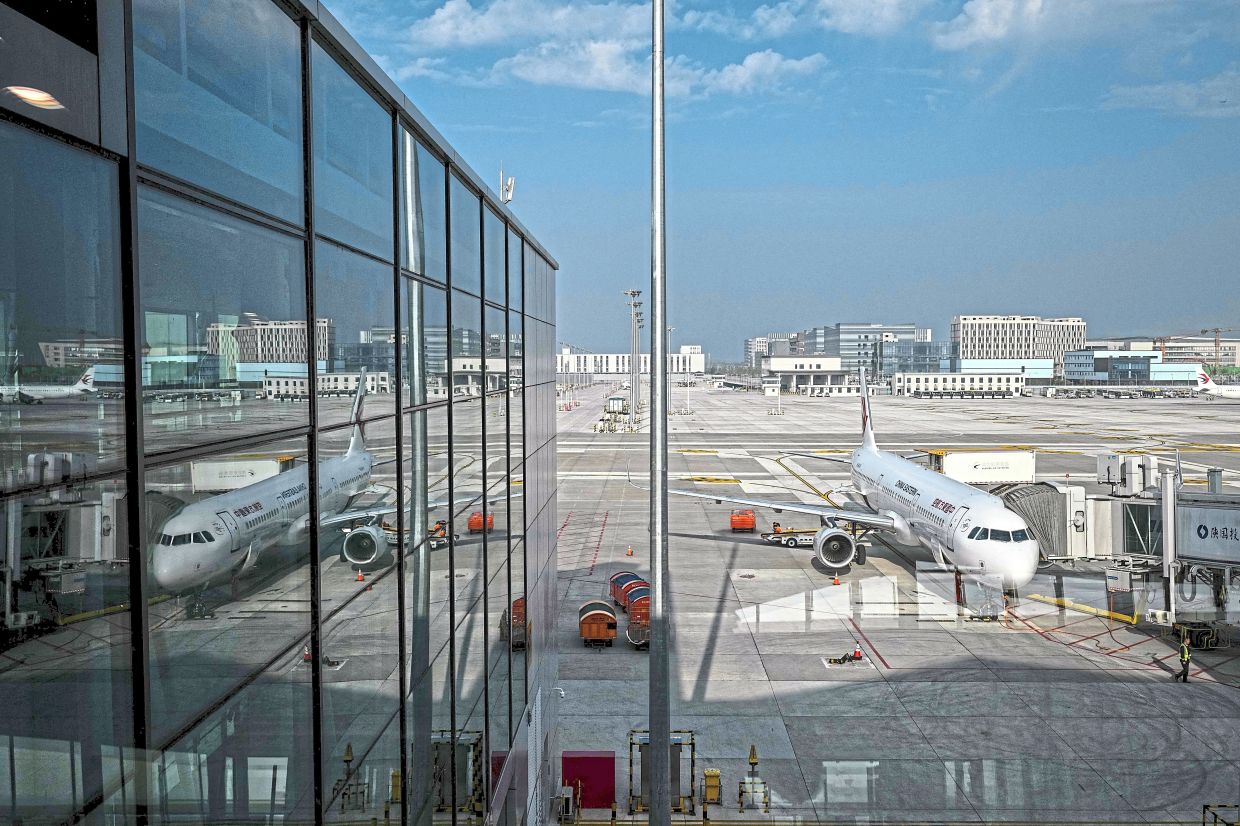
The earnings struggles of China's aviation sector deepened in the first half of the year, as Air China, China Eastern Airlines and China Southern Airlines collectively absorbed net losses totalling approximately 8.2 billion yuan ($1.22 billion). The dismal showing marks the seventh year running that these three carriers have posted first-half deficits, underscoring the persistent structural challenges facing one of Asia's largest aviation markets and raising concerns about the industry's ability to return to profitability even as international travel demand strengthens.
The magnitude of the losses proved particularly striking when compared to the carriers' first-quarter performance. Fuelled by robust Lunar New Year travel demand, the three airlines had recorded combined profits of 4.82 billion yuan in the opening months of 2026, a considerable swing that highlighted how fragile earnings gains had become across the sector. The second-quarter deterioration proved severe enough to wipe out these gains and push the overall first-half position deeply into the red, sending share prices lower across mainland and Hong Kong exchanges on the day of the announcement.
Individually, the financial pain was distributed unevenly across the trio. Air China, the national flag carrier, reported a net loss of 2.3 billion yuan, representing a significant deterioration from the 1.81 billion yuan loss recorded in the same period a year prior. China Eastern Airlines disclosed a loss of 2.2 billion yuan against a 1.43 billion yuan deficit in the comparable 2025 period. China Southern Airlines bore the heaviest burden, reporting a 3.7 billion yuan loss compared with a 1.53 billion yuan loss twelve months earlier. These widening deficits across all three carriers point to intensifying headwinds rather than isolated operational challenges at individual airlines.
The primary culprit behind these mounting losses was the sustained elevation in jet fuel costs, which remained extraordinarily high despite modest declines from their second-quarter peaks. Across the three carriers, fuel expenses rose between 35 and 38 percent during the first half of the year, a shock that overwhelmed attempts to generate offsetting revenue gains. The disruption to international flight networks stemming from regional instability in the Middle East, combined with the lingering economic aftereffects of the pandemic, created a particularly challenging operating environment that China Eastern characterized as having severely undermined profit prospects.
A critical vulnerability distinguishing Chinese carriers from many international competitors is their minimal use of fuel hedging strategies. While airlines in Europe, North America and other developed markets routinely protect themselves against oil price volatility through financial hedging arrangements, China's largest carriers have historically foregone such protections. China Southern's interim filing acknowledged the reality starkly, noting that there were presently no effective mechanisms available to mitigate exposure to fluctuations in jet fuel pricing. This structural exposure leaves the three carriers acutely sensitive to global oil market dynamics and geopolitical shocks that drive energy costs.
Despite the profitability crisis, the carriers managed to generate impressive revenue growth during the same period, with Air China's top line rising 10.5 percent, China Eastern climbing 11.1 percent and China Southern expanding by 9.7 percent year-on-year. This growth stemmed primarily from strengthening international demand, particularly on European routes as some passengers deliberately rerouted away from Middle Eastern hub airports that had been disrupted by regional conflicts. The expansion of international services proved insufficient to offset the margin compression created by soaring fuel costs, however, illustrating how even robust demand expansion can fail to restore profitability when input costs surge catastrophically.
The carriers' ability to respond by raising fares faced significant constraints, particularly on domestic routes where they face competition from high-speed rail networks and road travel alternatives. Unlike American carriers which successfully implemented substantial domestic fare increases during comparable inflationary periods, Chinese airlines lack comparable pricing power. Weaker macroeconomic conditions and shifting consumer preferences toward alternative transport modes meant that aggressive fare increases risked depressing passenger volumes rather than improving overall profitability. This pricing inflexibility represents a structural disadvantage relative to carriers in markets with more limited ground transportation alternatives.
The traditional peak season during the third quarter, which normally represents the most lucrative period for Chinese carriers, offered little relief during 2026. An unusually intense typhoon season disrupted domestic flight schedules precisely during the peak summer travel months when passenger demand peaks. Meteorological records documented 21 typhoons forming across the northwestern Pacific Ocean and South China Sea region through mid-year, nine more than the historical average for the equivalent timeframe. Flight forecasting firm Flight Master projected that Chinese airlines would carry 142 million passengers across domestic and international routes during July and August, representing a year-on-year contraction of 3.6 percent. Such a decline would represent the first contraction in the peak season since 2022, when pandemic-related lockdowns severely restricted travel across much of China.
Looking ahead to the remainder of 2026, analyst expectations have turned decidedly bleak. HSBC analysts project that the three carriers will post combined losses reaching approximately 16.8 billion yuan for the full year, a stark contrast to market expectations that had anticipated combined profits of 1.3 billion yuan. This dramatic downward revision of earnings expectations has triggered significant equity market weakness, with Shanghai-listed shares of all three carriers declining at least 36 percent year-to-date. The deteriorating profitability outlook has led each of the three carriers to forgo interim dividend declarations, a prudent but symbolically significant acknowledgment of financial stress.
One area where the carriers have managed progress involves expanding their deployment of domestically manufactured COMAC C919 narrowbody jets, which represent China's effort to develop competitive commercial aviation technology. China Eastern increased its C919 fleet to 17 aircraft after taking three deliveries during the first half, while both Air China and China Southern operated 11 such jets following receipt of two and three additional aircraft respectively. However, even this modernization program faces disruption, with China Eastern now expecting to receive 13 fewer C919 deliveries than previously anticipated across 2026 through 2028, likely reflecting broader economic softness affecting both the airline and its supply chain. These production setbacks add another layer of uncertainty to an industry already confronting unprecedented profitability challenges.
The cumulative effect of these multiple pressures—sustained elevated fuel costs, operational disruptions from geopolitical factors and weather, structural pricing constraints in domestic markets, and declining passenger volumes during what should be peak season—paints a sobering picture of China's aviation sector. For Malaysia and other Southeast Asian nations, this Chinese aviation stress carries regional implications, as weakened Chinese carriers may reduce capacity on regional routes and compete more aggressively on pricing. The situation underscores how deeply Asia's travel and aviation markets remain interconnected and vulnerable to shocks originating in any major economy.

