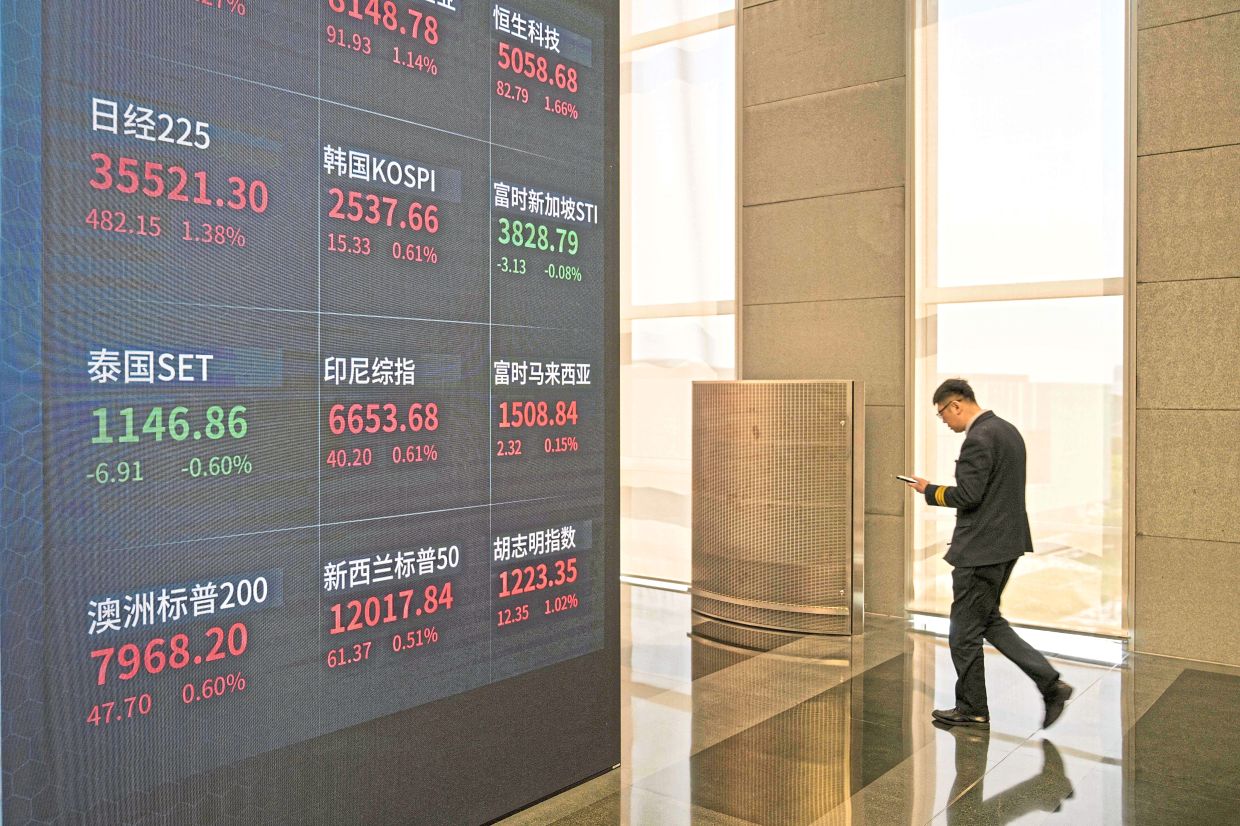
China's property sector entered fresh turbulence on Monday as share prices for developers plunged across mainland and Hong Kong exchanges following the announcement of sweeping regulatory changes designed to curtail the presale funding mechanism that has underpinned the industry for decades. The CSI300 Real Estate Index fell 4.6% by mid-afternoon trading, while Hong Kong-listed Chinese developers extended losses to 6.5%, with the Hang Seng's dedicated developers index shedding nearly 5%. The sharp reaction underscores investor anxiety over how the restructured system will reshape an already fragile sector battling its sixth consecutive year of decline.
Regulatory authorities released new guidelines on Friday aimed at severing developers' dependence on upfront payments from buyers before construction completion. The reformed approach restricts mortgages to properties that have already been finished, fundamentally altering the financial mechanics that have sustained China's real estate business model. Simultaneously, local governments are being directed to prioritise the sale of completed units, a measure intended to mitigate delivery risks that have eroded consumer confidence. Together, these interventions represent Beijing's most aggressive structural intervention yet, signalling official concern that the current model has become unsustainable and undermines confidence among homebuyers increasingly wary of putting capital into incomplete projects.
The presale system has long functioned as the lifeblood of China's property industry, enabling developers to access construction capital by selling units years before handover. Official data reveals that presales accounted for 68% of new home sales by floor space in 2025, illustrating the dominance of this financing pathway across the sector. Under the old regime, developers could funnel early mortgage proceeds directly into ongoing construction, creating a perpetual cycle of capital reinvestment. The financial analyst team at Nomura has warned that developers will now be forced to shoulder construction-phase funding themselves or rely on traditional development loans, fundamentally constraining their liquidity position and investment capacity during the critical build phase.
State-owned enterprises bore the brunt of Monday's selloff despite their perceived financial resilience. China Jinmao, Yuexiu Property and Greentown China each shed more than 14%, while larger state players including China Resources Land and China Overseas Land & Investment declined by more than 9%. Private-sector operators such as Longfor Group and Seazen, both regarded as comparatively stable, experienced declines of 7.2% and 5.5% respectively. The broad-based nature of the losses indicates that market participants view the regulatory changes as a systemic challenge affecting the entire developer ecosystem, regardless of ownership structure or financial standing.
Executives interviewed by Reuters, including representatives from state-backed entities, cautioned that while government-affiliated developers would find it comparatively easier to secure bank loans at preferential rates between 2-3%, privately held competitors face borrowing costs of 5-6%, further widening competitive disadvantages. One unnamed executive quantified the impact starkly, estimating that presales and associated mortgage funding represent 40% of development capital, implying a potential 40% contraction in near-term investment capacity. This reduction would occur precisely when developers are already struggling to move inventory in a market characterised by weakening demand and persistent affordability concerns among middle-class buyers.
The underlying health of China's property market remains deeply troubled. Government land auction revenues contracted 30.8% year-on-year during the first seven months of 2026, falling to 1.1731 trillion yuan (US$174.56 billion), while nationwide property development investment declined 19.2% to 4.3 trillion yuan. In major cities such as Beijing and Shanghai, new-home price recoveries have stalled, suggesting that even premium markets lack sufficient demand momentum. Meanwhile, second-hand housing prices in smaller inland cities have tumbled nearly 25% from 2020 levels, reflecting a bifurcated market where affordability crisis and buyer pessimism persist across regional markets.
State-owned enterprises have gradually come to dominate market share as private-sector competitors have faced defaults and financial distress. This consolidation reflects the government's preference for maintaining stability through direct ownership, though it also signals how deeply the sector's structural problems extend. Several executives acknowledged that state backing provides easier access to credit facilities, yet this advantage does not fundamentally alter the underlying problem: restricted presale funding reduces the cash available for land acquisition and fresh investment precisely when the sector needs liquidity to navigate its downturn. The regulatory shift thus presents a paradox whereby government measures intended to stabilise the market may inadvertently accelerate the market concentration and squeeze smaller players further.
Regulators have attempted to soften the blow by extending maximum mortgage terms from 30 to 40 years, potentially freeing household cash for consumption elsewhere in the economy. Analysts suggest this refinancing of homebuyer debt could provide modest stimulus to domestic consumption, yet industry observers remain sceptical this adjustment will meaningfully stimulate housing demand. Buyers facing declining property values and erosion of housing as a wealth-building instrument appear unlikely to respond to extended repayment windows with enthusiasm, particularly when employment uncertainty and demographic headwinds already constrain spending appetite.
Securities analysts at Everbright have characterised the new regulatory environment as substantially raising barriers to entry and requiring enhanced financial rigour and operational skill among property companies seeking to remain competitive. The consensus view anticipates that industry consolidation will accelerate markedly, with smaller and less capitalised players unable to adapt to the tighter funding constraints and therefore likely to exit the market or be absorbed by stronger competitors. This process mirrors earlier waves of consolidation in other sectors, yet the scale and speed of potential exit could prove destabilising if not carefully managed.
For Malaysia and the broader Southeast Asian region, China's property crisis carries important implications. Chinese investors have historically diversified portfolios into regional real estate assets, particularly high-end residential properties in Malaysia, Singapore and Thailand. As Chinese developers face constrained cash flows and potential insolvency, this capital outflow may diminish, affecting property valuations in select Malaysian markets. Furthermore, construction-related imports and materials sourcing for Chinese developers may contract, potentially impacting Malaysian suppliers of timber, steel and other building materials that depend on Chinese demand cycles. The regional banking sector, which holds exposure to Chinese property-linked lending, will merit closer monitoring as the credit environment tightens.
The systemic importance of China's property sector to the world's second-largest economy cannot be overstated. The sector's distress has cascading effects across financial markets, employment, local government revenues, and household wealth accumulation. Beijing's regulatory intervention reflects official recognition that the existing model is untenable, yet the transition to a fundamentally different operating paradigm carries substantial adjustment costs. Whether the restructured system can restore confidence among homebuyers and stabilise developer balance sheets remains uncertain; the sharp market reaction suggests investors question whether the cure might prove as disruptive as the disease itself.

