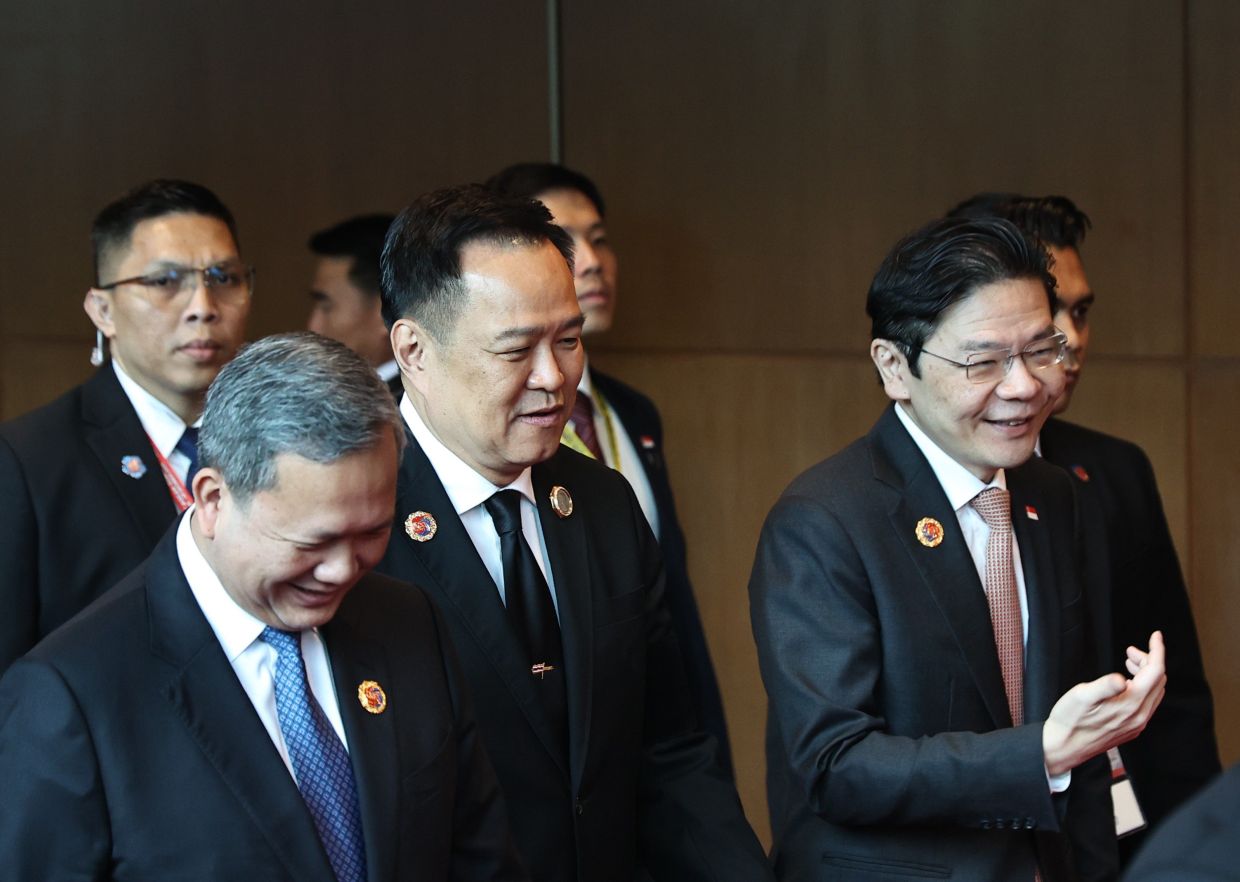
The possibility of China stepping into the Cambodia-Thailand border dispute as a neutral arbiter has gained momentum this week, with both Southeast Asian nations subtly opening diplomatic channels to Beijing while neither formally requesting intervention. Prime Minister Hun Manet used a high-level meeting with Chinese Premier Li Qiang in the Chinese capital to brief the leadership on recent frontier developments, marking one of the most substantive discussions between Phnom Penh and Beijing on the contentious issue since tensions escalated last year. Simultaneously, Thai Prime Minister Anutin Charnvirakul indicated that Bangkok would not reject Beijing's assistance if offered, even as he maintained that direct bilateral talks remained Thailand's preferred approach to resolving the longstanding territorial disagreement.
The diplomatic choreography unfolded during what appears to be a carefully orchestrated Beijing visit, with both leaders attending the 2026 World Artificial Intelligence Conference this week. Hun Manet's decision to personally brief Li on border matters demonstrates Phnom Penh's commitment to keeping its principal strategic ally fully informed of developments along a frontier that has become increasingly volatile. During their July 16 conversation, the Cambodian premier reiterated his government's consistent position that any resolution must respect international law and adhere to existing bilateral agreements and conventions. Li responded by reaffirming what Chinese officials characterise as an "ironclad" partnership, language that underscores the depth of the Cambodia-China relationship and Beijing's willingness to support Phnom Penh's interests within the region.
What makes the current diplomatic moment particularly significant is the measured but unmistakable opening that both Southeast Asian governments have created for Chinese involvement. Anutin told Thai media that while Bangkok had not formally approached Beijing with a mediation request, Thailand would not close the door to such an arrangement if China chose to propose one. This carefully calibrated statement avoids the appearance of either government capitulating to outside pressure while simultaneously signalling receptiveness to third-party facilitation. For Thailand, such language allows the government to maintain its stated preference for bilateral resolution while hedging against continued stalemate. For Cambodia, Hun Manet's direct engagement with Li on the issue suggests Phnom Penh sees value in having Beijing understand the gravity of the situation and perhaps positioning itself as a concerned stakeholder in any future negotiations.
China's track record in regional diplomatic engagement suggests Beijing has quietly been laying groundwork for a more active role. Last year, Chinese Foreign Minister Wang Yi made public statements indicating Beijing's willingness to facilitate dialogue between the two neighbours, though he carefully avoided formally offering mediation at that time. Wang emphasised China's commitment to "harmonious coexistence" between Cambodia and Thailand, framing Beijing's interests in terms of broader regional stability rather than favouritism toward either party. Since then, China has hosted trilateral meetings involving senior officials from all three countries, designed ostensibly to maintain ceasefire arrangements and build confidence between the disputing parties. These lower-profile diplomatic engagements have allowed Beijing to familiarise itself with both sides' positions while gradually inserting itself into the dispute resolution framework without appearing to impose solutions.
The absence of explicit mediation requests from either Cambodia or Thailand reflects the delicate political dynamics at play. Formal requests for outside mediation can be domestically unpopular, potentially appearing as a sign of weakness or inability to defend national interests. By leaving the door open to Chinese involvement without requesting it outright, both governments preserve their political flexibility while testing whether Beijing has appetite for deeper engagement. This diplomatic ambiguity also allows each side to blame the other if talks fail—a risk that formal mediation attempts would force into the open. Cambodia, under Hun Manet, faces domestic pressure to demonstrate nationalist credentials and resolve the border dispute without appearing to capitulate. Thailand faces similar pressures, particularly given the sensitivity of sovereignty issues in Thai politics. China's patient approach of facilitating without formally mediating allows both governments to accept assistance without losing face.
Regional observers have noted that Cambodia's broader strategy involves cultivating multiple international perspectives on the dispute, including Asean observer missions and engagement with international legal mechanisms. This multilayered approach suggests Phnom Penh is not placing all diplomatic weight on a single partner, even one as crucial as China. By welcoming various forms of international scrutiny and legal channels, Cambodia signals commitment to resolving the matter through transparent, rules-based processes. Thailand has similarly engaged with regional and international frameworks, though Bangkok has been somewhat more cautious about internationalising the dispute. The simultaneous engagement with China by both parties, therefore, represents one component of a broader diplomatic strategy rather than a sudden shift in positioning.
China's potential role as mediator carries implications that extend well beyond the bilateral Cambodia-Thailand relationship. A successful Chinese intervention could enhance Beijing's standing as a responsible regional power capable of resolving disputes among its smaller neighbours, a narrative China has actively promoted. Conversely, if mediation efforts fail or are seen as favouring one party, China risks damaging relationships with either government or appearing ineffectual. For Southeast Asia more broadly, Chinese mediation of inter-regional disputes could signal a shift toward Beijing assuming greater diplomatic responsibilities, potentially reshaping regional power dynamics. Asean as an institution might view either Chinese success or failure as having implications for the bloc's own mechanisms for managing regional tensions, particularly given that both Cambodia and Thailand are member states.
The economic dimensions of this diplomatic realignment warrant attention. China remains both Cambodia's largest trade partner and a major investor in Cambodian infrastructure, while also maintaining substantial economic ties with Thailand. Beijing's capacity to leverage economic relationships to incentivise agreement should not be underestimated, though such overt conditionality could undermine the appearance of neutral mediation. Thai and Cambodian negotiators are undoubtedly aware that China has both carrots and sticks in its diplomatic arsenal, though this reality remains unspoken in official communications. The question of whether China would employ economic leverage to push either party toward compromise represents an unseen dimension of any future mediation effort.
International law and the specific territorial claims at stake represent another critical dimension. Hun Manet's insistence during his Beijing meeting that any resolution respect international law and existing treaties suggests Cambodia believes legal frameworks support its position. If China were to mediate, it would need to address these technical and legal dimensions, not merely facilitate dialogue. The dispute involves complex historical claims, overlapping concessions, and contentious interpretations of colonial-era agreements. A mediator would need sufficient sophistication in international law to help both parties navigate these technical issues while finding compromise positions. Whether China possesses or is willing to invest such expertise remains unclear, particularly given Beijing's own contentious territorial disputes that it has resisted submitting to international legal adjudication.
The path forward depends on whether the current diplomatic signals congeal into formal mediation efforts or remain part of the background noise of South-East Asian diplomacy. Neither government has committed to formal mediation, and China has not officially offered its services. Should mediation occur, it would likely unfold gradually, with China deepening its facilitation role incrementally rather than announcing a formal mandate. This approach would allow either side to disengage without embarrassment and give both parties space to adjust domestic narratives around any eventual agreement. The coming months will reveal whether the carefully calibrated signals exchanged this week mature into substantive negotiation or remain part of the diplomatic theatre that characterises much regional engagement.

