China's artificial intelligence advancement in scientific research faces a fundamental bottleneck: the country cannot manufacture the sophisticated instruments necessary to generate the experimental data that underpins AI model development. This dependency on foreign technology strikes at the heart of Beijing's ambitions to lead in AI-powered scientific discovery, exposing vulnerability in a sector deemed critical to national competitiveness and military innovation.
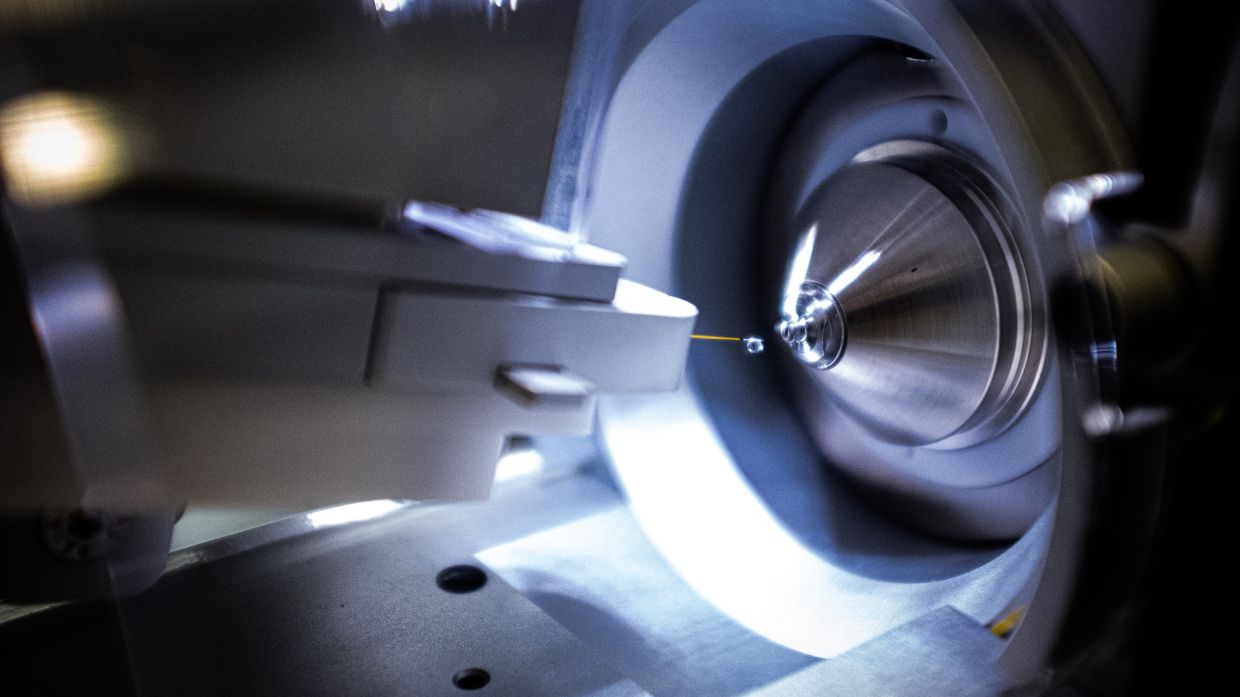
The challenge was crystallised at the recent "AI for Science" conference in Shanghai, where Weinan E, a mathematician from Peking University and member of the Chinese Academy of Sciences, highlighted the paradox facing Chinese researchers. Advanced equipment such as mass spectrometers, chromatographs and spectrometers are essential for generating the high-quality experimental data required to develop and validate sophisticated AI models. Without domestically manufactured alternatives, E warned that China's AI for science initiatives were akin to "cooking without rice"—fundamentally constrained regardless of computational prowess.
The scale of China's import dependency is striking. During 2024 alone, China imported nearly US$17 billion in scientific equipment, with more than three-quarters of major research instruments coming from foreign manufacturers. A recent assessment by consultancy firm LeadLeo revealed even starker figures for specific categories: China relies on imports for 83 per cent of its mass spectrometers and chromatographs, and 75 per cent of its spectrometers. The country is almost entirely dependent on imported optical instruments and biological tissue analysis equipment. These are not niche technologies but rather the backbone of modern life sciences and materials research across Chinese universities and research institutes.
The consequences of this dependency extend beyond mere inconvenience. Chinese researchers face significantly higher equipment costs compared to domestic manufacturers elsewhere, coupled with extended maintenance cycles and sluggish after-sales support. These practical impediments translate into reduced research efficiency and compromise the resilience of China's scientific supply chain. For a nation positioning itself as a technological superpower, the reliance on foreign suppliers introduces strategic vulnerability and constrains the speed at which scientific discoveries can be translated into applications.
Washington has weaponised this dependency. The United States, viewing advanced precision instruments as dual-use technologies with military implications, has systematically tightened export controls. By December 2020, during Donald Trump's first administration, more than 42 per cent of China-related entries on relevant export control lists had been added. The restrictions have continued and intensified under Trump's second term, driven by intelligence assessments that advanced equipment could support China's military modernisation and accelerate the development of AI-enabled weapons systems. In January, the Department of Commerce announced new export controls targeting high-parameter flow cytometers and specific mass spectrometry equipment, explicitly citing concerns that these technologies could generate biological data "suitable for use to facilitate the development of AI and biological design tools."
Beyond the hardware challenge, Weinan E identified a structural mismatch in how China and the United States approach AI for science. The US has pursued a strategy of strengthening general-purpose foundation models while integrating them with automated research infrastructure. This foundational approach ensures that AI systems possess robust underlying capabilities adaptable across diverse scientific domains. China, conversely, has adopted an application-driven methodology, building scientific AI infrastructure by integrating data, software, computing resources and automated equipment before applying these capabilities to specific fields. E cautioned that this difference reflects "significant gaps" in foundation models compared to international counterparts, and warned that simply grafting scientific capabilities onto existing open-source models represents a "false premise" rather than a viable solution.
The fundamental constraint, according to E, lies in model architecture rather than fine-tuning. Solving complex scientific problems demands stronger underlying models rather than post-training modifications alone. This observation carries profound implications for Malaysia and other Southeast Asian nations pursuing AI development. The lesson suggests that shortcutting fundamental research in favour of rapid application deployment may yield diminishing returns, a consideration particularly relevant as regional governments invest in AI capabilities.
Addressing these interconnected challenges requires systemic transformation. Weinan E proposed three structural "breaks" in China's research ecosystem. First, scientific disciplines must dissolve traditional boundaries to enable cross-field research that reflects how modern problems transcend academic silos. Second, the artificial divide between theoretical research and experimental work must be bridged, recognising that rigorous validation requires integration of both domains. Third, barriers separating academia from industry must be dismantled to facilitate faster translation of discoveries into practical applications and manufacturing improvements.
Equally important is reforming how research contributions are evaluated and rewarded. Traditional metrics emphasising academic publications neglect the infrastructure, data systems, software tools and research platforms that increasingly undergird scientific progress. Chinese institutions should recognise and incentivise work in developing these foundational resources, shifting evaluation frameworks to reflect the realities of modern collaborative science. For Southeast Asian research communities, this represents an opportunity to learn from China's experience and avoid replicating institutional structures misaligned with contemporary scientific practice.
The implications extend across Asia-Pacific. China's predicament illustrates how technological self-sufficiency in strategic sectors cannot be achieved through top-down mandates alone; it requires sustained investment in manufacturing ecosystems, talent cultivation and institutional adaptation. For Malaysia and neighbouring countries, the challenge serves as a reminder that meaningful participation in AI-driven scientific advancement requires addressing multiple levels simultaneously—equipment manufacturing capacity, research infrastructure, human capital, and institutional structures. Without attention to these fundamentals, even well-resourced AI initiatives risk remaining superficial rather than transformative.

