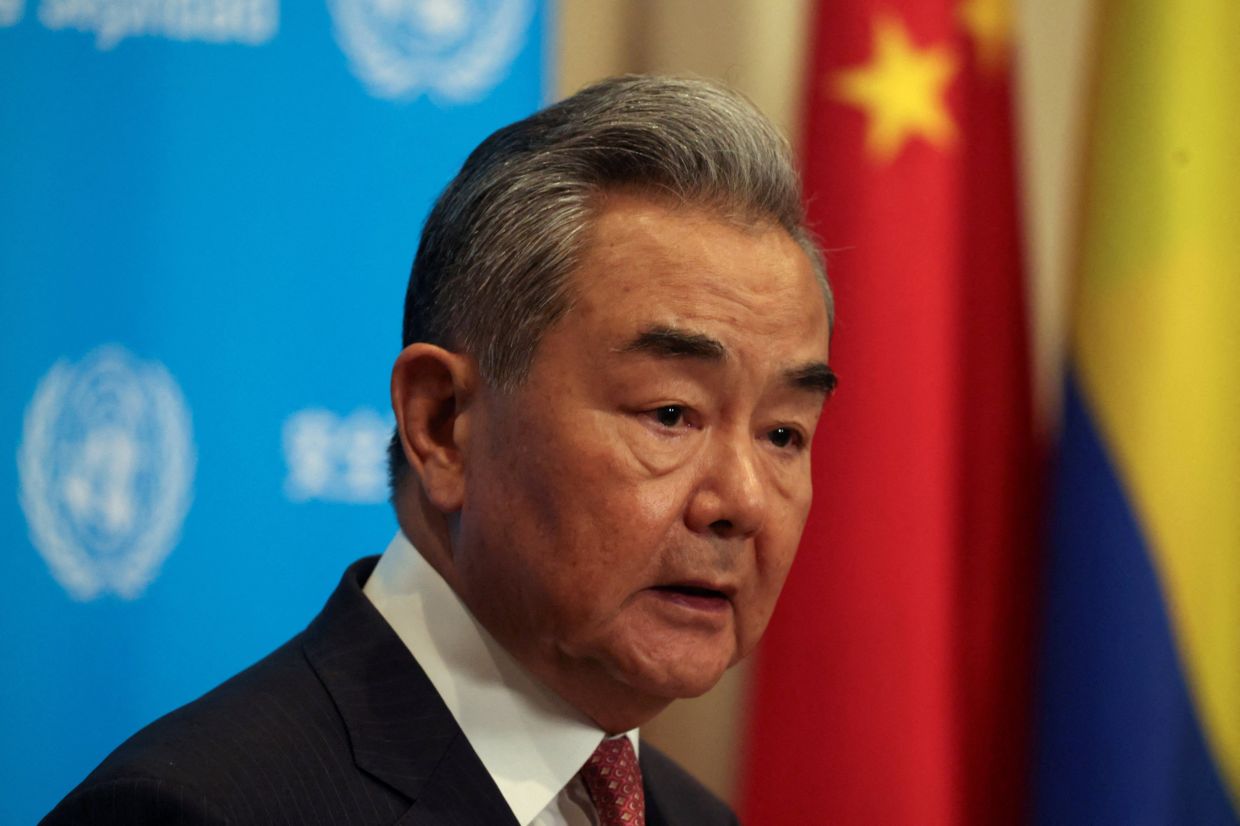
China's Foreign Minister Wang Yi has warned US Secretary of State Marco Rubio that handling Taiwan requires the "utmost caution", a forceful reminder of Beijing's red lines as the world's two largest economies attempt to stabilise their increasingly fraught relationship. The Tuesday phone call between the two senior diplomats underscores the persistent tensions simmering beneath recent diplomatic progress, with the sensitive issue of Taiwan remaining the most explosive flashpoint in US-China relations.
Wang stressed that constructing a stable, mutually beneficial relationship serves the interests of both Washington and Beijing, as well as the broader international community. He emphasised that achieving such cooperation demands concrete action from both sides, rather than mere rhetorical commitments. The Chinese Foreign Minister called on the US to "remove interference, overcome obstacles, and stay firmly on this correct path", language that reflects Beijing's frustration over American support for Taiwan and other geopolitical concerns.
For Malaysia and Southeast Asia, this diplomatic dance carries significant implications. The region sits uncomfortably in the middle of US-China rivalry, with countries like ours dependent on trade relationships with both powers while watching nervously as competition intensifies in the South China Sea and beyond. Any escalation involving Taiwan could disrupt regional stability and force nations to navigate an even more treacherous diplomatic landscape.
The Foreign Minister outlined a vision of expanding bilateral cooperation while simultaneously reducing points of contention. He proposed lengthening "the list of cooperation" and creating "more positive agendas" as essential counterweights to the numerous thorny issues dividing Washington and Beijing. This approach reflects Beijing's understanding that complete agreement is impossible, but managing disagreements without allowing them to dominate the relationship remains achievable. Such framework-building offers a template for how competing powers might coexist, though implementation remains far more difficult than principle.
Wang's emphasis that constructing this partnership "is not just a slogan" and "requires action, moving towards each other and persistent efforts" suggests frustration with the pace of progress. The warning carries particular weight given that Chinese President Xi Jinping had directly raised Taiwan during his May summit with President Trump, cautioning that mishandling the issue risked steering relations into an "extremely dangerous situation" with potential for open conflict. Xi's stark language underscore how seriously Beijing views any perceived challenge to its claim over Taiwan.
The timing of this call comes as Washington and Beijing prepare for a potential visit by Xi to the United States, a visit that could either reset the relationship or expose its fundamental fragility. Trump previously framed the May summit as a historic achievement that produced tangible benefits for Americans, including published commitments from Beijing to address US concerns about supply chain vulnerabilities and critical materials shortages. These economic achievements provided a foundation for claiming diplomatic success, helping justify the engagement approach to domestic audiences.
However, beneath the veneer of stability, cracks are appearing in the US-China relationship. Recent months have witnessed growing signs of strain, suggesting that the momentum from May's summit may be dissipating. Trade irritations, military encounters in the South China Sea, technology competition, and differing approaches to global issues continue generating friction. Taiwan remains the most dangerous potential trigger point, as Washington maintains its decades-old policy of strategic ambiguity while simultaneously deepening semiconductor and military ties with Taipei.
Beijing's view of Taiwan as an integral part of Chinese territory makes any foreign support for the island inherently threatening in Chinese eyes. This fundamental incompatibility between how Washington and Beijing view Taiwan's status makes the issue virtually impossible to resolve through negotiation. Instead, both sides attempt to manage the problem through careful language and calibrated actions, hoping to avoid crossing invisible lines that could trigger crisis. Wang's warning suggests China believes Washington may be approaching or testing those boundaries.
For Southeast Asian nations including Malaysia, this dynamic creates persistent uncertainty. Regional economies depend heavily on both US and Chinese markets, investment, and technology partnerships. A serious US-China confrontation over Taiwan could force uncomfortable choices and potentially disrupt the trade networks and supply chains that fuel regional growth. Countries across ASEAN have carefully maintained non-aligned positions, but serious conflict could make such neutrality untenable.
The call between Wang and Rubio also reflects the reality that despite recent diplomatic engagement, fundamental strategic competition between the two powers continues unabated. Military buildups, intelligence operations, technology contests, and ideological rivalries continue beneath the surface of official goodwill. Diplomacy provides a channel for managing this competition and preventing it from boiling over, but it cannot eliminate the underlying tensions driving US-China rivalry.
As Washington prepares for Xi's potential visit, managing expectations becomes crucial. Neither side can afford a dramatic rupture, yet neither can afford to appear weak to domestic audiences. This constraint-laden environment makes Taiwan an particularly treacherous issue. Any perceived concession on Taiwan by either side could provoke fierce domestic backlash, yet any perceived aggression could trigger the very escalation both claim to want to avoid. Wang's warning to Rubio reflects this precarious balancing act, communicating firmness while keeping diplomatic channels open.

