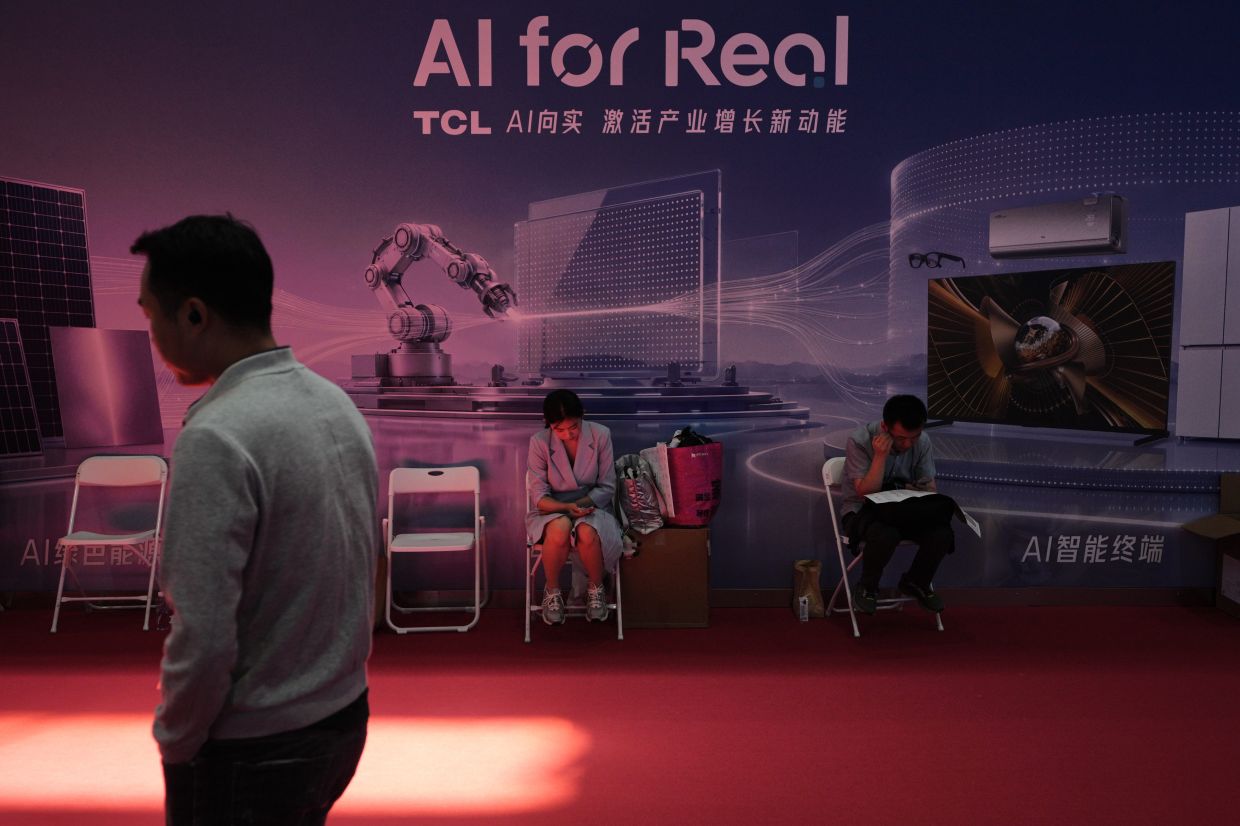
The integration of artificial intelligence into China's workplace is proceeding at an unprecedented pace, driven by aggressive government policies that encourage both private enterprises and individual workers to adopt AI technologies across virtually every sector. Unlike many Western nations where public anxiety about AI has mounted, Chinese workers are displaying a notably pragmatic acceptance of the technology, even as concrete evidence of job displacement accumulates. This unique mindset—born partly from cultural attitudes toward technological change and partly from state encouragement—is reshaping how millions of Chinese employees approach their careers, creating both opportunities for adaptation and substantial risks to long-term employment stability.
The scope of AI's penetration into the Chinese economy is staggering by recent historical standards. Industrial enterprises using AI models and "agents" have jumped dramatically from just 9.6 percent in 2024 to 47.5 percent in the following year, according to market intelligence data. This acceleration reflects deliberate government promotion through initiatives such as the "AI Plus" programme and comprehensive five-year planning extending to 2030, which explicitly aims to distribute AI capabilities across multiple economic sectors to strengthen China's position in technological competition with the United States. For many workers, this rapid deployment has translated into tangible changes to their professional circumstances, forcing rapid decisions about whether to embrace new tools or risk obsolescence.
Programmers and software developers represent one of the most immediately affected cohorts. Mid-level coding positions, which typically involve routine algorithmic work and standard problem-solving, have become increasingly vulnerable to AI replacement. Some developers acknowledge that while AI-generated code may not achieve perfection, it has reached a threshold where employers consider it "close enough" for many applications. This assessment has created a psychological shift among technical professionals, who now confront an uncomfortable calculus: resist adoption and risk being left behind by colleagues and competitors, or embrace AI integration even when it directly threatens their employment prospects. The pragmatic response from many has been to experiment with AI-assisted work methods while simultaneously exploring alternative career paths.
The translation industry illustrates the employment disruption in particularly stark terms. Translators working on contract bases—especially those operating in moderately competitive language pairs—have witnessed their earning potential collapse. Industry compensation has declined by more than fifty percent compared to previous years, even as some translators find themselves paradoxically busier than before, now employed to train and refine AI translation models. This inversion has compelled many language professionals to question the long-term viability of their expertise. The impact extends to educational institutions, where university programmes in foreign languages have experienced declining enrollment as prospective students recognize that AI-powered translation tools are rendering traditional language specialisation less marketable.
Physical and logistics work is increasingly subject to automation through humanoid robotics and specialised robots. Parcel sorting in postal facilities, traffic direction, coffee preparation, and food delivery now involve robotic systems that eliminate the need for human workers in these roles. Food delivery represents a particularly significant concern in the Chinese context, as millions of workers depend on this gig economy sector for livelihoods. The replacement of delivery personnel with autonomous systems poses not merely individual employment challenges but broader social implications for workers without the education or resources to transition into higher-skilled positions.
Creative industries, once considered relatively insulated from automation, are now experiencing substantial disruption. Generative AI now performs significant portions of creation, production, and distribution work in China's short-form video drama sector. The quantity of live-action short and vertical video content designed for mobile viewing has contracted by approximately seventy-five percent in the first quarter of this year compared to the previous year. Scriptwriters and content creators have responded by either attempting to reposition themselves as AI tools managers rather than creators, or by shifting into entirely different professional domains. One scriptwriter's experience—creating illustrated children's books after his employer downsized its writing team—reflects this broader pattern of professional migration among displaced creative workers.
Despite these disruptions, Chinese workers are demonstrating notably low levels of anti-AI sentiment compared to their counterparts in Europe and North America. Analysts attribute this to several factors: cultural acceptance of technological change, state promotion of AI adoption, and a pragmatic understanding that resistance is futile in a rapidly transforming economy. Displaced workers frequently express interest in AI-enabled entrepreneurship and independent ventures, viewing AI-related disruption not purely as a threat but also as a potential opportunity to establish autonomous businesses. This orientation contrasts sharply with Western labour movements, which have mounted more organised resistance to AI deployment in workplaces.
However, this apparent acceptance masks significant underlying economic concerns with macroeconomic implications. Consumer spending has lagged as workers across multiple sectors exhibit reluctance to commit resources when facing employment uncertainty. This consumer behaviour compounds challenges already created by prolonged weakness in China's housing sector, which has substantially diminished household wealth. Economic growth has been decelerating for several years, and the employment disruption created by rapid AI adoption risks exacerbating this slowdown at a crucial moment. The tension between government policies promoting AI adoption and consumer behaviour reflecting employment anxiety creates a paradoxical dynamic where the very policies designed to enhance productivity may simultaneously suppress demand.
Young workers face particularly acute pressures from these transformations. Urban unemployment officially hovers near five percent, but unemployment among people aged sixteen to twenty-four—excluding students—stands at approximately three times that rate. This demographic cohort is entering the workforce precisely when AI capabilities are reaching inflection points that render their initial skill training partially obsolete. The psychological and financial consequences of entering a labour market characterised by rapid technological displacement, combined with China's historically competitive academic environment, may create lasting consequences for social stability and intergenerational prosperity.
Women face disproportionate risks from AI-driven displacement, according to international labour research. Women tend to concentrate in sectors particularly amenable to automation, including electronics assembly and routine administrative work, while remaining significantly underrepresented in science and technology fields where new opportunities are most likely to emerge. This structural inequality threatens to widen gender-based economic disparities precisely as AI reshapes employment patterns.
China's demographic trajectory offers a potential long-term counterbalance to these employment disruptions. The nation's population of 1.4 billion is simultaneously ageing and shrinking—a demographic challenge that will intensify substantially over the coming decades. Projections suggest that by 2050, China will have fewer than two working-age adults to support each retiree, compared with more than 2.5 in the United States. In this context, automation and AI-driven productivity enhancements could partially offset workforce shrinkage rather than simply displacing workers. The critical challenge lies in managing the transition period—the next fifteen to twenty years—during which AI disruption will occur while demographic constraints remain insufficiently acute to absorb displaced workers naturally through retirements.
The experience of individual workers reveals both the sophistication of current AI capabilities and their genuine limitations. A scriptwriter noted that while AI could assist with brainstorming and fact-checking, the content it generated often felt formulaic, featuring repetitive storylines and inconsistent detail levels. This observation resonates across multiple sectors: AI excels at augmenting human decision-making and expediting routine tasks, but currently remains substandard for work requiring creative vision, nuanced judgment, and original thinking. A high school teacher expressed confidence that classroom instruction would persist despite students using AI for homework assistance, reflecting recognition that human expertise in pedagogical settings continues to offer irreplaceable value.
The trajectory of China's AI-driven economic transformation will ultimately depend on whether government and private sector institutions can successfully manage employment transitions while maintaining consumer confidence and social stability. The current moment is characterised by rapid adoption of powerful technologies combined with substantial labour market dislocation, creating both genuine opportunity for workers who can successfully retrain and significant vulnerability for those unable to adapt. Unlike many Western economies where this transition unfolds amid democratic labour discourse and union representation, China's state-directed approach concentrates decision-making authority in government and corporate management, leaving individual workers to navigate displacement with limited institutional protections. The coming years will reveal whether pragmatic worker acceptance of AI translates into actual successful career transitions or represents merely the calm before more substantial economic and social disruption emerges.

