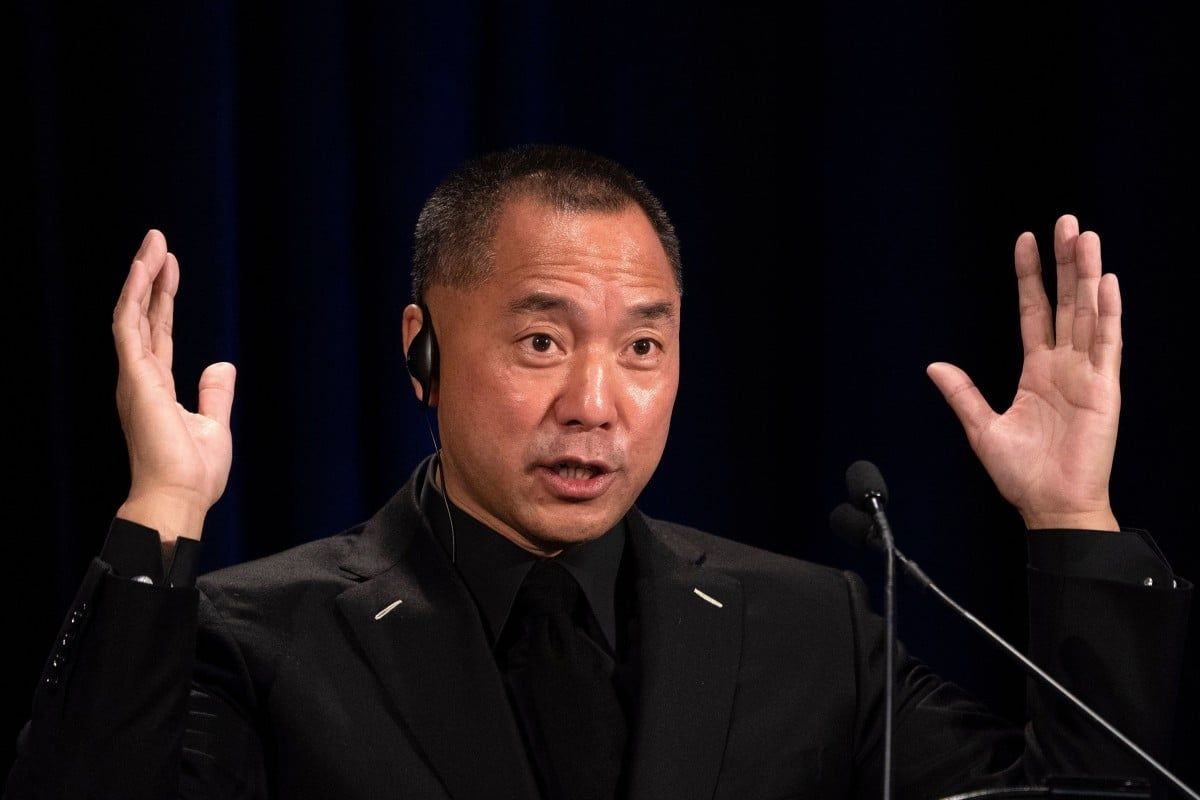
A self-exiled Chinese billionaire once counted among the world's wealthiest individuals has been handed a 30-year prison sentence in New York for perpetrating one of the most elaborate financial frauds in recent US history. Guo Wengui, who abandoned China a decade ago and reinvented himself as an outspoken critic of the Communist Party, was convicted of defrauding over 1,000 investors across multiple continents of hundreds of millions of dollars through an intricate web of bogus investment schemes. Judge Analisa Torres, presiding over the Manhattan courtroom crowded with Guo's supporters, characterized his conduct as a calculated predation on individuals desperate to bring democratic change to China, manipulating their idealism to finance an extraordinarily extravagant lifestyle.
The scope of Guo's criminal enterprise extended across multiple fraudulent entities established between 2018 and 2023. His schemes encompassed his media company GTV Media Group Inc., the so-called Himalaya Farm Alliance, and the Himalaya Exchange, through which he successfully convinced hundreds of thousands of people to invest more than one billion dollars in total. Prosecutors demonstrated at trial that Guo deliberately misrepresented these ventures to potential investors, systematically concealing the true nature of these operations and diverting funds to support his personal indulgence rather than the stated business objectives.
Guo's conviction on nine of twelve criminal charges culminated a seven-week trial that meticulously documented his deceptive practices and the devastating consequences inflicted upon his victims. During sentencing, the judge reviewed correspondence from individuals whose life savings had evaporated through his fraud, many reporting severe psychological distress, shame, and irreparable family relationships fractured by poor investment decisions made under his influence. One victim, Wei Chen, testified to the tribunal that Guo's actions had fundamentally destroyed both her life and that of her family. The court ordered Guo to forfeit 889 million dollars in restitution, though victims acknowledge recovery prospects remain uncertain.
The scale of Guo's illicit wealth accumulation funded what prosecutors characterized as a lifestyle of breathtaking excess. His Manhattan residence overlooked Central Park, and he had acquired membership at President Donald Trump's Mar-a-Lago golf club in Florida. His acquisitions reportedly included multiple mansions, luxury yachts, high-performance race cars, and extensive collections of designer garments and furnishings. This ostentatious display of wealth contrasted sharply with the financial devastation inflicted upon his defrauded investors, many of whom had been motivated by Guo's messaging appealing to their democratic aspirations and commitment to opposing authoritarian governance.
Before his arrest and detention without bail three years ago, Guo had cultivated a conspicuous presence within American political and business circles. He developed an unusually close relationship with conservative political strategist Steve Bannon, and together they publicly announced in 2020 a joint initiative aimed at overthrowing the Chinese government. His elevation within American conservative networks coincided with his transformation into a prominent public figure critical of Beijing, which paradoxically enhanced his credibility among investors who believed they were supporting both commercial ventures and geopolitical opposition to the Chinese Communist Party.
During his sentencing hearing, Guo protested his treatment while in custody, claiming he had been taken to a hospital early that Monday due to illness and disputing prosecutors' characterization of him as simulating medical conditions. He described arriving at the courthouse in distress and made references to repeated nausea, though the court's assessment of these claims was evident in the severity of the imposed sentence. Guo briefly addressed the charges against him, asserting that his original motivation in relocating to the United States was to oppose and ultimately destroy the Communist Party, an argument the judge plainly rejected given the evidence of systematic deception and personal enrichment.
Judge Torres highlighted Guo's complete absence of remorse throughout the legal proceedings. She noted that he continued to deny responsibility for his actions, insisting implausibly that his conduct had caused no financial loss and harmed no victims. Furthermore, the court documented instances in which Guo had encouraged his supporters to harass and intimidate individuals who spoke publicly against him, demonstrating a pattern of intimidation extending beyond his financial crimes. This behavior complicated any narrative suggesting that his conduct was merely misguided business practice rather than calculated fraud motivated by personal greed.
Guo's defense team constructed their arguments around claims of persecution by the Chinese Communist Party, alleging that Beijing had orchestrated a comprehensive campaign against him spanning multiple continents and allegedly recruiting influential figures within American business, entertainment, and political spheres to conspire against him. His lawyers contended that a lengthy prison sentence would validate China's smear campaign and potentially encourage further efforts to eliminate Chinese dissidents from public life. They referenced medical records documenting physical scars and disfigurements from torture allegedly endured in China and requiring surgical repair between 1993 and 2022, attempting to contextualize his actions within a broader narrative of victimization and persecution.
The defense maintained that Guo's substantial wealth had originated legitimately, arising from his family's position as the largest shareholder of China's largest publicly traded securities company. According to his legal representatives, he subsequently became a target of Chinese government officials after exposing their corruption, eventually relocating successively to Hong Kong, London, and ultimately New York in 2017. Chinese authorities have formally accused Guo of rape, kidnapping, bribery, and various other serious offenses, though Guo has consistently denied these allegations as politically motivated fabrications designed to silence his opposition activities.
China's Ministry of Foreign Affairs acknowledged Guo's sentencing and reiterated that he remains wanted by the Chinese government under an Interpol Red Notice, which constitutes a request to international law enforcement agencies to arrest him pending potential extradition proceedings. This international dimension introduces significant complexity to Guo's case, as the Chinese government simultaneously pursues him through international legal mechanisms while the United States has convicted and incarcerated him for fraud. The intersection of these criminal proceedings highlights the broader challenges that arise when political dissidents establish themselves in Western jurisdictions, particularly when their entrepreneurial activities cross the line into transparent criminality.
For Southeast Asian observers, particularly those in Malaysia, the Guo case illuminates important cautionary lessons regarding investment schemes targeting diaspora communities and politically motivated donor bases. Individuals promoting political causes against authoritarian regimes, whether in China or elsewhere, can exploit legitimate ideological sympathies to justify financial arrangements that lack genuine transparency or legitimate underlying business operations. The revelation that thousands of investors willingly transferred billions of dollars to entities controlled by someone with a compelling political narrative but no demonstrated legitimate business acumen suggests vulnerability within diaspora financial networks to sophisticated fraud schemes that weaponize political ideology.
The sentencing also underscores the comparative robustness of American judicial systems in prosecuting financial crimes, contrasting sharply with different approaches taken in other jurisdictions. Despite Guo's connections to prominent American political figures and his success in cultivating a sympathetic public narrative, federal prosecutors maintained sufficient independence and evidentiary standards to secure convictions and impose meaningful penalties. This outcome, however, arrived only after substantial harm had already been inflicted upon victims who lost life savings and experienced profound personal trauma. The case serves as a reminder that even within developed democracies with sophisticated regulatory frameworks, determined fraudsters can exploit legal vulnerabilities and cultural sympathies to accumulate substantial resources before facing accountability.

