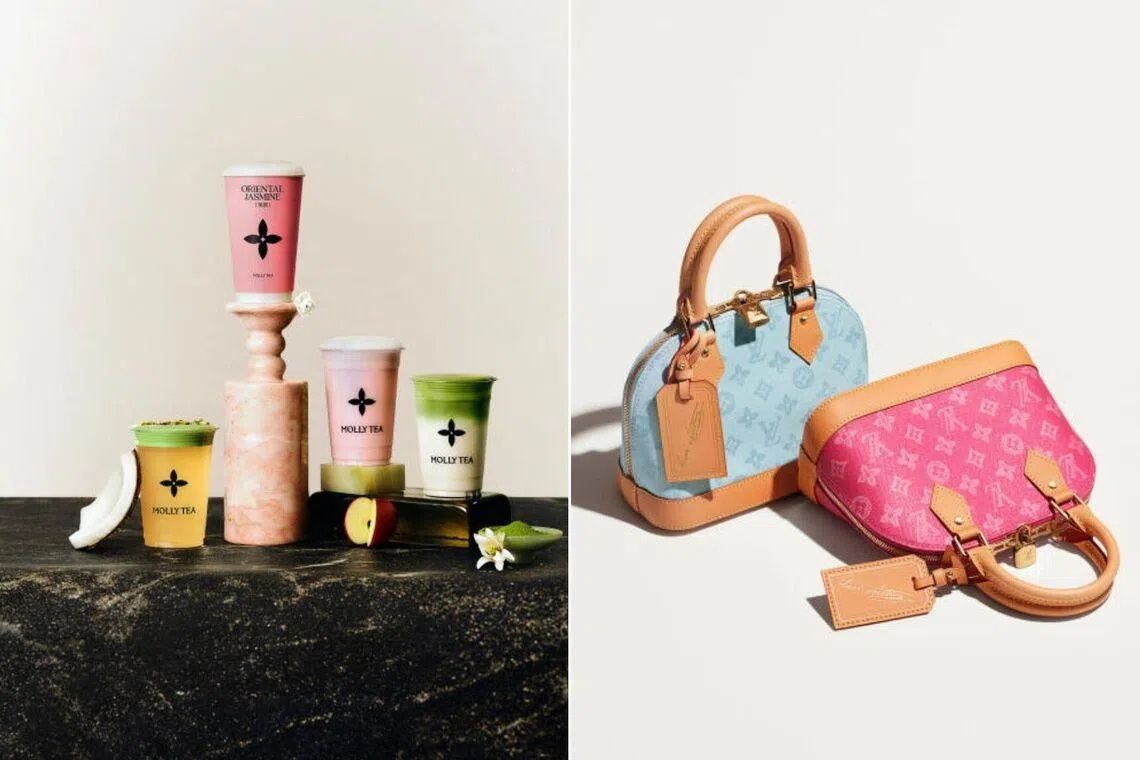
The Suzhou Intermediate People's Court in Jiangsu province has delivered a significant ruling in a high-profile intellectual property dispute between a popular Chinese milk tea chain and French luxury conglomerate Louis Vuitton, ordering Molly Tea to cease trademark infringement and compensate the fashion house with 10.3 million yuan, equivalent to approximately US$1.5 million. The judgment, handed down on June 29 following proceedings initiated by Louis Vuitton in May 2025, has ignited substantial public discourse across Chinese social media platforms regarding the boundaries of trademark protection, the role of cultural heritage in commercial branding, and fair competition in the crowded beverage sector.
According to court documentation, the Shenzhen-based Molly Tea and its affiliated Suzhou franchise location had infringed upon seven of Louis Vuitton's registered four-petal flower graphic trademarks. Beyond the financial penalty, the tea company must issue a public apology and has indicated its intention to appeal the decision to a higher judicial authority. The case represents a clash between a rapidly expanding domestic enterprise seeking to establish brand identity through floral motifs and an internationally recognised luxury brand fiercely protecting its iconic visual assets.
Molly Tea's branding strategy had involved submitting multiple trademark applications to the China National Intellectual Property Administration beginning in March 2024, predominantly featuring floral designs across various classifications including restaurant services, accommodation, advertising, and food products. Most applications encountered rejection from intellectual property authorities, with only the trademark bearing the Chinese characters for "Molly Tea" achieving successful registration. This pattern of rejections suggested that intellectual property examiners had already identified potential conflicts with existing marks, yet the dispute ultimately required judicial resolution.
The case has captured unprecedented public attention within China's digital ecosystem. A hashtag relating to the Louis Vuitton lawsuit against Molly Tea accumulated over 360 million views on social media platforms, while a related topic discussing the invalidation of the tea brand's disputed trademark garnered more than 18.7 million reads. This viral engagement reflects broader societal interest in intellectual property matters, particularly when they involve recognisable consumer brands and questions about cultural ownership in the commercial sphere.
Public sentiment online remains markedly divided, with legitimate arguments presented across competing perspectives. Some observers contend that Molly Tea's floral emblem bears striking visual similarity to the French luxury brand's signature pattern, constituting clear trademark mimicry that could confuse consumers. Others maintain that substantial visual differences exist between the designs and question the relevance of market overlap, given that Louis Vuitton operates primarily in luxury goods while Molly Tea serves the mass-market beverage sector. A notable contingent of commentators has challenged Louis Vuitton's claim to originality itself, suggesting that the fashion house's distinctive pattern may derive inspiration from traditional Chinese cultural motifs that predate modern trademark systems.
Kang Lixia, a partner at Beijing Standzer IP Firm, has provided expert analysis indicating that appeal success hinges significantly on the appellant's capacity to furnish compelling evidence of design originality and distinctiveness. She has emphasised that floral patterns and artistic designs rooted in traditional Chinese cultural heritage constitute public domain resources available for utilisation by all parties. However, she clarified that China's trademark registration system operates on a "first to file" basis, meaning that when multiple entities seek to register identical or substantially similar marks for comparable goods or services, the earliest applicant secures exclusive trademark rights whilst subsequent applications face rejection.
A crucial aspect of Chinese trademark law that favours Louis Vuitton involves the doctrine of cross-class protection for exceptionally well-known marks. Although Molly Tea and Louis Vuitton operate in technically different product classifications, the French luxury brand's status as an earlier-registered and globally recognised trademark entitles it to protection extending beyond its primary product categories. This principle creates considerable challenges for later applicants attempting to register similar designs, even in sectors unrelated to the original trademark holder's business activities, thereby establishing a substantial legal hurdle for Molly Tea's appeal prospects.
Liu Bin, an intellectual property attorney from Beijing Zhongwen Law Firm, has advocated for a balanced and rational examination of the dispute whilst noting that trademark protection for figurative marks does not necessitate complete identity between the disputed design and the registered trademark. Instead, the decisive legal question centres on whether average consumers would likely experience confusion when encountering the two marks. Liu has identified a fundamental public concern regarding the appropriate mechanisms for protecting and utilising traditional Chinese cultural patterns, with many citizens believing that such elements should not become subject to exclusive proprietary claims.
The central tension in this dispute reflects a broader challenge facing intellectual property systems across Asia, particularly in Southeast Asia where Chinese cultural motifs carry significant historical and artistic importance. Liu emphasises that although traditional cultural patterns should remain accessible for general use and artistic development, commercial brands employing these elements must scrupulously avoid creating market confusion or directly replicating earlier registered trademarks. The distinction between using public cultural resources legitimately and infringing upon established brand identity through visual similarity represents the core analytical question that courts must navigate.
For Malaysian and regional readers, this case carries implications beyond trademark law, touching upon questions of cultural appropriation, fair competition standards, and the balance between international intellectual property enforcement and local commercial interests. As Asian companies increasingly expand across borders and establish international brand identities, understanding how courts in major markets like China interpret trademark disputes becomes essential. The ruling demonstrates that courts will protect well-established brands against visual similarity, regardless of market sector differences or disputed claims about cultural origins, establishing precedent that companies seeking to build distinctive brand identities through traditional design elements must demonstrate genuine originality and differentiation.
Molly Tea's decision to pursue appeal proceedings suggests the company and its legal advisors believe material grounds exist to challenge the court's determination of trademark confusion and infringement. The appellate process will likely delve deeper into questions regarding the distinctiveness of the four-petal flower design in contemporary commercial contexts, the visual differences between the competing marks when viewed by ordinary consumers, and the extent to which Louis Vuitton's brand recognition justifies cross-category protection. As this dispute progresses through higher courts, it will establish important precedents affecting how rapidly expanding Asian beverage and consumer goods companies can develop visual branding strategies utilising traditional cultural elements.
The broader implications of this judgment extend to intellectual property strategy across the region. Companies developing brands must conduct thorough searches of existing registered marks before settling on distinctive visual elements, particularly when those elements incorporate culturally significant or common design motifs. The case also underscores the importance of working with qualified intellectual property counsel during brand development stages, as early guidance could have identified potential conflicts and steered Molly Tea toward genuinely distinctive design alternatives. For international brands operating in Asian markets, the ruling reinforces the principle that intellectual property rights once established enjoy substantial protection, even against competitors in entirely different commercial sectors.

