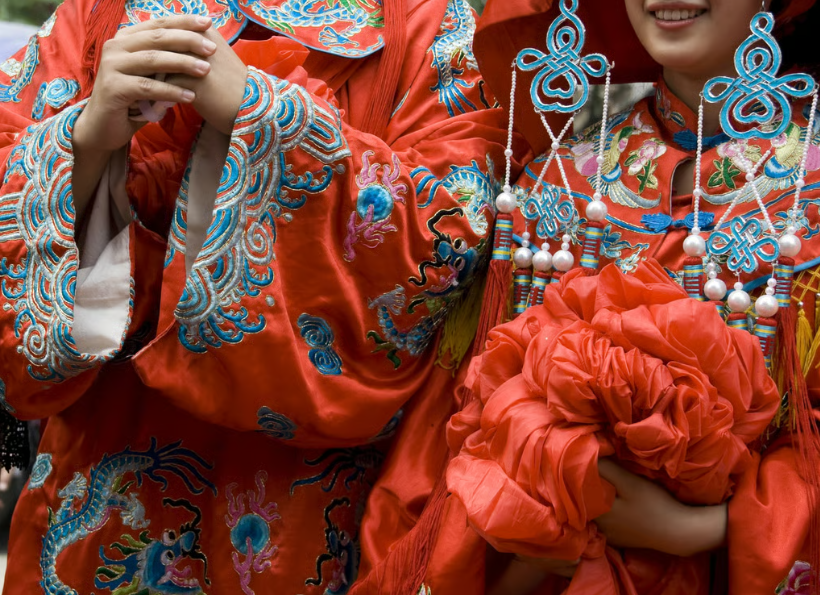
A court in Henan province's Ruyang county has delivered a landmark judgment that underscores growing judicial concern over the dangers posed by wedding hazing traditions in China. The verdict, made public in early July, found the newlywed couple and nine individuals involved in the incident jointly liable for injuries sustained by a bridesmaid during what began as conventional wedding festivities but rapidly deteriorated into reckless conduct. The case reflects an intensifying pattern of litigation across China as participants in these celebrations increasingly face legal consequences for injuries resulting from pranks that exceed the bounds of reasonable fun.
The incident unfolded on October 4, 2023, when a woman surnamed Zhang attended her friend Li's wedding as a bridesmaid. During the reception, Zhang found herself isolated in a bedroom with approximately ten men, predominantly groomsmen. When Zhang sought refuge by hiding in a cabinet, one of the groomsmen identified as Wang Moubing forcibly removed her and thrust her onto the bed. What followed was a dangerous stunt orchestrated by Wang, who proposed that the assembled men hoist Zhang skyward using the corners of a bedsheet, a form of improvised tossing that has become notorious in contemporary wedding celebrations.
The initial throw proceeded without incident, with the men successfully catching Zhang as she descended. However, during the second iteration of this risky maneuver, coordination among the participants collapsed catastrophically. Zhang plummeted to the floor with considerable force, resulting in immediate and severe injury. Notably, when the groom's aunt witnessed the escalating recklessness and intervened verbally to caution the group against permitting the jest to progress further, her admonition was disregarded entirely. Only when a man surnamed Hu, who had deliberately refrained from participating in the hazing, carried Zhang downstairs did the situation receive proper attention. An ambulance was summoned, and Zhang was transported to hospital where she remained under treatment for eighteen days.
The medical consequences proved grave. Diagnostic imaging revealed a lumbar vertebral fracture—a serious injury affecting the lower spine. Later that year, in August 2024, forensic assessment determined that Zhang qualified for grade nine disability status, representing a substantial level of impairment. The injury trajectory transformed Zhang's situation from a momentary mishap into a chronic condition with long-term implications for mobility and quality of life. Confronted with both immediate medical expenses and the prospect of enduring physical limitations, Zhang pursued legal redress, initiating court proceedings against the bride, groom, and the nine individuals present during the incident. She demanded compensation totalling 270,000 yuan, equivalent to approximately US$40,000.
The judicial determination addressed the question of accountability across multiple categories of defendants. The court concluded that the newlywed couple bore significant responsibility as the primary organizers of the event. Crucially, the judgment established that they possessed prior awareness that wedding hazing activities were occurring yet failed to intervene promptly to prevent escalation. This finding represents a notable development in Chinese jurisprudence, placing an affirmative duty on event organizers to actively monitor and curtail potentially dangerous conduct rather than passively permitting it to unfold. Wang Moubing, identified as the individual who initiated the most dangerous phase of the prank, was held to a heightened standard of culpability given his instrumental role in both removing Zhang from the cabinet and proposing the bedsheet tossing.
The remaining eight groomsmen faced joint and several liability based on the court's reasoning that they could not substantiate their non-participation through credible evidence. The judicial burden thus shifted to defendants to affirmatively demonstrate innocence rather than requiring prosecutors to establish guilt beyond reasonable doubt for each individual participant. This approach effectively created an incentive structure encouraging participants in group activities to either clearly document their abstention or face presumptive liability. The court's apportionment of financial responsibility reflected these varying degrees of culpability: the couple were ordered to contribute 90,000 yuan, representing forty percent of the total; Wang Moubing was assigned approximately 50,000 yuan reflecting his initiator status; and the eight other individuals were collectively required to pay 90,000 yuan.
The hun nao tradition, as this form of wedding hazing is termed in Chinese, possesses deep historical roots extending back millennia. Originally conceived as a mechanism to generate celebratory atmosphere and symbolically repel malevolent spirits, the ritual maintained cultural legitimacy across generations through its association with prosperity and protection. Contemporary manifestations persist throughout numerous regions of China, where variations continue to feature prominently in marriage ceremonies. However, the tradition has undergone significant social reevaluation in recent decades as documented cases increasingly demonstrate that such practices frequently devolve from playful teasing into scenes of genuine humiliation, psychological distress, and physical trauma. Bridesmaids and newlywed couples constitute the principal targets, though their vulnerability to injury creates asymmetrical power dynamics that complicate genuine enjoyment.
This judgment arrives within a context of accelerating legal precedent addressing wedding-related injuries. The problem has proven sufficiently prevalent to generate recurring headlines and courtroom proceedings. In 2018, a bridegroom in Guizhou province sustained multiple traumatic injuries when he was struck by a vehicle on an expressway while attempting to evade the wedding hazing activities targeting him. More recently, another groom in the same province fractured his leg while fleeing similar celebrations, subsequently obtaining a court order requiring the perpetrators to provide 50,000 yuan in compensation. These incidents demonstrate that the dangers extend beyond isolated accidents to encompass life-threatening scenarios where participants suffer injuries of sufficient severity to warrant hospitalization and leave lasting physical consequences.
The Ruyang court's decision carries significance beyond its immediate parties, functioning as a cautionary precedent that may influence the behavior of future wedding participants across the region. By explicitly holding organizers accountable and establishing presumptive liability for group participants, the judgment creates legal incentives for intervention and restraint. The verdict effectively communicates that aesthetic traditions cannot justify physical harm, and that celebration need not require the infliction of injury. For Malaysian and Southeast Asian observers, the case illuminates how legal systems respond when cultural practices generate measurable harm. While Chinese wedding traditions differ substantially from Malaysian customs, the underlying judicial principle—that organizers bear responsibility for participant safety and that preventable injuries warrant substantial compensation—applies across diverse cultural contexts. The judgment suggests an emerging international legal consensus that entertainment and tradition lose legal protection once they cross into genuine endangerment.

