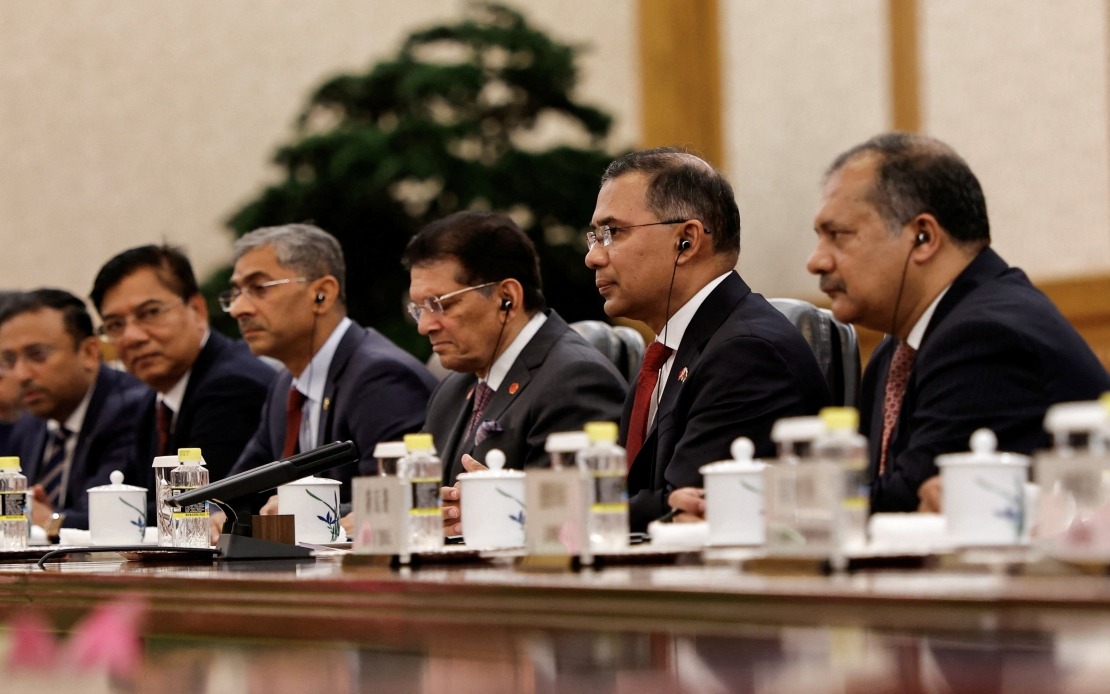
During a five-day visit to China from June 22 to 26, Bangladesh's Prime Minister Tarique Rahman secured commitments from twelve Chinese enterprises to channel US$9.2 billion into various sectors of his nation's economy. The investment slate encompasses infrastructure modernisation, renewable energy development, waste management, and logistical expansion—sectors that Bangladesh has identified as critical for boosting economic growth and regional competitiveness. These proposals signal deepening economic ties between Dhaka and Beijing at a time when both nations are pursuing strategic economic partnerships across Asia.
The breadth of the proposed investments reflects a deliberate effort by Bangladesh to diversify its economic base and address infrastructure bottlenecks that have long constrained manufacturing and trade. Energy security remains paramount for Bangladesh as it faces growing electricity demand; hence the inclusion of power generation and gas exploration projects demonstrates a pragmatic approach to meeting these needs whilst simultaneously reducing dependence on costly imported fuels. The scale of these commitments—ranging from several hundred million to billions of dollars per project—underscores Chinese corporate appetite for long-term positioning in South Asian markets, particularly as geopolitical tensions create uncertainty elsewhere.
The flagship infrastructure project comes from Sichuan Road and Bridge Group, which has committed US$4.5 billion to develop the critical Dhaka-Chattogram highway through a public-private partnership model. This corridor links Bangladesh's capital to its largest port city and serves as the economic lifeline of the nation. Upgrading this vital artery could substantially reduce freight transit times, lower logistics costs, and catalyse commercial activity across the country. For regional observers, this project exemplifies how Chinese companies are positioning themselves as essential partners in modernising Southeast Asian and South Asian transportation networks—a strategic advantage that extends Beijing's economic influence throughout the region.
Port development emerges as another strategic focus within the investment framework. China Civil Engineering Construction Corporation has pledged US$650 million to develop and operate the Mongla Port Economic Zone, encompassing warehousing and logistics infrastructure. Mongla Port, located approximately 230 kilometres south of Dhaka on the Bay of Bengal, has historically remained underdeveloped relative to its geographic potential. Modernising this facility could redirect maritime traffic away from congested Chattogram Port and create a second major trading hub, reducing infrastructure strain and distributing economic benefits more widely across Bangladesh's coastal regions. The joint decision by both governments to modernise and expand Mongla Port facilities signals recognition that port capacity expansion is essential for handling future trade volumes.
Environmental remediation and renewable energy projects constitute a significant portion of the proposed investments, reflecting both global sustainability imperatives and Bangladesh's own needs. Shanghai SUS Environment Company plans a US$890 million investment in waste-to-energy plants, addressing the mounting municipal waste challenge facing Bangladesh's rapidly urbanising centres. Simultaneously, Huaxin Textile Industry Company has proposed establishing a 200 megawatt captive solar power facility within the Payra economic zone whilst expanding textile manufacturing capabilities with a US$190 million commitment. These parallel initiatives demonstrate how Chinese investors are seeking to combine environmental compliance with economic expansion—a model that could serve as template for other developing economies grappling with balancing growth and sustainability.
The e-waste management proposal from Zhongxin Environmental Protection Group, valued at US$1.65 billion and targeted at the Payra Port Industrial Zone, addresses a critical environmental concern for South Asia. Electronic waste from discarded consumer goods and industrial equipment represents both an environmental hazard and a potential resource if properly processed and recycled. Bangladesh's burgeoning electronics consumption means e-waste volumes are rising sharply; establishing processing capacity domestically rather than exporting waste to other nations serves both environmental and economic interests. This project exemplifies how investment can simultaneously address environmental challenges and create industrial value chains.
Manufacturing diversification receives attention through multiple proposals reflecting sectoral gaps in Bangladesh's current industrial base. Shenzhen Kaifa Technology's US$250 million electric smart metre manufacturing initiative positions Bangladesh as a supplier for regional meter demand as smart grid technologies expand across Asia. China Future Energy Group's US$250 million gas field exploration and development project leverages Bangladesh's existing hydrocarbon resources whilst building technical capacity. SF Express's US$180 million cold-chain logistics infrastructure investment in Mongla addresses a critical weakness in Bangladesh's food supply chain, enabling temperature-controlled distribution of perishable goods across the country and region.
The creation of a dedicated Chinese industrial park in Chattogram represents institutional deepening of economic integration. Such parks, common throughout Southeast Asia, function as incubators for industrial clustering, technology transfer, and export-oriented manufacturing. A Chinese industrial park would house multiple enterprises within a managed ecosystem offering shared utilities, streamlined customs procedures, and specialised services—creating economies of scale that benefit resident companies whilst generating employment and tax revenue for the host nation. For Bangladesh, such facilities reduce friction in doing business with Chinese partners and potentially attract additional Chinese investment beyond the currently proposed US$9.2 billion.
From Bangladesh's perspective, these investments directly address stated policy objectives. Commerce Minister Khandakar Abdul Muktadir explicitly noted that expanded Chinese investment would help reduce Bangladesh's chronic trade deficit with China—a long-standing concern for Dhaka policymakers. Bangladesh imports considerably more from China than it exports, creating pressure on foreign exchange reserves and the balance of payments. By directing Chinese capital into Bangladeshi infrastructure and manufacturing, the investment slate promises to boost export capacity and potentially rebalance bilateral trade dynamics. Creating tens of thousands of jobs across multiple sectors would simultaneously address unemployment concerns and generate tax revenue for Bangladesh's government.
For the broader Southeast Asian region, Bangladesh's investment boom carries spillover implications. As Bangladesh industrialises and modernises its infrastructure, it becomes a more attractive market for regional exports and a more competitive manufacturing location. Improved port facilities benefit not just Bangladesh but neighbouring countries seeking alternative shipping routes. However, the concentration of Chinese investment in Bangladesh also illustrates how Beijing's capital deployment shapes regional economic architecture—decisions made in Chinese boardrooms reverberate through South Asian development patterns. Malaysia and other regional nations compete for similar investment flows, making Bangladesh's success in attracting Chinese capital both instructive and cautionary.
The joint communiqué issued at the conclusion of Prime Minister Tarique Rahman's visit articulated a comprehensive cooperation framework encompassing trade, e-commerce, industrial and supply chains, and investment. This language suggests the US$9.2 billion in proposed investments represents the initial tranche of a longer-term strategic relationship. The emphasis on upgrading Bangladesh's export capacity and jointly upholding the multilateral trading system reflects alignment between Dhaka's and Beijing's economic philosophies—both favouring managed integration into global supply chains rather than protectionist isolation. For Malaysian policymakers and businesses, understanding the terms and trajectory of Bangladesh-China economic cooperation provides benchmarking data on Chinese investment patterns and partnership expectations in South Asia.
Implementation remains critical. Proposed investments frequently encounter delays or revisions as projects navigate feasibility studies, environmental assessments, regulatory approvals, and political dynamics. The track record of Chinese investment execution in South Asia demonstrates both impressive completion of flagship projects and instances where commitments faced obstacles or modifications. Bangladesh's institutional capacity to manage large-scale infrastructure projects, coordinate across multiple government agencies, and maintain project timelines will determine whether the US$9.2 billion commitment translates into actual capital inflows and completed facilities. Close monitoring of project progression will reveal whether these investments materialise at anticipated scales and timelines, offering insights into Bangladesh's economic trajectory and broader Chinese investment patterns throughout Asia.

