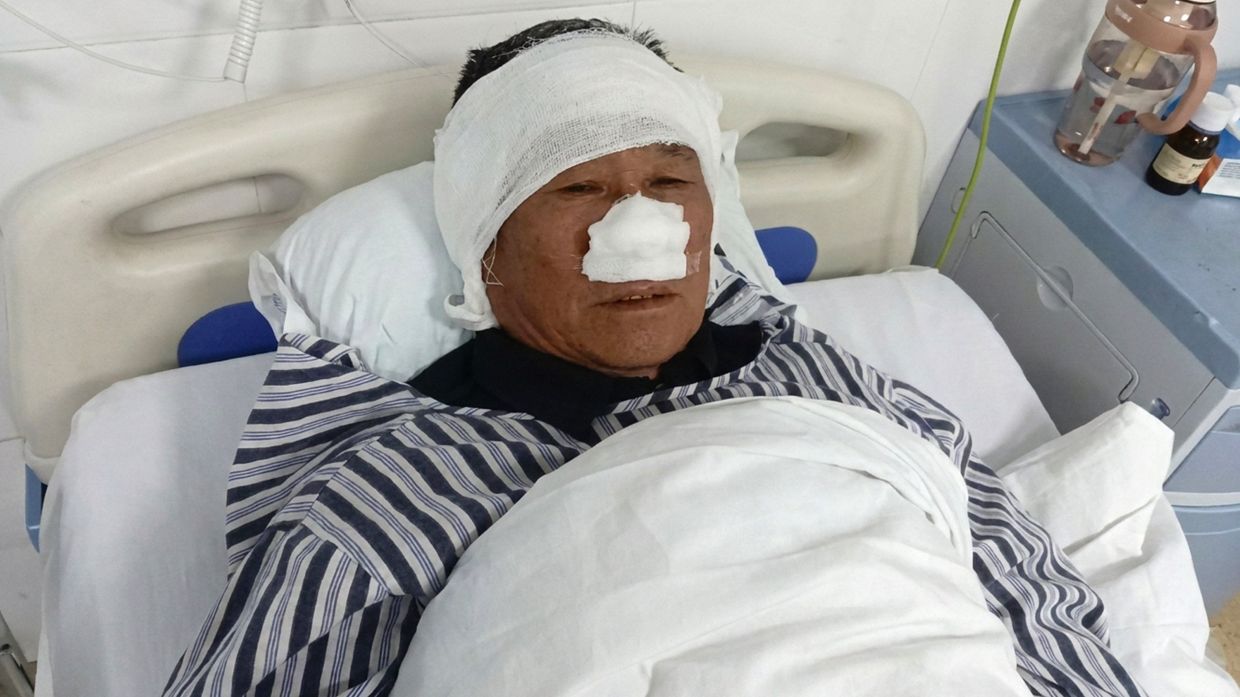
A 69-year-old man from central China has been formally recognised as a national hero by the Chinese government following a harrowing incident in which he sacrificed his nose to save a woman from violent assault. Zeng Fanlin, a former village official and community mediator from Chenzhou in Hunan province, was named among 86 people in Beijing's latest list of "national heroes for a just cause" announced on July 9.
The dramatic intervention unfolded in April when a man in his twenties arrived in the village and began terrorising residents, attacking passersby indiscriminately and kicking at doors. The escalating violence reached a critical point when the assailant stopped a woman riding an electric bicycle and gripped her around the neck, creating an immediate threat to her life. Despite the danger, nearby residents held back from physical intervention, instead calling emergency services while the woman struggled for her safety.
Without hesitation, Zeng rushed towards the attacker and tackled him to the ground. Two other villagers quickly arrived to assist, and together the three men managed to restrain the increasingly violent suspect. During this desperate struggle, the attacker turned to biting and savagely tore away a substantial portion of Zeng's nose. Undeterred by the excruciating injury and significant bleeding, Zeng maintained his grip on the attacker until police arrived at the scene. The suspect was arrested and placed in custody while Zeng was immediately transported to hospital for emergency treatment.
The severity of Zeng's facial injury posed substantial medical challenges. Hospital doctors determined that most of his nose had been lost, making surgical reconstruction a complex undertaking with uncertain outcomes. Medical professionals warned that Zeng would likely face long-term complications, including ongoing pain and permanent scarring, even after successful reconstructive procedures. The initial treatment plan, detailed by People's Daily, required at least six months of recovery and involved multiple surgical interventions. The total medical costs exceeded 70,000 yuan, equivalent to approximately US$10,000, which local authorities subsidised through government support schemes.
Zeng has since undergone two major reconstructive surgeries performed by his medical team. Surgeons utilised an innovative approach, harvesting skin grafts from his own scalp to rebuild the nasal structure and restore the wings of his nose. While these procedures have successfully restored his ability to breathe normally, Zeng continues to experience daily pain from the injury. His physical recovery, though remarkable given the extent of the trauma, serves as a permanent reminder of his selfless action. When reflecting on his sacrifice, Zeng demonstrated remarkable philosophical acceptance, telling local media that compared to preserving another person's life, his personal losses were entirely justified.
Zeng's willingness to place himself in harm's way reflects a deeply held personal philosophy shaped by his own difficult early life. Orphaned during childhood, he survived only because villagers in his community extended help and care to him. Later, local government authorities provided him with free education, giving him opportunities he might otherwise never have had. This experience of receiving support when most vulnerable instilled in Zeng a powerful commitment to reciprocating that kindness by serving and protecting his own community. His daughter has characterised him as a man driven by an unshakeable moral compass, someone incapable of remaining passive when witnessing injustice or harm to others.
Zeng's heroic character extends beyond this single April incident. In 2016, he played a crucial role in apprehending a thief and assisting police, demonstrating a pattern of civic engagement and bravery spanning years. His work as a volunteer community mediator before the attack showed his consistent dedication to resolving conflicts and maintaining harmony among villagers. This long record of service to his community establishes him not as someone acting impulsively, but rather as an individual whose values and actions have remained constant throughout his adult life.
The attacker's eventual fate will be determined through the Chinese legal system, which provides severe penalties for such crimes. Under Chinese law, intentionally causing serious bodily injury carries potential prison sentences ranging from three to ten years, depending on the severity of harm inflicted and circumstances of the case. The investigation into the April incident remains ongoing, with police indicating that the suspect attacked multiple strangers after experiencing emotional distress that he could not manage. The woman whom Zeng rescued has chosen to remain out of public view and has made no public statements about her experience.
Beyond government recognition, Zeng received material support for his bravery from both private and philanthropic sources. The Alibaba Foundation and local media outlets presented him with 20,000 yuan as recognition of his heroic actions. This financial assistance, while modest compared to his medical expenses, represented a public acknowledgment that his sacrifice extended beyond his personal community and resonated more broadly across Chinese society.
The case has sparked considerable online discussion across Chinese social media platforms, where observers have celebrated Zeng's actions while calling for severe punishment of the attacker. One widely shared comment captured the sentiment: "Zeng is a true everyday hero. The attacker should be severely punished. Good people should not have to shed their blood in vain." This reaction underscores broader anxieties about public safety and social order, as well as societal appreciation for those willing to intervene when witnessing violence. For Malaysia and other Southeast Asian countries grappling with similar concerns about vigilance and community safety, Zeng's story raises important questions about the balance between individual responsibility and state protection, and the circumstances under which civilians should or should not intervene in violent confrontations.

