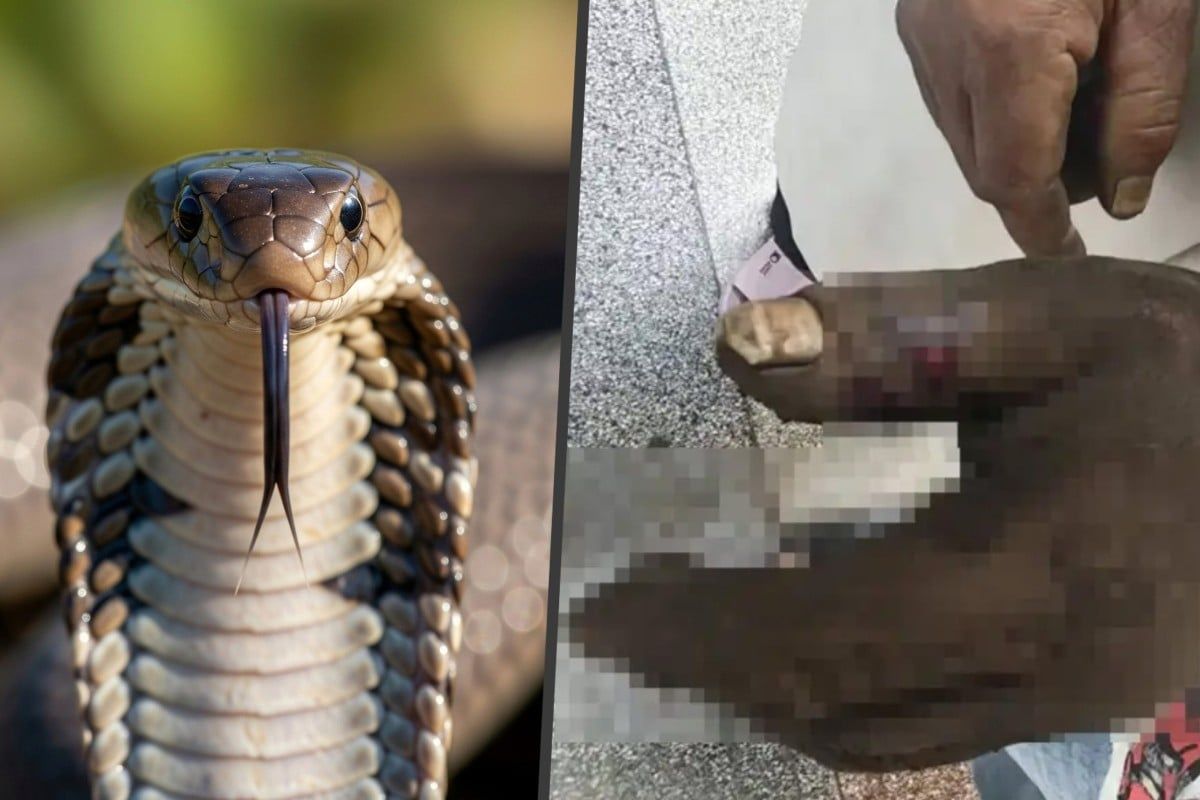
A woman in Yunnan province learned a painful lesson about the gap between television dramatisation and medical reality when her attempt to save her husband from a cobra bite resulted in her own hospitalisation. The incident unfolded in Yuanyang county in southwestern China when a farmer sustained a bite to his finger while working his field. Within moments of the injury, his wife took action based on rescue techniques she had witnessed on screen, directly applying suction to the wound without any protective measures in a desperate bid to extract the venom before it could spread through his body.
The farmer's condition deteriorated rapidly as the venom began taking effect. His finger swelled dramatically and he experienced dizziness and weakness, prompting his wife's decision to attempt the extraction method. Despite her intervention, he was rushed to hospital for proper medical care. However, the consequences of her well-intentioned rescue effort became apparent hours later when she began experiencing progressive symptoms of envenomation, including numbness spreading through her mouth, tongue, face and limbs. By the following day, the severity of her condition had escalated significantly, and concerned family members brought her to Honghe Prefecture No 3 People's Hospital alongside her husband.
Medical teams at the facility quickly diagnosed both patients with cobra poisoning and administered antivenom serum and supportive treatments. The couple recovered sufficiently to be discharged within several days, but the incident prompted hospital physicians to use their case as a teaching moment about widespread misconceptions surrounding snakebite first aid. The situation highlights how popular entertainment media can inadvertently propagate dangerous practices that place would-be rescuers at serious risk of injury.
Doctors explained that the oral mucosa—the soft tissue lining the mouth—contains an exceptionally rich network of small blood vessels called capillaries. When venom makes direct contact with this tissue, it can rapidly penetrate the bloodstream, poisoning the rescuer just as surely as it would the original victim. This physiological reality stands in stark contrast to the heroic scenes often depicted in films and television dramas, where protagonists successfully extract venom through suction without apparent consequence. The mouth's highly permeable nature makes it an ideal pathway for toxins to enter the circulation, transforming a rescue attempt into a medical emergency.
Beyond the suction technique, medical professionals stressed that snakebite wounds themselves present a challenge to any extraction effort. Snake fangs create puncture wounds resembling tiny pinholes, and the venom injected through these openings immediately begins diffusing into the subcutaneous tissues and bloodstream. By the time a rescuer attempts to extract it, the toxic compound has already started circulating and binding to nerve receptors and muscle tissues throughout the body. The window for any physical removal of venom is extraordinarily narrow, making suction techniques virtually ineffective in practice regardless of technique or timing.
The hospital's guidance extended to other common but equally problematic interventions. Cutting into the bite wound, a practice sometimes recommended in outdated first-aid instructions, poses severe risks including excessive blood loss and infection. The damaged tissue becomes vulnerable to bacterial colonisation, potentially leading to secondary infections that complicate recovery. Similarly, applying extreme heat or cold—such as using fire or ice on the injury site—can cause additional tissue damage without slowing venom circulation, and may even accelerate absorption through inflammation and increased blood flow.
Instead, medical authorities recommend a measured approach focused on minimising spread of the toxin and securing professional care. Individuals bitten by snakes should immediately contact emergency medical services rather than attempting home remedies. Keeping the bitten limb immobilised reduces muscular contractions that would otherwise pump venom through the lymphatic and circulatory systems more rapidly. Additionally, attempting to identify the snake species—by observing its colour, scale patterns, and head shape—provides invaluable information to treating physicians, who can then select the appropriate antivenom tailored to that specific species' toxin profile.
Snakebite incidents in China regularly capture public attention and spark online discourse, particularly when they occur in unexpected locations or among vulnerable populations. A notable case from May involved a secondary school student in Guangdong province who sustained a bite on school grounds in a grassy area. The adolescent initially downplayed the injury because he experienced no immediate pain and could not identify what had attacked him. Hours elapsed before he reported progressive neurological symptoms—limb numbness and blurred vision—to school staff, prompting urgent hospitalisation. The medical team subsequently revealed that a delay of just one to two additional hours would have been catastrophic, as respiratory paralysis would likely have rendered him unable to breathe without mechanical ventilation.
The Yunnan couple's experience resonated widely across Chinese social media platforms, generating reflective commentary on the reliability of information sources. Observers noted the dangers of accepting television portrayals as factual guidance, with one commenter remarking that entertainment media frequently misrepresents emergency medical procedures. Others took a more sentimental view, recognising the wife's actions as a testament to her devotion despite their ultimately harmful consequences. Such reactions underscore both the emotional resonance of the story and the public's hunger for accurate health information in an age of information abundance and misinformation.
For Malaysian and Southeast Asian readers, the incident carries particular relevance given the region's diverse snake populations and the prevalence of cobra species throughout the area. Rural communities in Malaysia and neighbouring countries face similar risks of snakebite incidents, and traditional remedies or improvised first-aid techniques remain disturbingly common. The case serves as a regional cautionary tale about the importance of modern medical knowledge dissemination, particularly in agricultural communities where snake encounters occur more frequently. Public health authorities across Southeast Asia would benefit from proactive educational campaigns that clearly communicate evidence-based snakebite protocols while dispelling the persistent myths perpetuated by popular media.

