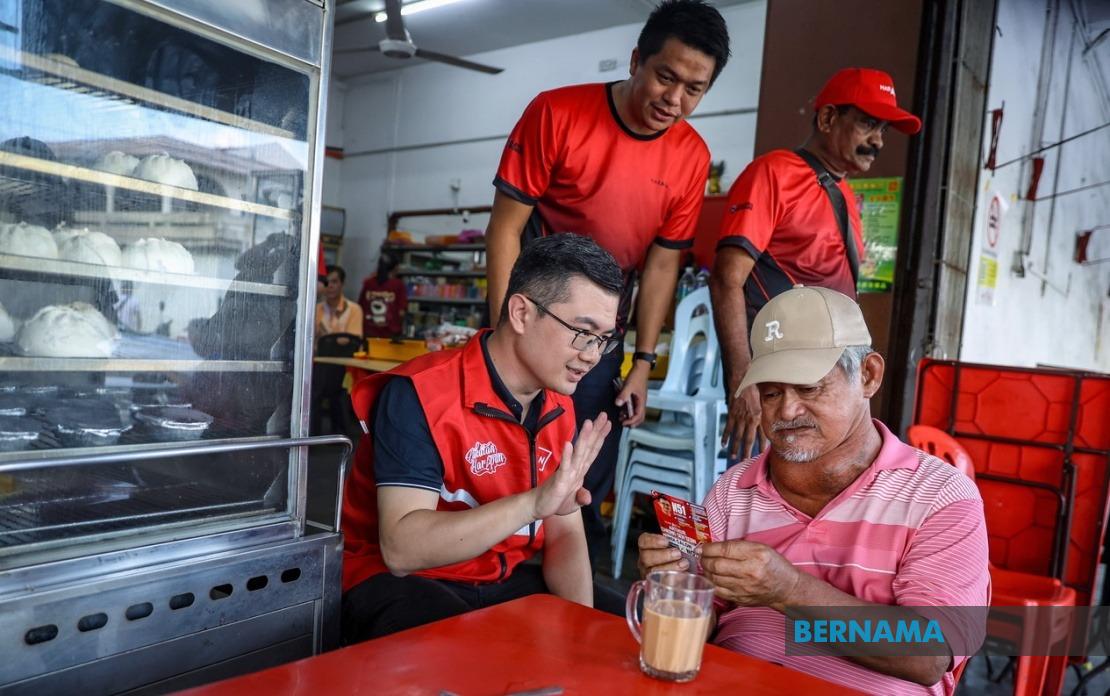
Arthur Chiong Sen Sern, the 36-year-old assemblyman for Bukit Batu, is entering the 16th Johor State Election on July 11 with an optimistic outlook, betting that his tangible contributions to the constituency over the past two years will secure him a stronger mandate than the razor-thin victory he achieved in 2022. The Pakatan Harapan candidate's confidence stems from consistent engagement with constituents across diverse backgrounds and his record of turning campaign pledges into concrete improvements for residents.
Chiong's previous triumph at the ballot box came with a margin so narrow it could easily have swung the other way. In the 15th state election held in 2022, he captured the Bukit Batu seat with merely 137 votes separating him from his closest rival, garnering 9,439 votes in a four-way race against Barisan Nasional's Datuk S. Suppayah, Perikatan Nasional's Tan Heng Choon, and Warisan's Lee Ming Wen. That slender victory served as both a sobering reminder of electoral vulnerability and a catalyst for sustained effort on the ground.
Since assuming office two years ago, Chiong has pursued a deliberate strategy of visible presence in his constituency, particularly in underserved areas. He has regularly visited Felda settlements to engage directly with residents, positioned himself as an accessible representative regardless of their political affiliation, and tackled practical grievances ranging from pot-holed roads to inadequate street lighting. His investment in community infrastructure demonstrates commitment beyond rhetoric—he funded RM20,000 for lighting installation at a futsal court in a young people's recreational area, a project that continues to deliver tangible benefits to users.
The assemblyman has also prioritised addressing chronic flooding issues that plague several neighbourhoods within his constituency. Kampung Rahmat and Kampung Seri Paya, historically vulnerable to flash floods, have experienced measurable improvements following collaborative efforts between his office and the Department of Irrigation and Drainage. Chiong's personal practice of arriving quickly at flood-affected areas to assist residents has strengthened his brand as a responsive public servant, creating lasting impressions among constituents who remember his presence during crises.
Beyond infrastructure and emergency response, Chiong has extended financial support to grassroots civil society organisations operating within Bukit Batu. This multipronged approach to constituency service—combining hard infrastructure, social welfare, and disaster response—has cultivated what he describes as positive community sentiment. He believes this accumulated goodwill, grounded in observable rather than promised achievements, positions him well against competitors in a more crowded 2024 race.
The political landscape in Bukit Batu has grown considerably more complex since 2022. This election will feature a four-cornered contest rather than the previous four-way battle, though with different contenders. Chiong faces R. Kumaran, representing Barisan Nasional and serving as PKR Kulai chief; M. Premanand, fielded by Ikatan Demokratik Malaysia-MUDA; G. Tamili, running for Bersama; and independent candidate Kamaruzaman Ali. The constituency itself encompasses 49,963 registered voters, making it a substantial electorate by state assembly standards.
Chiong has also benefited from institutional support at the highest echelons of his party. Prime Minister Datuk Seri Anwar Ibrahim, who also chairs Pakatan Harapan, personally endorsed Chiong's candidacy, a gesture signalling confidence in both his record and his electoral viability. In Malaysian politics, such backing from the national leadership carries symbolic weight and can translate into campaign resources, volunteer mobilisation, and positive media coverage that bolsters an incumbent's chances.
The timing of the election adds another dimension to Chiong's campaign strategy. Early voting is scheduled for July 7, allowing some constituents to cast ballots before the official polling day on July 11, which could work to his advantage given his ground organisation. The compressed campaign window requires efficient mobilisation, an area where sitting members typically enjoy logistical advantages over challengers.
Chiong's approach reflects a broader pattern among successful Malaysian politicians in competitive constituencies: building electoral dominance through consistent, visible service rather than relying solely on party machinery or national sentiment. His emphasis on addressing non-partisan concerns—flooded neighbourhoods affect voters regardless of their political colour, as do poorly lit streets or underutilised community facilities—creates a practical foundation for cross-community appeal. This strategy proves particularly valuable in mixed constituencies like Bukit Batu where diverse communities coexist.
The journey from a 137-vote victory to a confident defence suggests Chiong has learned crucial lessons about constituency representation. His willingness to invest time and resources in unglamorous but essential tasks—attending community gatherings, collaborating with government agencies on drainage, funding local amenities—creates the kind of incremental trust-building that translates into electoral resilience. Voters in democracies, including Malaysia, tend to reward representatives who deliver tangible improvements and demonstrate genuine accessibility.
However, Chiong's confidence must contend with unpredictable electoral dynamics. The fragmented opposition field could split anti-PH votes, potentially assisting the incumbent, or alternatively consolidate around a single challenger if opposition coordination improves during the final campaign phase. Moreover, broader state and national political currents could shift voter sentiment in ways difficult to predict from ground-level service records alone.
The Bukit Batu contest will serve as a litmus test for whether consistent constituency work and tangible development initiatives can overcome the narrow victory margin that defined Chiong's 2022 triumph. For broader Malaysian politics, the race demonstrates how local issues—infrastructure, public safety, community amenities—continue to weigh heavily in voter calculations, even as national controversies dominate headlines. Chiong's campaign is ultimately a wager that voters reward competence and accessibility over ideological positioning or partisan enthusiasm.

