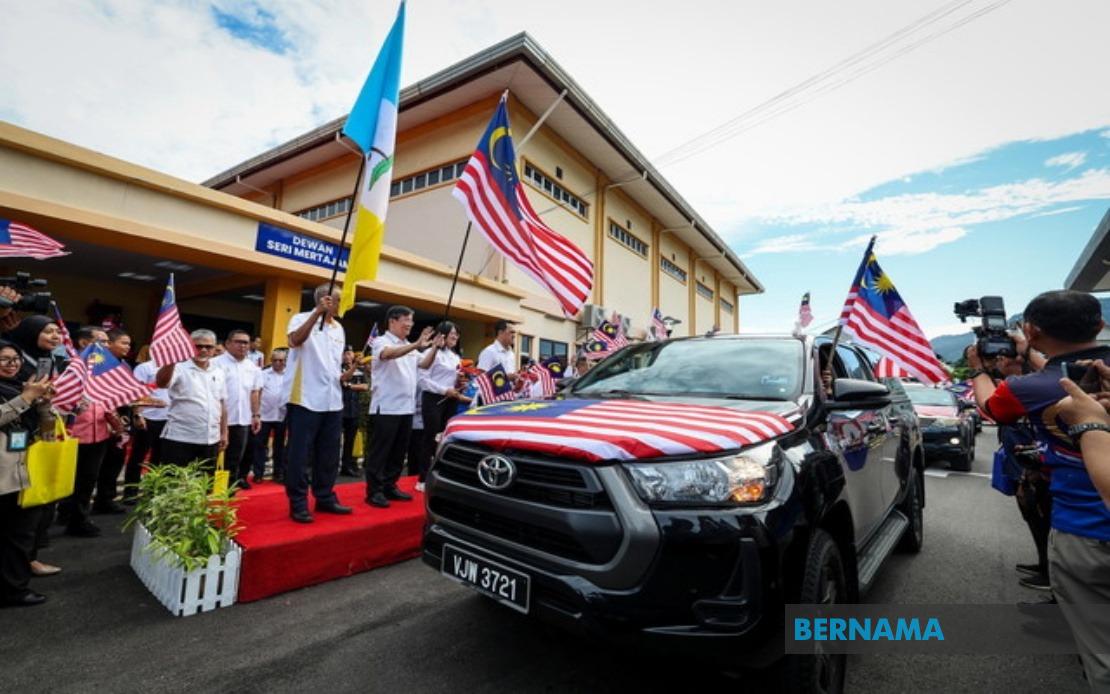
Penang Chief Minister Chow Kon Yeow has called on the people of the state to capitalise on National Month celebrations as a meaningful moment for renewing their bonds of national solidarity and demonstrating genuine patriotism. Speaking at the launch of Penang's state-level National Month festivities and the Fly the Jalur Gemilang campaign at the Central Seberang Perai District and Land Office on July 31, Chow emphasised that this annual observance represents far more than ceremonial observance—it is a critical occasion for Malaysians to reassess their commitment to the nation and reinvigorate shared determination to advance collective progress.
The Penang leader stressed that the campaign represents a symbolic moment for residents across all walks of life to demonstrate their pride in Malaysian identity and reaffirm their resolve to build the nation together. He encouraged individuals and organisations to view the month-long celebration not merely as a time-bound exercise but as a catalyst for fostering deeper connections across communities that might otherwise remain siloed. In his remarks, Chow articulated a vision of National Month as an opportunity to transcend the divisions that often characterise Malaysian public discourse and instead anchor discussion around shared national aspirations.
Crucially, Chow directed his message toward political leaders and institutional representatives, urging them to subordinate partisan interests to the overarching cause of national unity. He warned against the dangers posed by statements or actions that might sow doubt regarding public allegiance to the nation or its constitutional framework. This implicit criticism reflects broader concerns within Malaysian political circles about the potential for divisive rhetoric to erode the social fabric, particularly during sensitive periods when national consciousness is heightened. Chow's intervention suggests a deliberate effort by the Penang administration to position itself as a guardian of harmonious coexistence and stable governance.
The Chief Minister articulated a direct challenge to Malaysia's capacity to withstand internal discord. He contended that the nation cannot sustain actions that jeopardise established unity, and that instead all segments of society—from government to business to civil society—must concentrate their energies on consolidating social bonds and deepening institutional loyalty. This framing elevates national security concerns beyond traditional military definitions to encompass social cohesion and psychological commitment to the state as fundamental pillars of national resilience. For Malaysian readers, particularly those in Penang, this represents an implicit acknowledgement that economic development and administrative competence alone are insufficient without corresponding social stability.
Beyond his appeals for unity, Chow encouraged Penangites to display the national flag across residential properties, commercial establishments, workplaces, and vehicles throughout August. This visible manifestation of patriotism serves multiple functions: it creates a landscape of national symbols that reinforces collective identity, signals to international observers Malaysia's internal cohesion, and provides opportunities for families and workplaces to engage in common celebratory practices. By emphasising this tangible expression of patriotism, Chow moves beyond abstract exhortations toward concrete actions that residents can undertake, thereby converting sentiment into visible demonstration.
However, the Chief Minister delivered a more provocative message when he contended that patriotism must transcend its seasonal parameters and become embedded in daily conduct. He challenged Malaysians to examine how their individual choices—their integrity in professional roles, their commitment to preserving social harmony, their contributions to economic and social advancement—reflect or fail to reflect genuine patriotic sentiment. This reframing repositions patriotism from a matter of flag-flying and ceremonial participation to a comprehensive ethical framework governing quotidian behaviour. For Malaysian audiences accustomed to viewing National Month as primarily a time for public displays and official ceremonies, this represents a more demanding interpretation of national commitment.
The ceremonial launch itself involved symbolic gestures designed to amplify the campaign's reach and legitimacy. Chow distributed flags to representatives spanning state administration, federal agencies, and private sector organisations, a deliberate choice to demonstrate that patriotic commitment transcends organisational silos and governmental hierarchies. The subsequent departure of a 18-agency convoy proceeding across Penang's iconic Second Penang Bridge—a structure laden with its own symbolic significance as a feat of Malaysian engineering and infrastructure development—transformed the abstract campaign into a visible, kinetic expression of collective participation.
Interwoven with his patriotic messaging, Chow articulated the Penang government's development agenda, framing economic growth and technological advancement as expressions of national commitment. He referenced the Penang2030 Vision framework, emphasising that innovation, digital transformation, artificial intelligence integration, and sustainable development practices represent contemporary manifestations of nation-building. This linkage between technological progress and patriotic duty reflects broader Southeast Asian trends wherein governments position economic competitiveness as intertwined with national sovereignty and dignity. For Penang specifically, known as Malaysia's premier technology and manufacturing hub, this framing situates the state as instrumental to national aspirations.
The Chief Minister's emphasis on ensuring that economic growth's benefits reach all segments of Penang society addresses potential vulnerabilities in the state's development trajectory. Income inequality and uneven distribution of high-value employment opportunities have become contentious issues across Malaysia's more developed regions. By explicitly pledging that prosperity generated through technological advancement will be broadly accessible, Chow attempts to preempt social fractures that could undermine the unity he advocates. This represents sophisticated political communication, wherein appeals for patriotic consensus are complemented by commitments to inclusive prosperity.
For Malaysia's regional position, Chow's emphasis on national unity carries implications beyond Penang's borders. Southeast Asia continues confronting separatist movements, religious extremism, and identity-based tensions that threaten governmental legitimacy and regional stability. Malaysian political leaders' consistent invocation of national unity thus reflects recognition that the nation's multiethnic, multireligious composition represents both strength and vulnerability. Penang, as a historically cosmopolitan state with significant minority populations, holds particular symbolic importance. When its Chief Minister emphasises unity and discourages divisive rhetoric, he signals to other Malaysian states and regional observers that even states with demographic diversity can maintain social harmony through deliberate political commitment.
The timing of Chow's National Month message also merits consideration. Delivered during early August, his remarks occurred amid broader Malaysian political developments and international attention to Southeast Asian governance. His explicit caution against statements undermining national loyalty may constitute oblique commentary on contemporary political discourse, wherein opposition parties and civil society organisations frequently critique governmental policies. By elevating national unity to paramount importance during this ceremonial moment, Chow implicitly establishes boundaries for acceptable political disagreement—dissent is permissible, but only when pursued in manner protecting overarching national solidarity.
Looking forward, the effectiveness of Chow's message depends substantially on whether the Penang administration itself demonstrates the integrity and commitment to inclusive development he advocates. Patriotic appeals from government leaders carry credibility only insofar as those leaders demonstrate through substantive policy choices that they themselves prioritise national interest above factional advantage. For Penang residents, particularly those navigating economic pressures and social anxieties, the state government's delivery on promises of high-value employment, equitable prosperity distribution, and genuine national unity will ultimately determine whether National Month rhetoric translates into sustained social cohesion or remains merely ceremonial sentiment.

