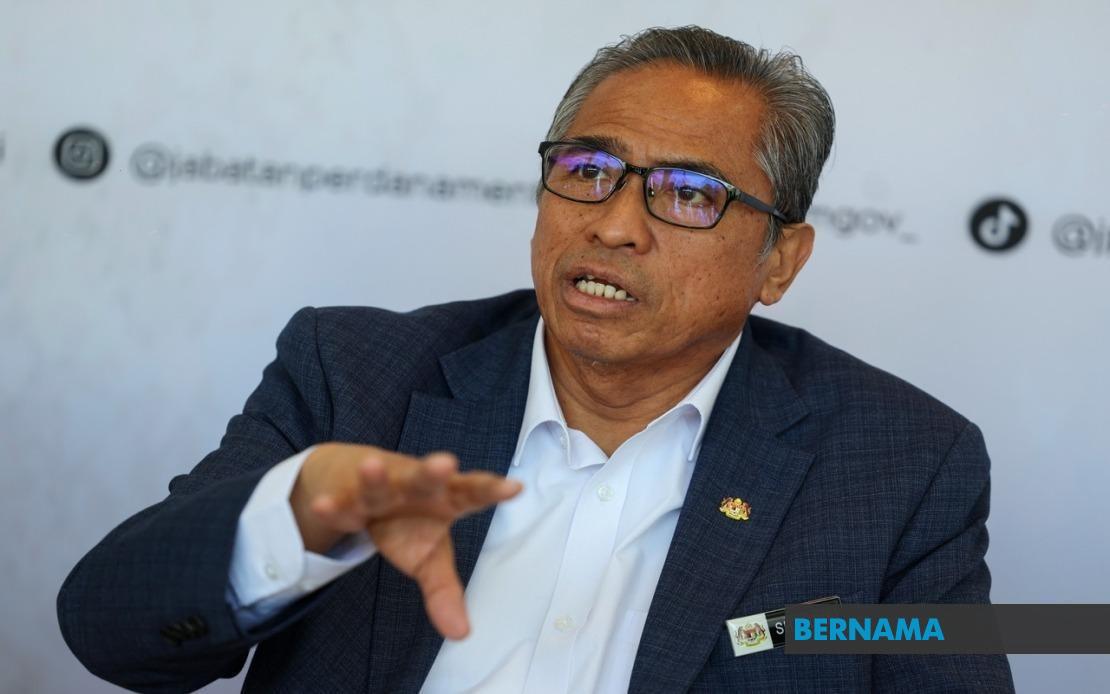
The Malaysian civil service faces mounting pressure to move swiftly from the diplomatic successes of recent high-level visits into tangible economic results for citizens. Chief Secretary to the Government Tan Sri Shamsul Azri Abu Bakar delivered this message in remarks emphasizing that the country's bureaucratic apparatus must become a reliable engine for translating international agreements into domestic prosperity. Speaking in Kuala Lumpur on June 24, he outlined how Prime Minister Datuk Seri Anwar Ibrahim's working visits to Russia and Turkmenistan have positioned Malaysia advantageously on the global stage, but only if the civil service can execute effectively at home.
The Chief Secretary framed the challenge in terms of strategic alignment. He stressed that government officials, particularly those managing economic policy and trade regulation, must operate with considerably greater speed and preparation than has traditionally been the case. The reasoning is straightforward: diplomatic overtures create market access and partnership opportunities, but these benefits evaporate if bureaucratic processes lag. Shamsul Azri emphasized that ministries responsible for economic and trade matters now carry responsibility for demonstrating the level of readiness required to capitalize on gains secured by the leadership's international engagement. This represents a notable shift in how Malaysia's civil service is being evaluated—no longer merely on policy formulation but on implementation velocity.
The concept of MADANI Diplomacy, which underpins Malaysia's current foreign policy approach, requires domestic institutional support to succeed. Shamsul Azri called for all public sector personnel, from departmental heads downward, to internalize and operationalize the principles embedded in this diplomatic framework. MADANI Diplomacy emphasizes pragmatic engagement and mutual benefit in international relations, but realizing these benefits demands that civil servants understand the strategic intentions behind each bilateral or multilateral engagement. The Chief Secretary's message suggests that the bureaucracy has sometimes operated in silos, with foreign policy achievements failing to translate into coordinated domestic action. His emphasis on a whole-of-government approach represents an attempt to break down these organizational barriers.
Shamsul Azri placed particular emphasis on the Ease of Doing Business agenda and Malaysia's positioning as an investment destination. These initiatives have become central to the government's economic strategy, particularly as the country competes with regional rivals for manufacturing and technology sector investment. The civil service's role here is multifaceted: streamlining regulatory approval processes, reducing bureaucratic red tape, and ensuring that foreign investors experience Malaysia as a frictionless operating environment. The Chief Secretary stressed that this is not merely an administrative matter but a strategic one. Every delayed investment approval or regulatory complication potentially redirects capital to Thailand, Vietnam, or Indonesia. Against this backdrop, his call for government officials to operate with greater agility and responsiveness takes on urgency.
The concept of a "global mindset" among civil servants merits closer examination. Shamsul Azri argued that public sector employees must think and act as if they are representatives of Malaysia to the world, not merely administrators processing applications. This represents a cultural shift from traditional Malaysian bureaucracy, where hierarchical structures and adherence to procedure have often taken precedence over outcomes. Officials in trade ministries, investment promotion agencies, and customs departments would need to develop deeper understanding of international market conditions, competitor strategies, and investor expectations. This is a significant departure from the conventional skill sets cultivated in Malaysian public administration, requiring substantial investment in training and organizational development.
The reference to the Public Service Reform Agenda (ARPA) and its "internationalisation" enabler suggests that the government recognizes systemic deficiencies in how the bureaucracy currently operates. ARPA aims to build administrative capacity aligned with national development objectives, and the internationalisation component acknowledges that Malaysia's civil service must compete globally for talent and expertise. This indicates recognition that current staffing and capabilities may be inadequate for the sophisticated international economic engagement now required. The aspiration is to develop a cadre of civil servants capable of functioning as sophisticated strategic partners with their counterparts in other nations and with multinational corporations.
The immediate objectives outlined by Shamsul Azri focus on converting diplomatic understanding into economic results. These include establishing robust supply chains for critical commodities, creating high-income employment opportunities for Malaysians, and ensuring the country remains competitive within global investment flows. These goals reflect both ambition and some anxiety about Malaysia's competitive position in Southeast Asia. The region faces intense competition for foreign direct investment, particularly in semiconductors, green technology, and digital services. If Malaysian bureaucracy cannot execute quickly once investments are approved, capital will simply relocate to neighboring economies with faster decision-making processes.
The timing of these remarks is significant. Malaysia's regional competitors—Vietnam, Thailand, and Indonesia—have all invested heavily in simplified investment procedures and rapid-response bureaucratic mechanisms. Some have established special economic zones with streamlined governance structures explicitly designed to reduce the friction foreign investors experience. Shamsul Azri's emphasis on agility and capacity-building suggests that Malaysia's current administrative structures may be perceived as falling behind these benchmarks. His remarks thus contain an implicit acknowledgment that institutional reform remains incomplete and that the civil service requires renewed focus on execution capability.
The intersection between MADANI Diplomacy and bureaucratic reform reveals a deeper strategic challenge facing Malaysia. Diplomatic successes are meaningless without institutional capacity to implement resulting agreements. Conversely, even the most efficient bureaucracy cannot compensate for weak international positioning and limited market access. The Chief Secretary's message attempts to bind these two imperatives together, arguing that each depends on the other. For Malaysian readers and observers, this suggests that employment growth and prosperity depend not simply on what the government negotiates internationally but on how effectively and quickly state institutions can translate those negotiations into operational reality. The civil service, often portrayed as an impediment to progress, is being repositioned as essential to converting Malaysia's diplomatic ambitions into shared national prosperity.