Malaysia's civil service has achieved significant financial and environmental gains through its paperless initiative, having conserved 116,405 reams of paper and realised cost savings of RM1.99 million. The accomplishment underscores the government's commitment to modernising administrative operations, a cornerstone of its broader digital transformation strategy that extends across multiple sectors and agencies.
Chief Secretary to the Government Tan Sri Shamsul Azri Abu Bakar revealed the milestone during a Digital Economy and Fourth Industrial Revolution Council meeting convened by Prime Minister Datuk Seri Anwar Ibrahim, highlighting how operational efficiency improvements translate into measurable fiscal benefits. The convergence of cost reduction and environmental stewardship demonstrates that digitalisation initiatives need not compromise either economic prudence or sustainability objectives—a particularly relevant lesson for developing economies navigating the balance between growth and resource conservation.
The paperless framework represents a fundamental shift in how Malaysia's bureaucracy handles routine administrative functions. What began as a targeted approach to digitising straightforward transactions has matured into a systemic reform affecting record management, inter-agency communication, and documentation workflows across numerous government departments. This transition necessitated substantial investment in digital infrastructure, staff training, and cybersecurity protocols, yet the accumulated savings already justify the initial expenditure while creating a foundation for expanded digital services.
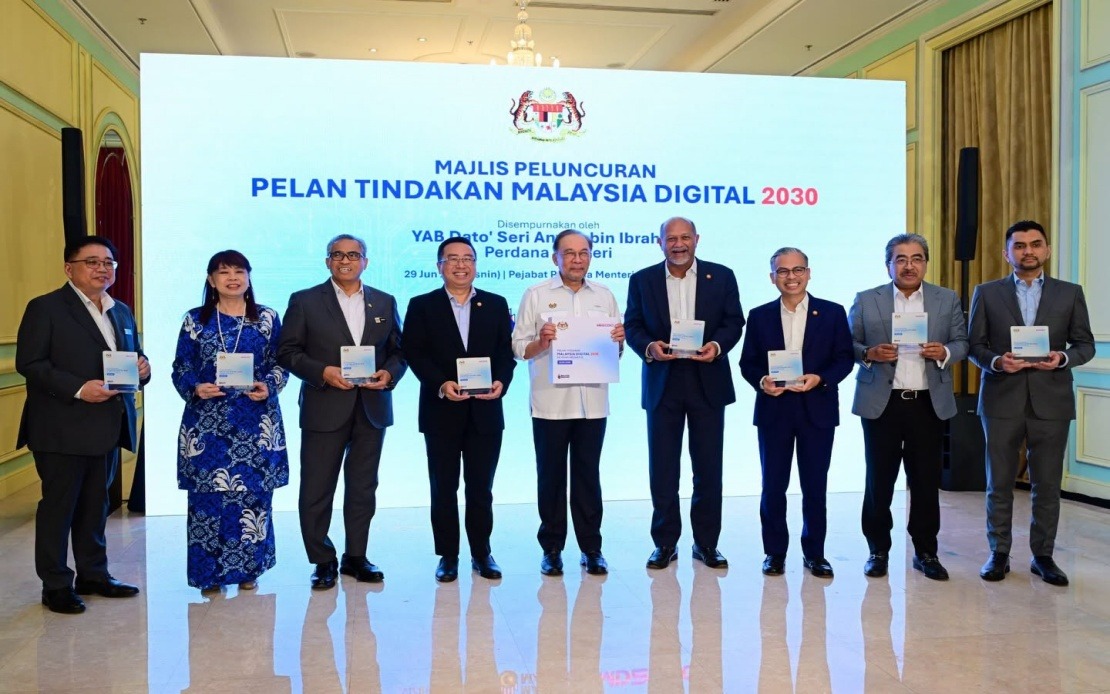
Shamsul Azri, serving as Government Cluster Chairman, contextualised these developments within Malaysia's overarching Malaysia Digital 2030 framework, unveiled during the same council meeting. The initiative positions the nation to achieve Artificial Intelligence nation status within the coming years, leveraging digital foundational infrastructure to support more sophisticated technological adoption. The paperless initiative thus functions not merely as an isolated cost-reduction programme but as a building block enabling more transformative applications of digital technology across government and society.
Central to the government's digitalisation agenda are complementary initiatives including MyDigital ID and MyGov, both designed to streamline citizen interactions with public services while reducing reliance on physical documentation. These platforms create ecosystems wherein paperless administration becomes seamlessly integrated into broader digital governance frameworks, allowing residents to access services, submit documentation, and manage government interactions through unified digital portals. The synergy between these initiatives magnifies their individual impact, creating momentum toward comprehensive digital government transformation.
The council's deliberations also emphasised expanding digital access throughout Malaysia's higher education sector, recognising that cultivating a digitally-fluent population represents essential infrastructure for achieving AI nation aspirations. Universities serve as incubators for technological innovation and talent development, making their integration into digital ecosystems crucial for building domestic capacity in emerging technologies. Investment in digital education infrastructure today seeds tomorrow's competitive advantages in artificial intelligence, data science, and advanced digital competencies.
Complementing these educational initiatives, the government established the MyMAHIR National AI Council for Industry to systematically develop comprehensive digital talent aligned with evolving market demands. Rather than relying on ad-hoc skills development, this structured approach ensures that Malaysia cultivates workforce capabilities matching specific technological competencies required across sectors. The council's formation reflects recognition that technological transition demands intentional human capital development rather than passive assumption that workforces will organically adapt to new technological environments.
The paperless initiative's genesis traces to February, when civil service leadership announced plans to implement simplified digital transactions beginning in mid-February. This measured introduction allowed initial testing and refinement before broader deployment, exemplifying prudent change management in large bureaucratic systems. Phased implementation reduces disruption to ongoing government operations while permitting identification of systemic challenges before they metastasise into organisation-wide problems. The strategy balanced ambition with realism, acknowledging that transforming entrenched administrative practices requires careful sequencing and continuous adjustment.
From a regional perspective, Malaysia's paperless initiative offers relevant lessons for neighbouring Southeast Asian nations similarly pursuing digitalisation. The demonstrated cost savings and environmental benefits provide tangible evidence that governments need not choose between fiscal responsibility and modernisation. For countries across the Association of Southeast Asian Nations weighing capital allocation between infrastructure modernisation and traditional spending, Malaysia's experience demonstrates that digital transformation frequently yields near-term financial advantages while enabling longer-term economic dynamism. The replicability of these frameworks—adapted to local contexts and existing systems—presents opportunities for regional capacity-sharing and collaborative development of digital governance standards.
The trajectory from paperless administration toward AI nationhood reflects Malaysia's understanding that technological capability develops incrementally through successive adoption waves. Initial digitalisation efforts establish foundational infrastructure, build institutional competency, and demonstrate administrative feasibility, creating psychological and practical platforms for more ambitious initiatives. Each milestone achieved—whether measured in reams saved or systems integrated—builds organisational confidence and technical expertise enabling subsequent transformative leaps. Malaysia's structured approach to digital transition offers a model whereby developing nations can progress toward advanced technological adoption while maintaining operational continuity and fiscal prudence throughout transformation journeys.

