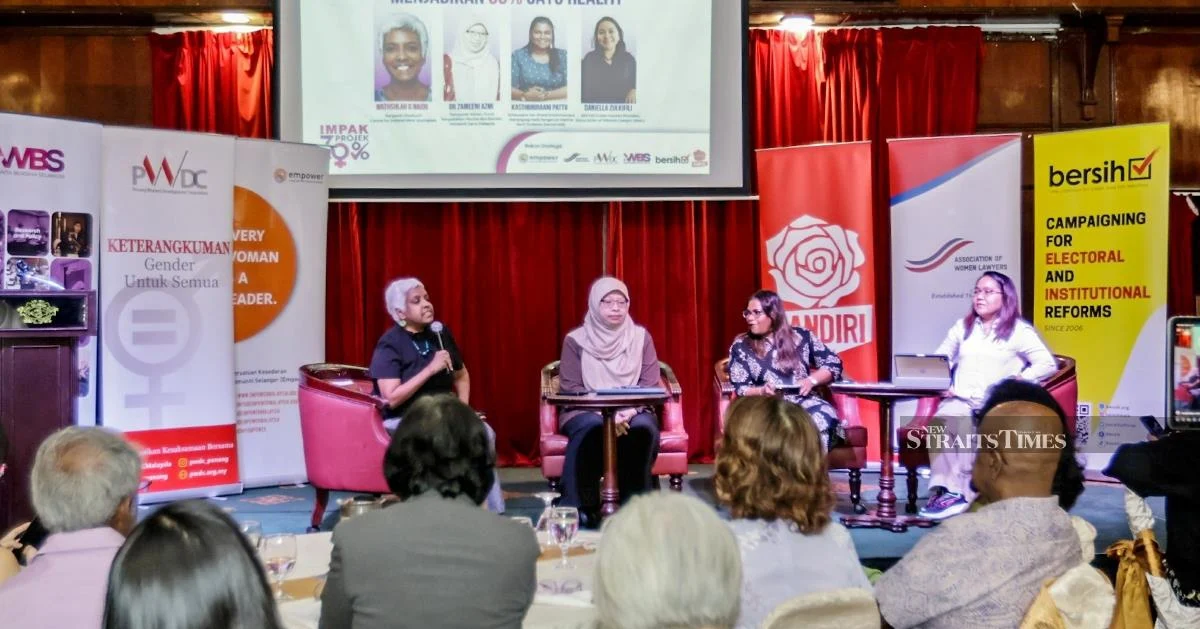
Malaysian civil society groups have formally tabled a memorandum and draft legislation with the government, seeking to establish a binding requirement that political parties nominate a minimum of 30 per cent women candidates in the forthcoming general election. The submission, delivered in Kuala Lumpur, represents a coordinated push by advocacy organisations to institutionalise gender representation in electoral contests and address persistent underrepresentation of women in Parliament.
The proposal arrives amid ongoing international and domestic discussions about Malaysia's performance on gender equality metrics. Despite comprising roughly half the electorate, women have historically held significantly fewer parliamentary seats than their male counterparts. The current composition of the Dewan Rakyat reflects this disparity, with women making up a minority of representatives across political parties and states. By establishing a concrete numerical threshold, the proposed legislation would introduce mechanisms to shift this imbalance and require parties to demonstrate genuine commitment to inclusive governance.
The 30 per cent target itself warrants examination within the broader global context. Many democracies have adopted similar benchmarks as intermediate steps toward full parity. Rwanda, Tunisia, and several Nordic countries have implemented quotas ranging from 30 to 50 per cent, demonstrating that legislative requirements can produce measurable results. Malaysia's civil society groups appear to have adopted this tested framework as a realistic yet meaningful first phase rather than a final destination, signalling recognition that transformative change typically unfolds incrementally.
The choice to pursue legislative rather than merely advisory measures reflects strategic lessons learned from previous gender advancement efforts. Voluntary party commitments have historically proven insufficient, as parties without competitive pressure often deprioritise candidate diversity. By embedding the requirement into law, organisations aim to create enforceable standards that apply uniformly across the political spectrum, removing excuses and establishing clear accountability mechanisms.
Political parties face diverse incentives regarding this proposal. Those with existing women-friendly constituencies and internal diversity initiatives may view the target as an achievable step that aligns with evolving democratic values. Others may resist, citing concerns about meritocracy or internal party structures. However, the submission to government rather than solely to opposition parties suggests the coalition seeks bipartisan support, indicating recognition that meaningful change requires buy-in across the political establishment.
Implementation challenges will be substantial. Questions remain about how the government would enforce compliance, whether penalties would apply to non-compliant parties, and whether the requirement would apply to all electoral categories or specific tiers. The legislative framework must also address whether the quota applies to winnable seats or merely nominations—a distinction that determines whether women candidates have genuine prospects of election or serve primarily as symbolic representation.
For Malaysian voters, particularly women, this initiative carries implications extending beyond headline statistics. Research consistently shows that increased female representation in legislatures correlates with greater attention to childcare, healthcare, education, and family law reforms. Women legislators often bring different policy priorities and legislative styles, potentially enriching parliamentary debate and broadening policy considerations. Enhanced women's representation thus affects substantive governance outcomes, not merely symbolic diversity.
The submission also reflects broader Southeast Asian trends toward improved gender representation in politics. Several neighbouring democracies have implemented or debated similar measures, creating a regional momentum that influences domestic conversations. Malaysia's civil society groups are effectively positioning the country within this international movement, suggesting that failing to advance gender representation risks appearing outdated relative to regional peers.
For the government's consideration, the proposal presents both opportunities and political calculations. Endorsing the measure would signal commitment to democratic inclusivity and modern governance standards, potentially appealing to younger voters and urban constituencies. Conversely, some political constituencies may view quotas skeptically, preferring merit-based selection. The government must balance these competing pressures while deciding whether to champion the draft legislation, modify it substantially, or delay action.
The timing of this submission warrants attention, as the next general election remains a specified deadline. Rather than advocating indefinitely for women's representation, civil society has framed this as an actionable target for the immediate electoral cycle. This creates practical pressure: parties and government must decide soon whether to accommodate this requirement or explicitly reject it, leaving little room for prolonged deliberation.
Beyond the specific 30 per cent figure, the submission signals growing sophistication in Malaysian civil society advocacy. By producing comprehensive draft legislation rather than merely requesting change, organisations demonstrate serious intent and reduce barriers to implementation. They have essentially completed preliminary legislative work, requiring only political will for advancement.
The response from political parties and government will reveal much about Malaysia's trajectory on gender inclusion. Acceptance would mark genuine progress toward fuller democratic representation. Rejection or significant dilution would indicate that political elites view women's representation as negotiable rather than fundamental to legitimate governance. Either outcome will shape civil society strategy for subsequent reform efforts and send signals to Malaysian women about democratic institutions' responsiveness to their concerns.