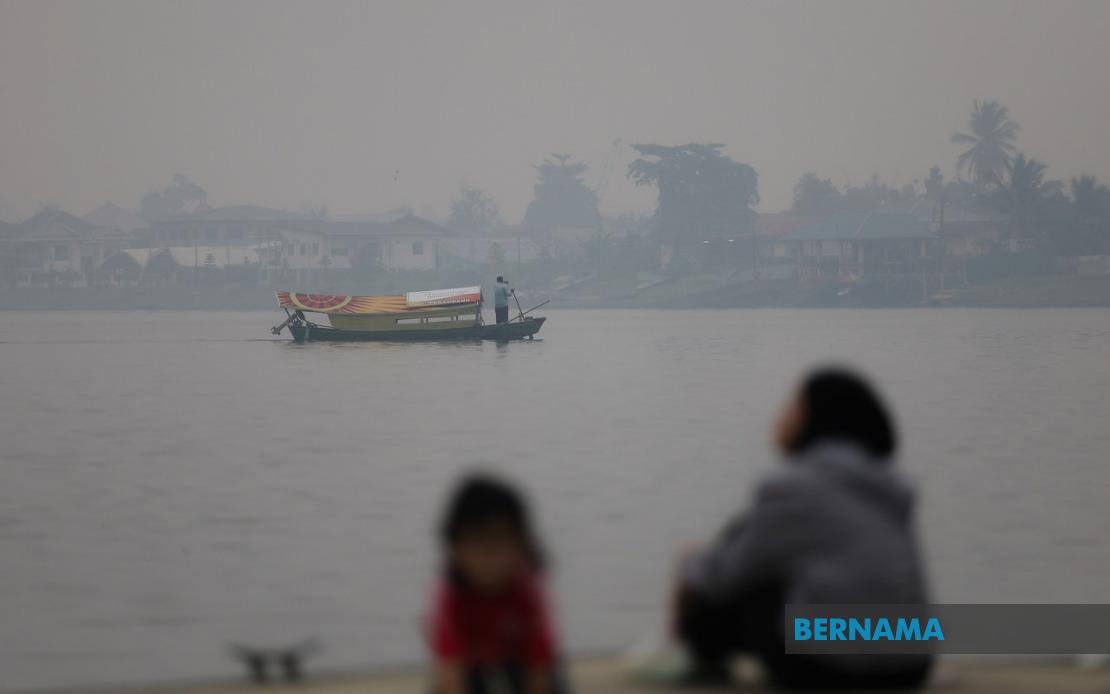
Cloud seeding initiatives have been activated across Malaysia to address the dual crises of transboundary haze pollution and dwindling water reserves, with Deputy Prime Minister Datuk Seri Dr Ahmad Zahid Hamidi confirming that operations are prioritising regions where air quality has deteriorated significantly. The meteorological intervention represents a coordinated effort to mitigate environmental pressures during Malaysia's dry season, when both air pollution spikes and water resource availability diminishes.
The cloud seeding programme operates under a strategic framework targeting specific geographic and climatic thresholds. Areas recording Air Pollutant Index measurements exceeding 150—classified as unhealthy air quality—have been designated as priority zones for the seeding operations. Simultaneously, regions experiencing concerning reductions in dam water levels are receiving attention, reflecting government recognition that water security and environmental quality are interconnected challenges during periods of elevated temperatures and reduced precipitation.
Dr Ahmad Zahid emphasised that this preventative strategy becomes essential when Malaysia's hydrological cycle shows signs of stress. With numerous reservoirs across the country experiencing declining water tables, the authorities recognised that allowing such trends to continue unchecked risked creating acute shortages in domestic water supply during the hottest months. The cloud seeding initiative therefore functions as a dual-purpose intervention—simultaneously improving air quality and augmenting rainfall to replenish aquifer systems.
Operational execution involves coordination among multiple government agencies, with the Malaysian Meteorological Department providing technical expertise and weather analysis whilst the Royal Malaysian Air Force supplies the logistical capability to conduct aerial seeding operations. This inter-agency collaboration underscores the technical complexity of cloud seeding, which remains dependent on precise atmospheric conditions and timing to achieve meaningful results. The process itself cannot be activated indiscriminately; it requires that suitable cloud formations already exist within target areas, and that meteorological conditions favour successful precipitation.
Immediate seeding efforts commenced in Putrajaya on the announcement date, with subsequent operations scheduled across Sarawak, Kedah and Perlis from September 3 through September 5. The geographic spread of these operations reflects where environmental stress indicators—whether air quality deterioration or water availability concerns—have registered most acutely. Sarawak, in particular, faced critical air quality challenges, with three monitoring stations recording hazardous readings that demanded urgent intervention.
The Air Pollutant Index readings recorded across Sarawak illustrated the severity of the situation. The Serian Police headquarters monitoring station registered a hazardous API reading of 412, indicating air quality at levels posing significant health risks to the general population. Samarahan followed with a reading of 332, whilst Kuching, Sarawak's capital, recorded 304. Sri Aman measured 228, placing it in the very unhealthy category. These measurements, taken from the Department of Environment's Air Pollutant Index Management System at 12:30 pm on the announcement date, demonstrated that regional air quality had crossed multiple danger thresholds simultaneously.
The emergence of haze pollution typically stems from transboundary sources, with agricultural burning and industrial emissions from neighbouring regions combining with local factors to degrade air quality across Malaysia's eastern states. Sarawak's geographic proximity to fire-prone regions means it often experiences the first and most severe impacts of such pollution episodes. By targeting these areas for cloud seeding, the government sought to combat both the immediate health threat and the underlying meteorological conditions contributing to pollution accumulation.
Cloud seeding represents a weather modification technique with decades of operational history, though its effectiveness remains subject to natural variability. The technology works by introducing seeding agents into clouds to stimulate precipitation, but success hinges on existing atmospheric moisture and cloud formations. Dr Ahmad Zahid's acknowledgement that operations must account for cloud movement and positioning reflects sophisticated understanding of atmospheric dynamics—clouds must be moving towards targeted areas, and they must possess sufficient characteristics to respond to seeding agents. This explains why cloud seeding cannot function as a guaranteed solution but rather as a tactical tool deployed when meteorological conditions align favourably.
The water security dimension underlying these operations carries particular significance for Malaysian policymakers and citizens. Malaysia's water infrastructure, though relatively robust compared to many regional neighbours, remains vulnerable to prolonged dry spells. Dam levels that fall significantly during hot seasons can constrain agricultural output, industrial water availability, and domestic supply. By pursuing cloud seeding before critical shortages materialise, the government attempted to maintain buffer capacity within reservoir systems. This proactive approach contrasts with reactive crisis management and reflects lessons learned from previous episodes when water restrictions became necessary.
The scheduling of extended seeding operations through early September indicates that authorities anticipated the environmental pressures would persist beyond the initial announcement period. The concentration on peninsular and northern states—Putrajaya, Kedah and Perlis—suggests that these regions faced comparable challenges to Sarawak, albeit perhaps at slightly less severe intensity. Kedah, which relies heavily on agricultural production, faces particular vulnerability to simultaneous water and air quality stress, making it a logical focus for intervention.
For Malaysian citizens and policymakers, these operations underscore the interconnected nature of modern environmental challenges. Air pollution, water security and weather patterns form an integrated system where intervention in one area can produce secondary benefits. The deployment of cloud seeding reveals government recognition that climate variability and transboundary pollution now constitute recurring challenges requiring technological and institutional responses. Whether through improved regional cooperation on emissions control, investment in weather modification capabilities, or enhanced water storage and management, Malaysia continues adapting to environmental pressures that affect both quality of life and economic stability.
The success of these operations will likely be measured both in air quality improvements registered across affected areas and in water level recoveries observed at targeted reservoirs. However, long-term solutions to haze and water availability ultimately require addressing root causes through regional cooperation on emissions reduction and domestic investments in sustainable water infrastructure. Cloud seeding, whilst valuable as a tactical tool, functions best as one component within a comprehensive environmental management strategy addressing both proximate symptoms and underlying systemic factors.

