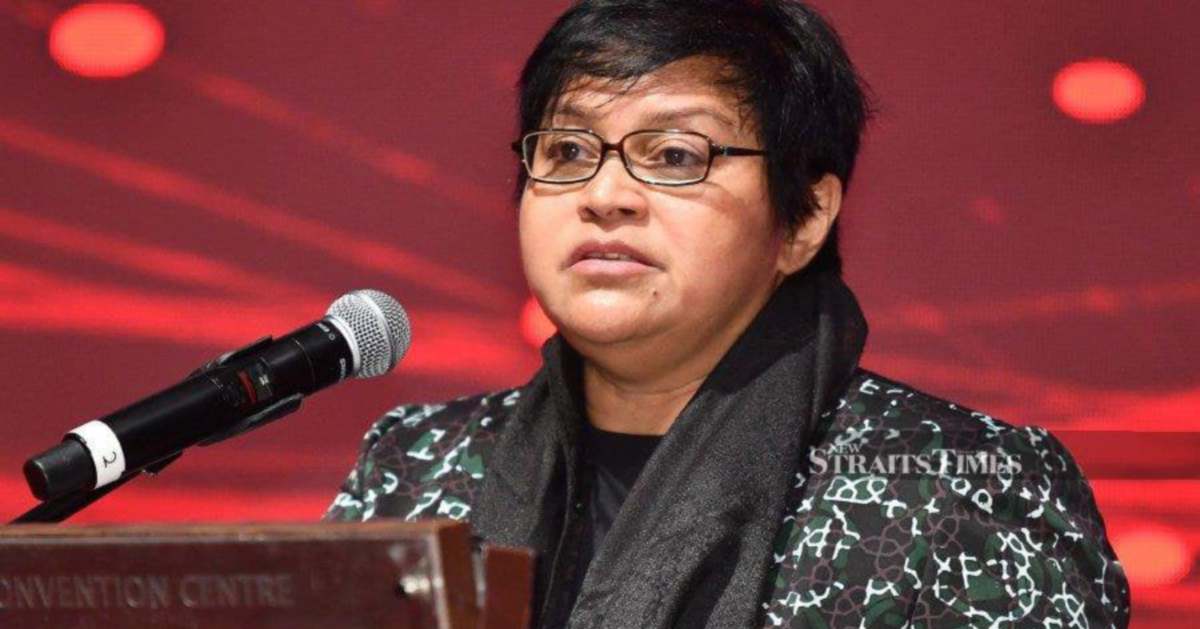
Datuk Seri Azalina Othman Said, the information chief of Umno, has drawn a clear boundary on the timing of political negotiations in Johor, insisting that any meaningful conversation about forming a governing coalition must remain off the table until voters have delivered their verdict at the ballot box. Speaking from Putrajaya, the senior party official underscored the importance of waiting for definitive electoral results before political parties engage in substantive discussions about governance structures in the southern state.
The statement from Azalina reflects a broader concern among Umno leadership that premature coalition discussions could undermine the party's campaign momentum and distract from its core election message. By establishing this clear demarcation between the campaign phase and the post-election negotiation phase, Umno is attempting to maintain focus on persuading voters through direct engagement and policy platforms rather than allowing the narrative to drift toward backroom dealmaking. This approach is particularly significant given the competitive political landscape in Johor, where multiple parties are vying for voter support across different demographic and geographic constituencies.
Johor has historically been a stronghold for Umno, yet the political dynamics of the state have evolved considerably in recent years. The emphasis on postponing coalition discussions signals that Umno wants to project confidence in its ability to secure a strong mandate from Johor voters without appearing dependent on pre-arranged political alliances. Azalina's remarks suggest that the party leadership believes focusing on concrete electoral performance rather than speculative alliance talk will be more persuasive to the electorate.
The distinction between pre-election positioning and post-election negotiation is particularly crucial in Malaysian politics, where the gap between campaign narratives and governing realities can sometimes create public disappointment. By establishing expectations clearly now, Umno is attempting to manage the political conversation and set parameters for how discussions will unfold once ballots are counted. This timing framework also allows the party to maintain internal party discipline during the campaign without being bound by public commitments regarding potential coalition partners.
The Johor political context adds particular weight to Azalina's comments. As a state that directly borders Singapore and serves as an economic hub for the southern region, Johor's governance structures carry implications that extend beyond state-level politics. The formation of any coalition government in the state will need to address complex issues ranging from economic development and infrastructure investment to social policies affecting the diverse population. These substantive governance questions cannot be adequately addressed through preliminary political negotiations conducted before voters have expressed their preferences.
For Malaysian voters and political observers, Azalina's statement represents a reminder of how electoral processes typically unfold in the country's Westminster-influenced system. The principle that governance arrangements emerge from election results rather than predating them is fundamental to democratic practice, though in practice Malaysian politics has occasionally seen parties negotiate alignment before voting takes place. By publicly committing to this post-election framework, Umno is attempting to reinforce expectations about procedural propriety and democratic sequencing.
The statement also carries implications for other political parties operating in Johor. Opposition and non-Umno parties may interpret Azalina's remarks as suggesting that Umno expects to be in a strong position following the election, making premature alliance discussions unnecessary from their perspective. Alternatively, smaller parties might view this as an indication that serious coalition negotiations will only commence once results are clear, potentially affecting their own campaign strategies and positioning.
Regionally, the approach outlined by Azalina reflects broader patterns in Southeast Asian politics where electoral legitimacy and post-election negotiation sequences remain important aspects of democratic processes. While political realities frequently involve extensive pre-election coordination among parties, the public rhetoric emphasizing post-election determination of governance arrangements maintains a formal commitment to voters having a meaningful voice in deciding their representatives and, by extension, who should govern.
For Malaysia more broadly, maintaining clarity about electoral timelines and coalition-formation procedures helps preserve public confidence in democratic institutions. When politicians discuss governance arrangements before votes are counted, citizens may question whether their ballots meaningfully influence outcomes. Azalina's insistence on respecting the electoral sequence demonstrates awareness of this dynamic and an attempt to preserve the perceived legitimacy of whatever government eventually forms following Johor voters' final decision.

