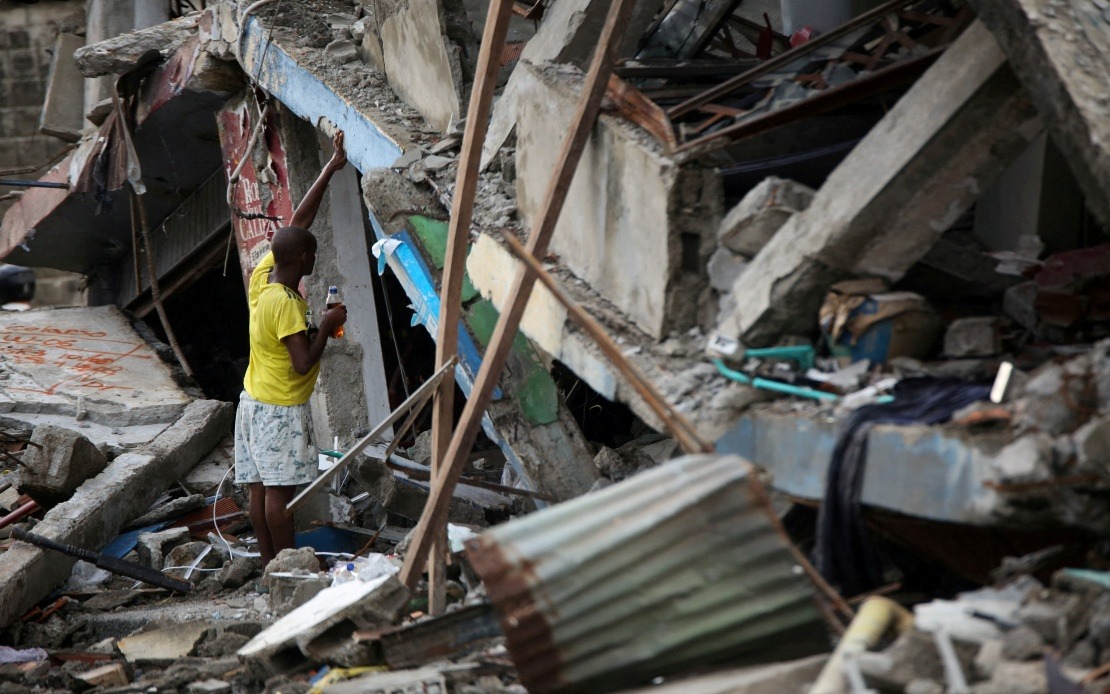
Colombia faces an exceptionally challenging moment as the nation simultaneously battles a rapidly escalating wildfire crisis whilst continuing recovery operations from a powerful earthquake that struck just days earlier. Emergency management authorities reported this week that 344 municipalities have been placed under red alert status due to mounting wildfire threats, representing a staggering 93 per cent increase in a single day driven by extreme heat and critically dry atmospheric conditions. This convergence of natural disasters is testing the limits of national emergency response capacity and raising serious questions about the government's ability to manage multiple catastrophes occurring within such a compressed timeframe.
The Institute of Hydrology, Meteorology and Environmental Studies (IDEAM) has documented that the geographic concentration of active fires spans six major administrative regions: Tolima, Cesar, Norte de Santander, Antioquia, Narino and Santander. The National Unit for Disaster Risk Management confirmed dozens of conflagrations are burning simultaneously across these territories, forcing authorities to mobilise firefighting brigades, military personnel, emergency responders and aerial assets in an all-hands response. The sheer number and distribution of fires has created a coordination nightmare, as resources become increasingly fragmented across vast distances and difficult terrain.
The scale of environmental destruction already recorded is staggering. Officials have documented that destroyed vegetation, agricultural land and residential properties now exceed 11,000 hectares across multiple municipalities, representing widespread ecological and economic damage that will require years to remediate. This destruction compounds the humanitarian toll from the 7.4 magnitude earthquake that struck on August 10, which claimed 288 lives, left 4,018 people injured and destroyed more than 12,500 homes outright. Authorities have further documented damage to over 80,000 additional structures, creating a cascading crisis in which disaster victims and affected communities now face potential evacuation or further displacement due to wildfire threats.
The timing of these dual crises could hardly be worse for Colombia's disaster management infrastructure. Firefighting crews from affected departments, including Risaralda which itself was impacted by the earthquake, have been redirected to combat the spreading fires, yet officials have acknowledged severe staffing shortages that prevent adequate deployment across all affected areas. Personnel exhausted from earthquake response operations are now being pressed into immediate service fighting fires, creating unsustainable workload demands. The psychological and physical toll on emergency responders who have barely had time to process the earthquake's aftermath before being redeployed to new crises cannot be overstated.
Long-term climate projections have further darkened the outlook. IDEAM meteorological models indicate a 90 per cent probability that the El Niño phenomenon will persist through the first quarter of 2027, with particularly intense heat anomalies expected to peak toward year's end. This suggests that Colombia should anticipate sustained pressure on water resources, elevated fire risk across multiple seasons and continued atmospheric conditions favourable to rapid wildfire spread. For a nation already dealing with present emergencies, this projection represents an alarming warning that relief may not arrive soon and that investment in disaster prevention and preparedness infrastructure has become an urgent national priority.
The volcanic dimension of Colombia's current hazard environment adds yet another layer of complexity to emergency management. The Purace volcano located in the southern department of Cauca has shown heightened seismic and volcanic activity, forcing national risk management agencies to simultaneously monitor and prepare for potential eruption scenarios. This means that disaster planners must now develop contingency strategies not only for earthquake aftershocks, wildfires and drought-related crises but also for the possibility of volcanic hazards affecting the already-stressed southern regions. The concentration of multiple major natural hazards occurring in proximity represents a scenario for which few nations possess adequate institutional capacity.
For Malaysia and other Southeast Asian nations observing Colombia's predicament, the lessons are instructive. The Andean nation's experience demonstrates how climate change-induced drought and heat stress can rapidly overwhelm national emergency management systems, particularly when other major disasters strike in temporal proximity. Southeast Asia's own vulnerability to typhoons, flooding, earthquakes and volcanic activity suggests that building resilient disaster management infrastructure and maintaining substantial standby capacity for simultaneous multi-hazard scenarios should be treated as fundamental national security investments. Countries in the region that remain underprepared for compound disasters face similar risks of cascade failures in emergency response.
The immediate humanitarian challenge facing Colombia involves not only fighting active fires and treating earthquake victims but also managing the psychological and social dimensions of repeated collective trauma. Communities that lost homes and livelihoods in the earthquake now face potential evacuation due to wildfire proximity, creating second-order displacement crises. Social services, medical facilities and temporary housing arrangements already strained by earthquake relief suddenly face new demands. This multiplier effect of compounded disasters is precisely what modern disaster risk reduction frameworks struggle to address adequately, as most planning assumes single hazards rather than overlapping calamities.
Columbia's institutional response will be observed closely by international disaster management experts and by nations similarly vulnerable to multiple concurrent natural hazards. The degree to which the government successfully mobilises additional regional assistance, accepts international aid if offered, and transparently communicates recovery timelines will influence how quickly affected populations regain confidence in state institutions. Early indications that staffing remains inadequate and that authorities acknowledge resource constraints suggest a government attempting honest assessment rather than minimising the crisis severity, which may ultimately prove advantageous for building public support for necessary relief investments.

