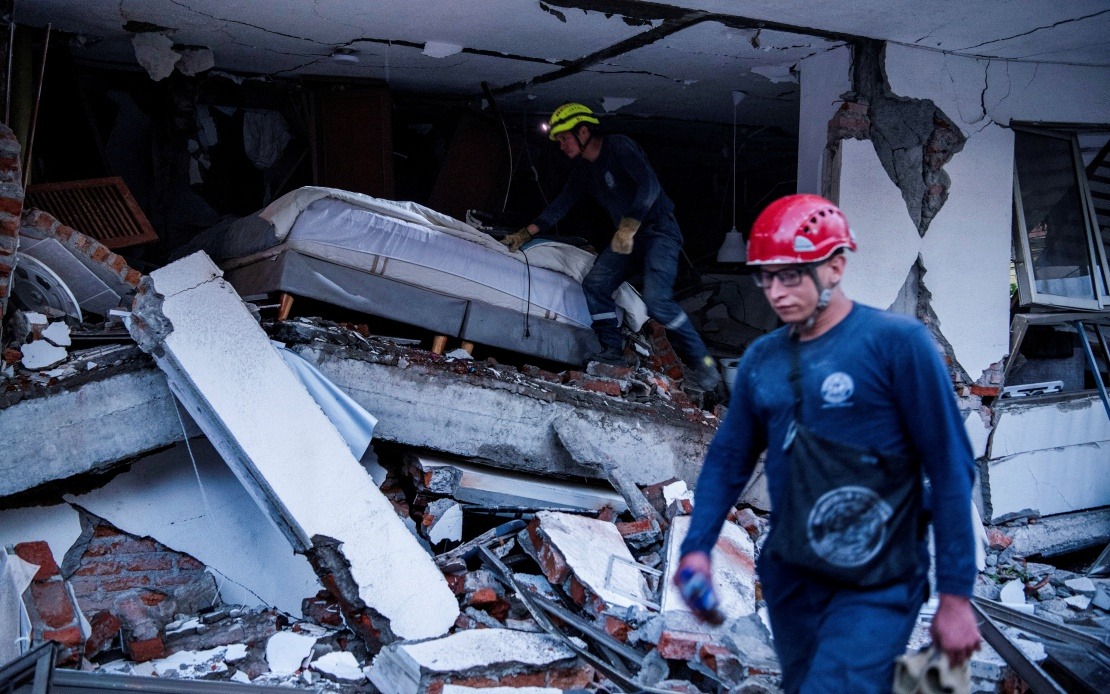
Western Colombia reeled from the impact of a powerful magnitude 7.4 earthquake that struck Monday morning, leaving a mounting toll of destruction across the country. The death count has climbed to 132, with more than 570 individuals injured, according to the latest government assessment. The seismic event, which originated near San Jose del Palmar in Choco department at a depth of 96 kilometres, struck at 7:34 am local time, catching residents and businesses largely unprepared for the intensity of the tremors.
The geographic spread of the disaster underscores the far-reaching consequences of the quake. Preliminary assessments indicate that 32 cities throughout Colombia have sustained serious damage, with five major departmental capitals facing particularly severe conditions. Pereira has emerged as the hardest-hit area, accounting for 60 of the recorded deaths, while Cali has reported 15 fatalities. Other significantly impacted cities include Quibdo with eight deaths and Manizales with four, highlighting how the damage concentrates in the southwestern and central regions of the country. The distribution of casualties and injuries across such a wide geographic area suggests the earthquake's magnitude and the shallow-to-moderate depth generated destructive energy across considerable distances.
The physical infrastructure damage presents a sobering picture of the earthquake's force. Authorities have documented the collapse of 86 buildings, a figure that may yet rise as search and rescue teams complete their assessments in debris-strewn areas. Beyond immediate structural damage, the disruption to critical transportation infrastructure has complicated relief operations significantly. Seven airports across the affected regions have suspended operations due to earthquake-related damage, limiting the ability to rapidly deploy emergency supplies and medical personnel to the most severely impacted communities. This transportation bottleneck threatens to slow the pace of rescue and humanitarian response at precisely the moment when speed is essential.
Recognising the scale of the catastrophe, Colombian President Abelardo de la Espriella declared a state of national disaster, a legal designation that mobilises extraordinary government resources and protocols to manage the emergency response. This declaration frees bureaucratic obstacles, allows for rapid deployment of military and civilian personnel, and enables the government to requisition resources and funding for immediate relief operations. The severity of the declaration reflects official acknowledgment that conventional disaster management frameworks are insufficient for the scope of this emergency.
Security and welfare concerns for foreign nationals have formed part of the official response. The Chinese Embassy in Colombia activated emergency protocols immediately following the earthquake, moving quickly to assess the situation of Chinese nationals throughout the country. As of the latest report, no casualties among Chinese citizens have been documented, though the embassy's ongoing verification efforts suggest some level of concern warranted the rapid mobilisation of resources. This diplomatic response mirrors similar protocols adopted by embassies of other nations with significant populations in Colombia.
For Malaysian observers, the Colombia earthquake serves as a stark reminder of the seismic vulnerabilities that affect not only the Pacific Ring of Fire nations but also countries along the Caribbean tectonic boundaries. While Malaysia faces distinct geological risks centred on the Sunda Strait and regional fault systems, the Colombian case demonstrates how even technologically advanced nations with established building codes can suffer massive casualties and infrastructure damage when earthquakes exceed planned resilience thresholds. The concentration of deaths in specific urban centres suggests that building construction standards, whether through age, maintenance, or design limitations, significantly influenced survival rates.
The earthquake also highlights the interconnection between natural disasters and broader economic and social systems. The disruption to airport operations will ripple through Colombia's economy, affecting commerce, tourism, and the movement of goods at a moment when the country desperately needs resources flowing into affected areas. For a nation already managing various socio-political challenges, this natural disaster imposes enormous additional burdens on government capacity and public finances. The reconstruction effort will require sustained international support and domestic resource mobilisation for months or years to come.
The Colombian Geological Service's rapid identification of the epicentre location and depth provided crucial data for understanding the earthquake's mechanics and predicting potential aftershock sequences. The placement near San Jose del Palmar in Choco, a region with significant seismic activity due to subduction zone interactions, reflects the area's tectonic vulnerability. The 96-kilometre depth, while moderately deep, produced surface effects consistent with a magnitude 7.4 event, suggesting the rupture extended significantly or that stress transfer mechanisms activated secondary failures in the surrounding crust.
Regional implications of the Colombia earthquake extend throughout Central and South America, particularly affecting nations sharing similar tectonic settings and building infrastructure standards. The disaster underscores why earthquake preparedness, building code enforcement, and early warning system investment represent critical public policy priorities. For countries like Colombia facing competing demands for limited government resources, the massive costs associated with earthquake response and reconstruction create difficult trade-offs with other pressing needs.
The human cost extends beyond the immediate death toll and injuries. Thousands have been displaced from damaged homes, requiring emergency shelter and sanitation provisions. Supply chain disruptions caused by airport closures and infrastructure damage will affect food security, medical supply distribution, and access to clean water in affected communities. The psychological trauma experienced by survivors, particularly children who witnessed destruction and loss, represents a longer-term public health challenge that mental health systems will struggle to address adequately.
International disaster response mechanisms have presumably been activated, with bilateral aid offers and multilateral development bank support likely forthcoming. However, the coordination challenges of delivering aid through damaged infrastructure and limited airport capacity present formidable logistical problems. The success of Colombia's recovery will depend not only on immediate rescue and relief operations but also on sustained commitment to reconstruction from both domestic authorities and the international community.
Looking forward, Colombia faces the urgent necessity of conducting comprehensive damage assessments, identifying additional bodies in collapsed buildings, and preventing secondary disasters such as landslides triggered by ground instability in mountainous regions. The government's disaster declaration provides the legal and administrative framework for these operations, but translating policy into effective ground-level response requires coordination across dozens of agencies and countless local authorities dealing with their own community-specific crises. The weeks and months ahead will test both Colombia's institutional capacity and international solidarity mechanisms designed to support nations facing major natural disasters.

