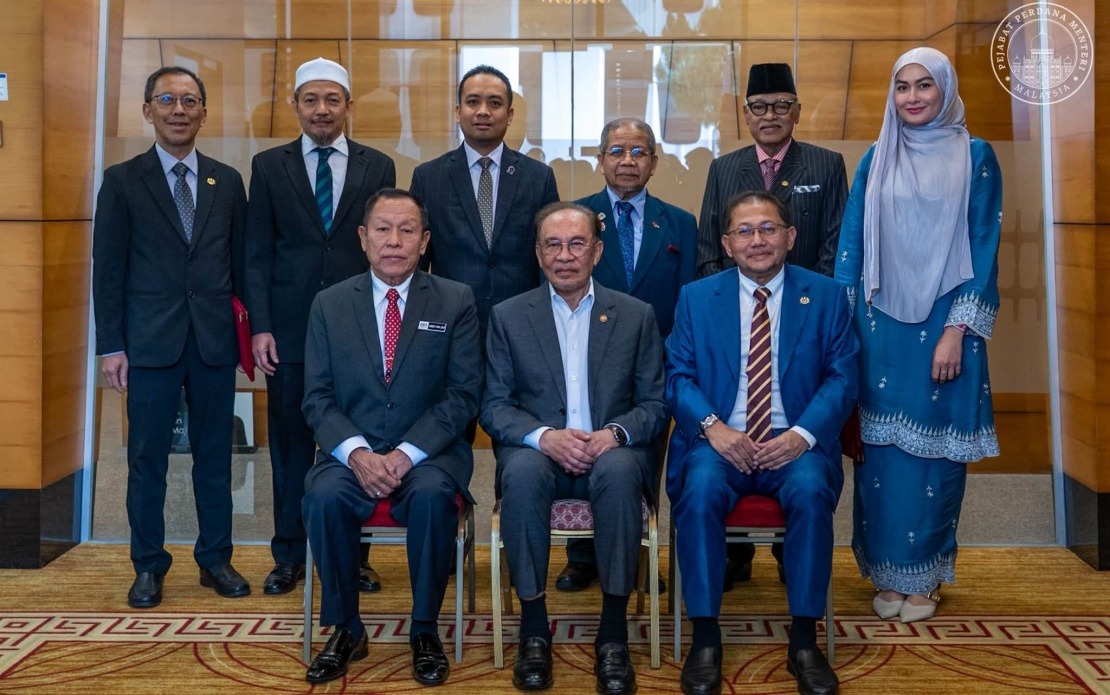
Prime Minister Datuk Seri Anwar Ibrahim has underscored the necessity of a comprehensive, multi-institutional approach to combating corruption in Malaysia, asserting that no single body can effectively address the challenge independently. Speaking in Parliament on June 30, Anwar emphasised that sustained progress against graft demands seamless coordination among enforcement agencies, advisory bodies, lawmakers, public servants, the business community, and ordinary citizens working in concert toward shared anti-corruption objectives.
The Prime Minister's remarks came as he formally presented appointments to newly selected members of two critical oversight mechanisms: the Special Committee on Corruption (JKMR) and the Anti-Corruption Advisory Board (LPPR). Both bodies have received the consent of the Yang di-Pertuan Agong, marking the official inauguration of these fresh leadership teams. Anwar conveyed to the incoming members the importance of strengthening their commitment to advancing Malaysia's anti-corruption agenda, recognising their collective responsibility despite their diverse professional and personal backgrounds.
The JKMR operates as a statutory check-and-balance institution, established under Section 14 of the Malaysian Anti-Corruption Commission Act 2009 (Act 694). Its composition deliberately bridges the political divide, with members drawn from both the Government and Opposition ranks within Parliament's upper and lower chambers. This bipartisan structure is designed to ensure that anti-corruption scrutiny remains impartial and that no single political faction can dominate the committee's direction or priorities. By incorporating diverse viewpoints from across the political spectrum, the JKMR maintains credibility as an independent voice capable of providing critical feedback to strengthen overall anti-corruption effectiveness.
Parallel to the JKMR's parliamentary oversight role, the LPPR serves as an advisory body tasked with bringing external expertise and fresh perspectives to Malaysia's corruption-fighting efforts. Established also under Section 13 of Act 694, the LPPR draws its members from individuals demonstrating exceptional integrity and professional distinction. These appointees are selected from the broader pool of civil servants and professionals who have earned recognition for their contributions to public service or their fields. This composition ensures that the board benefits from accumulated wisdom and experience drawn from multiple sectors, grounding anti-corruption recommendations in practical understanding of institutional realities.
The emphasis on institutional pluralism reflects an understanding that corruption operates across interconnected public and private domains, requiring responses tailored to each sector's specific vulnerabilities and operating norms. Enforcement agencies alone—however well-resourced or independently mandated—cannot penetrate every corner of economic and administrative activity where corrupt practices may take root. Parliamentary oversight provides legitimacy and democratic accountability to enforcement actions. Private sector participation ensures that business communities contribute to establishing ethical standards within commercial environments. Civil society engagement mobilises public vigilance and demand for accountability from below.
For Malaysia, the multi-stakeholder framework carries particular significance given the country's structural challenges. A federation with multiple layers of government, significant private sector influence on public policy, and diverse ethnic and religious communities requires anti-corruption architecture that builds broad consensus rather than relying on top-down mandates alone. The involvement of both Government and Opposition members within the JKMR demonstrates acknowledgment that corruption transcends partisan lines and that credible action requires bipartisan commitment. This approach potentially insulates anti-corruption efforts from accusations of political manipulation, a recurring concern in many developing democracies where enforcement mechanisms are weaponised against political opponents.
The timing of these appointments also reflects contemporary regional dynamics. Across Southeast Asia, countries including Indonesia, the Philippines, and Thailand have grappled with corruption control whilst navigating complex political transitions. Malaysia's institutional approach—vesting responsibility in multiple bodies rather than concentrating it—may offer a model worth observing for other regional governments seeking sustainable anti-corruption frameworks. The participation of advisory boards composed of respected professionals signals commitment to evidence-based policymaking rather than ideologically driven enforcement.
However, the effectiveness of this multi-institutional architecture ultimately depends on actual operational independence and resource allocation. Advisory bodies can generate excellent recommendations that gather dust if enforcement agencies lack political will or budgetary support to implement them. Parliamentary committees require genuine investigative capacity and protection from executive pressure to fulfill their oversight mandate. Private sector participation demands that businesses face meaningful consequences for non-compliance, not merely voluntary codes of conduct. Civil society organisations must maintain sufficient autonomy to critique government and corporate actors without fear of retaliation.
The success of Anwar's collective approach also hinges on clear delineation of responsibilities among these various institutions, avoiding duplication or jurisdictional conflict that could create loopholes. Transparent communication channels between the JKMR, LPPR, enforcement agencies, and Parliament become essential for converting institutional plurality into coordinated action. Regular public reporting on the activities and recommendations of these bodies would strengthen accountability and demonstrate tangible progress to citizens.
For Malaysian businesses and investors, the strengthened anti-corruption apparatus signals commitment to creating a cleaner operating environment, though practical implementation will ultimately matter more than institutional design. International investors and regional trading partners increasingly scrutinise governance standards when assessing market entry and partnership risks. A visibly functioning multi-institutional anti-corruption framework may enhance Malaysia's attractiveness as a destination for foreign direct investment and international business partnerships.
The appointment of new JKMR and LPPR members represents incremental institutional evolution rather than revolutionary change, yet it underscores official recognition that corruption requires sustained, sophisticated responses. As Anwar noted, members from varied backgrounds bring complementary expertise and perspective to bear on a persistent national challenge. Whether this diversity translates into measurable improvements in governance standards and reduced corruption incidents will determine whether institutional multiplication succeeds in substantially strengthening Malaysia's anti-graft capabilities.

