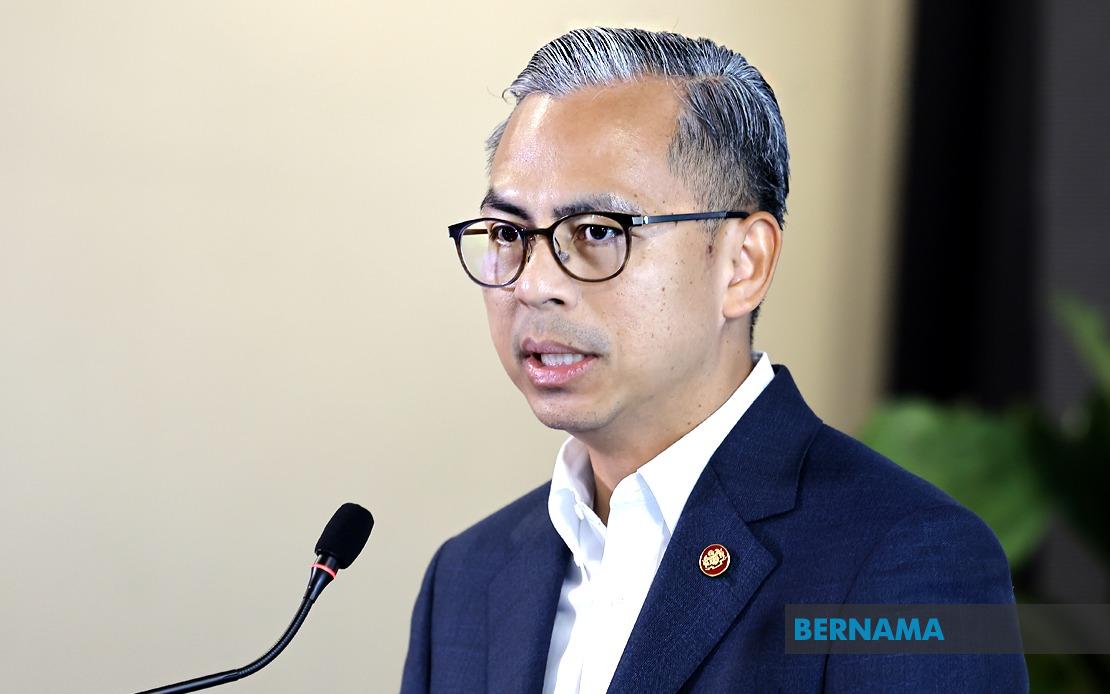
Communications Minister Datuk Fahmi Fadzil has been accorded the singular distinction of receiving the Darjah Panglima Pangkuan Negeri (DPPN) award, conferring upon him the title Datuk Seri, in a comprehensive honours ceremony set to unfold in Penang over the coming days. As the Unity Government's chief spokesperson, Fahmi tops the list of more than 1,200 recipients of state honours, awards and medals being presented in conjunction with the 85th birthday celebration of Penang Governor Tun Ramli Ngah Talib, underscoring the significance placed upon his political standing and public service contributions.
The Datuk Seri honour bestowed upon Fahmi represents the highest echelon of recognition within the state's honours system, with the DPPN designation conferring one of Malaysia's most prestigious titles to those who have demonstrated exceptional service to the nation and state. By receiving this award as a sole recipient, Fahmi joins an exclusive circle of individuals recognized at this rarified level within Penang's honours framework, reflecting his role as a pivotal figure in the federal government's communications apparatus and his responsibilities in articulating government policy to the public and media.
Beyond Fahmi's singular recognition, the honours ceremony reflects Penang's commitment to acknowledging contributions across multiple sectors of society. Nineteen individuals will receive the Darjah Gemilang Pangkuan Negeri (DGPN), which similarly carries the Datuk Seri designation, broadening the circle of top-tier honourees. This cohort encompasses figures of considerable institutional influence, including Chief Judge of Malaya Datuk Seri Hashim Hamzah, whose judicial authority extends across critical areas of the Malaysian legal system, alongside MARA Incorporated Sdn Bhd chairman Datuk Abdul Halim Mohammad and Invest Penang chief executive officer Datuk Loo Lee Lian, both instrumental in economic development and business facilitation within the state.
The DGPN recipients extend into the private sector and business leadership, with Pelita Samudra Pertama (M) Sdn Bhd managing director Tan Sri D. Murugan, Menara Rezeki Sdn Bhd managing director Datuk Saiful Nizam Mohd Yusoff, and M Summit Group chairman Datuk Moh See Eng representing the commercial forces driving economic activity in the region. Their inclusion signals Penang's recognition of the interconnection between state honours and the business community's contribution to regional prosperity and development initiatives.
The honours structure extends to nine recipients of the Darjah Yang Mulia Pangkuan Negeri (DMPN) and seventy-two recipients of the Darjah Setia Pangkuan Negeri (DSPN), both carrying the Datuk title but representing a slightly lower tier within the awards hierarchy. Among the DMPN recipients are former Penang police chief Datuk Azizee Ismail and UEM Group Bhd managing director Datuk Amran Hafiz Affifudin, reflecting recognition of law enforcement and infrastructure management sectors. The DSPN recipients encompass a broader cross-section of public servants and cultural figures, including the late renowned film actor, director and scriptwriter Nordin Ahmad, whose cinematic contributions to Malaysian culture are being posthumously acknowledged through state recognition.
The DSPN awards also honour those serving in critical national infrastructure and governance roles, such as National Disaster Management Agency director-general Datuk Meor Ismail Meor Akim, whose responsibilities in managing emergency preparedness and disaster response have grown increasingly significant amid climate and security challenges facing the region. Bank Rakyat chairman Datuk Mohd Irwan Mohd Mubarak represents the financial inclusion sector, while Penang Development Corporation CEO Abdul Latiff Abd Aziz exemplifies state-level development coordination. The inclusion of SRS Projek Transit Aliran Ringan (LRT) Sdn Bhd project director Adil Putra Ahmad reflects Penang's prioritization of public transportation and urban mobility infrastructure, critical considerations for a bustling state navigating rapid urbanization.
The broader honours framework extends to additional tiers of recognition, with ninety-two individuals receiving the Darjah Johan Negeri, followed by thirty-one recipients of the Bintang Cemerlang Negeri. The awards programme encompasses significant numbers at lower designations: one hundred ninety-four recipients of the Pingat Kelakuan Terpuji, three hundred twenty-eight of the Pingat Jasa Kebaktian, four hundred sixty-three of the Pingat Jasa Masyarakat, and twelve of the Pingat Bakti Setia. This tiered structure enables the state to recognize contributions across a wide spectrum of society while maintaining clear hierarchical distinction between levels of achievement and service.
Penang State Legislative Assembly Speaker and State Government Official Ceremonies Committee chairman Datuk Seri Law Choo Kiang has announced that the investiture proceedings will unfold over four days, commencing tomorrow and continuing through July 13 to 15, allowing sufficient ceremonial space for the presentation of honours to the substantial cohort of recipients. The extended timeline reflects the logistical complexity of recognizing over one thousand individuals while maintaining ceremonial dignity and ensuring each recipient receives appropriate formal acknowledgment. This extended schedule also distributes the administrative burden across multiple days, facilitating attendance of dignitaries and family members throughout the proceedings.
Within the broader 1,221-recipient pool, one hundred one individuals will receive formal state honours, while the remaining one thousand one hundred twenty recipients will be presented with awards and medals of merit across the four-day ceremony. According to Datuk Seri Law Choo Kiang, the honourees comprise an eclectic mixture reflecting Penang's diverse economic and social landscape: members of the state and federal civil services who administer government functions; politicians representing various electoral constituencies; corporate figures whose business acumen drives regional economic growth; members of non-governmental organisations advancing social causes; local entrepreneurs establishing economic opportunities; and volunteers contributing their time to community betterment initiatives. This comprehensive approach to state recognition acknowledges that societal advancement depends upon contributions from multiple constituencies working in complementary fashion.
The honours ceremony, ultimately, represents more than ceremonial occasion; it serves as a public reaffirmation of which individuals and sectors the state government considers worthy of formal recognition. Fahmi Fadzil's elevation to Datuk Seri status, as sole DPPN recipient, signals the communications ministry's centrality to the federal government's contemporary agenda, particularly during a period when managing public messaging and narrative surrounding the Unity Government's policies remains paramount. For Penang specifically, the comprehensive honours list demonstrates the state's investment in recognizing excellence and service across governmental, business, cultural and voluntary sectors, reinforcing societal values around dedication to public good and professional achievement that the state government wishes to encourage among its populace and beyond.
For Malaysian observers and those tracking Southeast Asian governmental structures, the Penang honours ceremony exemplifies how regional governments within federal systems utilize ceremonial recognition as a mechanism for reinforcing political legitimacy, rewarding constituent constituencies, and signalling policy priorities through the careful selection and ranking of honourees. The prominence accorded to Fahmi Fadzil, a federal minister from the ruling coalition, within a state honours framework reveals the intersection of federal and state political interests, while the inclusion of business leaders, judges, police officials and infrastructure managers demonstrates how contemporary Southeast Asian governance recognizes the interdependence of public administration, judiciary, security, commerce and infrastructure development in advancing regional competitiveness and livability.

