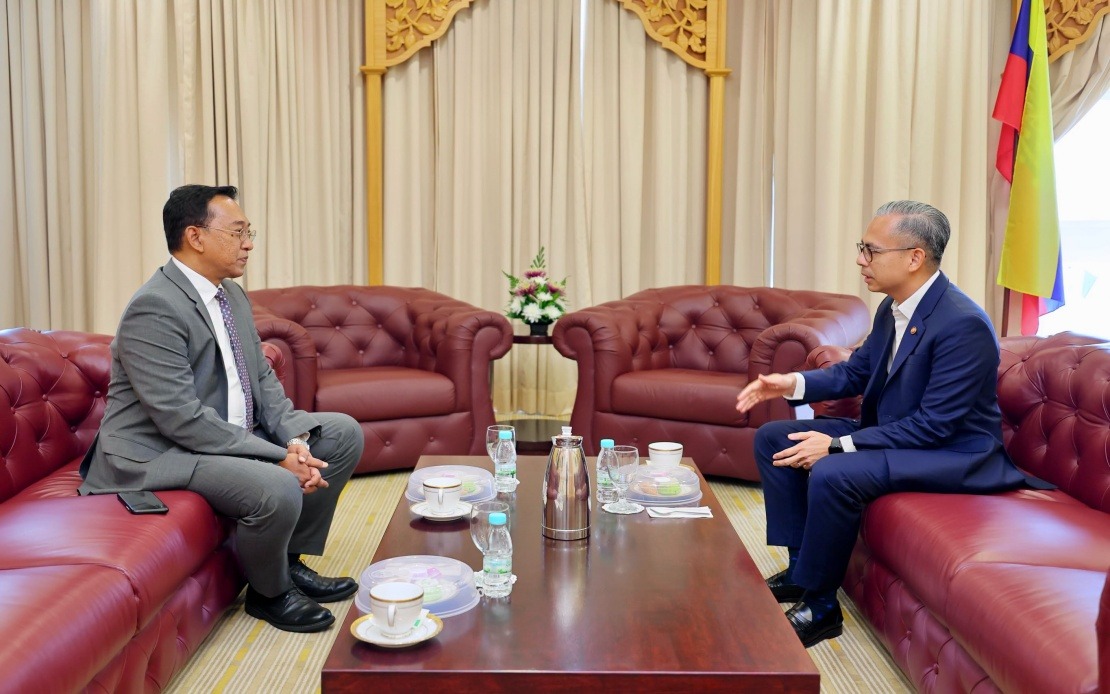
Malaysia's Communications Minister Datuk Fahmi Fadzil has received a courtesy visit from the country's freshly-appointed Ambassador to Lebanon, Anwar Udzir, in a meeting focused on reinforcing bilateral working relationships and exchanging perspectives on matters affecting Malaysia's standing on the global stage. The encounter, documented through a social media update by the minister, underscores the importance of maintaining robust connections between Kuala Lumpur's government apparatus and its diplomatic representatives stationed abroad.
Anwar Udzir, who formally received his credentials from His Majesty Sultan Ibrahim, King of Malaysia, on May 18, 2026, brings with him a track record of diplomatic engagement that extends beyond his appointment to Lebanon. The timing of this courtesy call reflects customary protocol whereby senior government officials welcome new ambassadors to establish rapport and set the tone for collaborative engagement during their tenures abroad.
The meeting served as a platform for substantive dialogue encompassing Malaysia's broader strategic interests at the international level. Such encounters between cabinet ministers and ambassadors typically establish a foundation for ongoing consultation on pressing global issues, bilateral relations with host nations, and the promotion of Malaysian interests within regional and international forums. The emphasis on exchange of views suggests that both officials recognised the significance of maintaining clear communication channels between domestic policymakers and those representing Malaysia overseas.
Fahmi's background familiarity with Anwar provides an additional layer of continuity to this diplomatic engagement. The minister recalled their prior collaboration when Anwar's team supported the organisation of the Asia-Pacific Telecommunity Ministerial Meeting held in Tokyo, Japan, during the preceding year. This shared experience of working together on telecommunications matters—a domain directly relevant to Fahmi's portfolio—creates a common reference point and suggests potential for coordinated efforts on matters bridging communications policy with international representation.
Lebanon occupies a strategically significant position in the Middle East, serving as a crucial hub for regional commerce, diplomacy, and cultural exchange. Malaysia's diplomatic presence in Beirut carries weight not only for bilateral relations but also for Malaysia's broader engagement with the Arab world and Middle Eastern nations. An ambassador's effectiveness in such a posting directly influences Malaysia's ability to advance trade interests, protect the welfare of Malaysian nationals present in the country, and participate meaningfully in regional political and economic discussions.
The appointment of ambassadors represents one of the most visible expressions of a nation's diplomatic priorities. Lebanon, despite ongoing internal challenges including economic strain and political complexity, remains important to Malaysia's network of international partnerships. The new ambassador will navigate a demanding environment while representing Malaysian interests and fostering people-to-people connections that extend the reach of bilateral relations beyond governmental channels.
Fahmi's explicit statement wishing Anwar success and expressing hope that he will be granted the opportunity to effectively represent Malaysia reflects the minister's recognition of the challenges inherent in diplomatic postings, particularly in volatile regions. Such encouragement from a senior minister signals organisational support for the ambassador's mission and may facilitate smoother coordination between the Communications Ministry and Malaysia's diplomatic corps on matters within the minister's jurisdiction.
The courtesy call also represents an opportunity for the minister to brief the ambassador on domestic policy priorities that may have international dimensions, as well as to receive updates on developments in Lebanon that could affect Malaysian interests or citizens. Given Fahmi's portfolio encompassing communications and media affairs, discussions likely touched upon Malaysia's media representation, digital diplomacy initiatives, and the broader communications landscape in Lebanon that could impact how Malaysia's narrative is presented within that country.
Diplomatic protocol demands that newly-arrived ambassadors conduct courtesy calls on senior government officials to establish relationships and signal their commitment to strengthening bilateral ties. These ostensibly ceremonial meetings often carry substantial significance in setting expectations and establishing the tone for an ambassador's tenure. Fahmi's receptiveness to this meeting and his public acknowledgment of it through social media underscores the value Malaysia places on this particular diplomatic posting and the ambassador's role.
Moving forward, the relationship established during this courtesy call may prove instrumental in facilitating communication between Malaysia's government and the Lebanese authorities on matters ranging from trade and investment to cultural exchanges and diplomatic coordination on regional issues. The ambassador will likely reference this initial engagement with the Communications Minister when negotiating on matters falling within his purview, using the established rapport to advance Malaysian positions and interests.
The meeting ultimately reflects the functioning of Malaysia's diplomatic machinery and the careful attention paid to ensuring that ambassadors feel supported by the home government as they undertake their international responsibilities. In an increasingly complex global environment where diplomatic skill and coordination matter substantially, such foundational relationships between ministers and ambassadors become particularly valuable assets in advancing national interests abroad.

