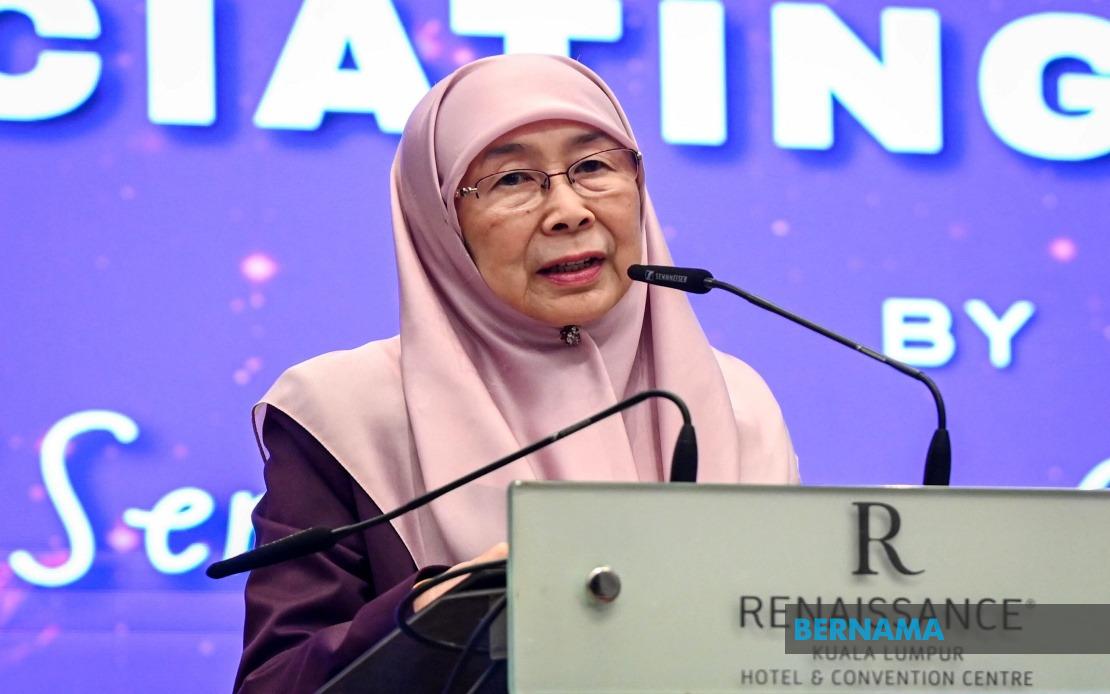
Datuk Seri Dr Wan Azizah Wan Ismail has emphasised that the delivery of effective maternal healthcare depends fundamentally on placing patients at the centre of every clinical decision, with technological and medical innovation serving as a means to an end rather than an end in itself. Speaking at the launch of the 16th Malaysian Obstetric Anaesthesiology Symposium (MyOASym) 2026 in Kuala Lumpur on July 3, the Prime Minister's wife articulated a vision for the healthcare system in which the quality of care transcends conventional metrics of clinical success to encompass the holistic experience of mothers and their families during pregnancy and childbirth.
The measure of excellence in maternal healthcare, Wan Azizah argued, cannot be confined to mortality rates, complication statistics, or other quantifiable clinical endpoints. Rather, healthcare systems must be evaluated on their capacity to uphold the dignity and respect of patients whilst providing meaningful emotional and psychological support during one of life's most transformative experiences. This perspective reflects growing international recognition that patient outcomes are inextricably linked to how individuals are treated throughout their medical journey, a principle that carries particular weight in the context of maternal care where physical and emotional wellbeing are deeply intertwined.
Wan Azizah's remarks underscore an apparent tension within modern healthcare systems: the rapid advancement of medical technology and innovation has created opportunities to diagnose and treat conditions with unprecedented precision, yet this progress can sometimes come at the expense of the human element that has traditionally defined the doctor-patient relationship. She cautioned that innovation alone, divorced from genuine human compassion and attentiveness to patient needs, falls short of the standards expected in contemporary healthcare delivery. The message resonates particularly strongly across Malaysia and the broader Southeast Asian region, where healthcare systems are increasingly grappling with how to balance technological modernisation with the preservation of culturally sensitive, family-oriented care practices.
The growing complexity of maternal healthcare demands represents a significant contemporary challenge that Wan Azizah highlighted as requiring urgent attention from healthcare planners and policymakers. Advanced maternal age, obesity, cardiac complications, and obstetric haemorrhage present increasingly common scenarios that extend beyond the capabilities of individual healthcare professionals working in isolation. These high-risk presentations frequently occur across Malaysian tertiary centres and demand a coordinated, collaborative response that integrates expertise from multiple specialties. The reality that such complex cases are becoming more prevalent reflects demographic and health trends affecting women throughout the region, including rising maternal age at first pregnancy and the growing prevalence of chronic conditions among women of childbearing age.
To address these mounting complexities, Wan Azizah advocated strongly for the systematic institutionalisation of multidisciplinary simulation training programmes that bring together anaesthesiologists, obstetricians, and neonatologists in structured educational environments. Such training initiatives simulate high-pressure clinical scenarios and allow teams to practise coordinated responses to emergencies before encountering them with actual patients. The evidence supporting simulation-based training in obstetrics is substantial, demonstrating improvements in team communication, reduced medical errors, and better patient outcomes. By embedding these practices across Malaysian healthcare institutions, rather than relying on ad-hoc training or informal learning, the healthcare system can create a more consistent standard of preparedness and reduce the variability in care quality that currently exists between facilities.
Wan Azizah's call for elimination of professional silos represents a critical insight into a systemic problem that extends well beyond the specific context of obstetric anaesthesiology. Within many healthcare institutions, specialists and departments operate with substantial autonomy, with limited formal mechanisms for interdepartmental communication and collaborative problem-solving. This compartmentalisation, whilst allowing for depth of expertise within individual specialties, can compromise patient safety and care quality when conditions require integrated management. Her emphasis on fostering a workplace culture that prioritises transparent communication and collective responsibility reflects best practices observed in high-performing healthcare systems internationally, including those in neighbouring Singapore and Hong Kong.
The implementation of early warning systems represents another crucial component of the framework Wan Azizah outlined for reducing maternal mortality and morbidity. These systems, which employ standardised protocols to identify patients at escalating risk, enable healthcare teams to intervene proactively before minor complications become life-threatening crises. Malaysia's maternal mortality ratio, whilst improved over recent decades, remains an area requiring continued attention and investment. Early warning systems, when properly implemented and supported by clear escalation protocols and adequate staffing, have demonstrated capacity to identify deteriorating patients and facilitate timely intervention, fundamentally altering the trajectory of potential obstetric emergencies into stories of successful management and maternal survival.
Beyond the systemic and institutional changes Wan Azizah advocated, she also directed her remarks toward individual healthcare professionals, particularly those early in their careers. She encouraged young doctors and nurses to maintain intellectual curiosity and commitment to continuous learning throughout their professional lives, recognising that medical knowledge evolves rapidly and yesterday's standard practice may be superseded by more effective approaches. Equally important, she stressed the value of mentorship relationships and creating psychological safety for junior staff to ask questions, seek guidance, and learn from their clinical experiences without fear of censure. This emphasis on developing empathy alongside technical proficiency addresses a recognised gap in many medical education curricula, which have traditionally prioritised scientific knowledge and procedural skill whilst giving less attention to communication, emotional intelligence, and patient-centred care practices.
The international dimension of MyOASym 2026 also merits attention as a reflection of Malaysia's standing within regional healthcare networks. The participation of obstetric anaesthesiology specialists and maternal healthcare professionals from Singapore, Hong Kong, and Pakistan demonstrates Malaysia's role as a centre for medical excellence and continuing professional development within Southeast Asia and beyond. Such gatherings facilitate the cross-pollination of ideas, the sharing of best practices developed in different healthcare contexts, and the establishment of collaborative relationships that can advance maternal healthcare quality across borders. For Malaysian healthcare professionals, the opportunity to engage with international colleagues provides exposure to varied approaches to common clinical challenges and access to expertise that can be adapted and integrated within the Malaysian healthcare system.
The symposium itself represents an important platform for addressing the evolving landscape of maternal healthcare in Malaysia. As the country faces demographic shifts, rising rates of chronic diseases among women of childbearing age, and increasing expectations regarding maternity care quality, the medical community must continuously reassess its knowledge, skills, and organisational practices. The focus on obstetric anaesthesiology, which plays a critical role in managing complex maternal cases and providing pain relief during childbirth, reflects recognition that this specialty requires particular attention and development to meet contemporary maternal healthcare needs.
Wan Azizah's articulation of the principles guiding excellence in maternal healthcare—patient-centredness, compassion, dignity, respect, multidisciplinary collaboration, and continuous learning—provides a framework that extends beyond the immediate context of obstetric anaesthesiology to inform broader healthcare system development across Malaysia. As the country continues to invest in healthcare infrastructure and professional development, this vision emphasises that technological and clinical advancement must always serve the fundamental goal of enhancing the wellbeing and dignity of patients and their families. For Malaysian policymakers and healthcare leaders, this message underscores the importance of viewing healthcare innovation not merely as the acquisition of new technologies or techniques, but as a comprehensive transformation in how healthcare systems are organised, how professionals communicate and collaborate, and how patients experience care within a framework of respect and compassion.

