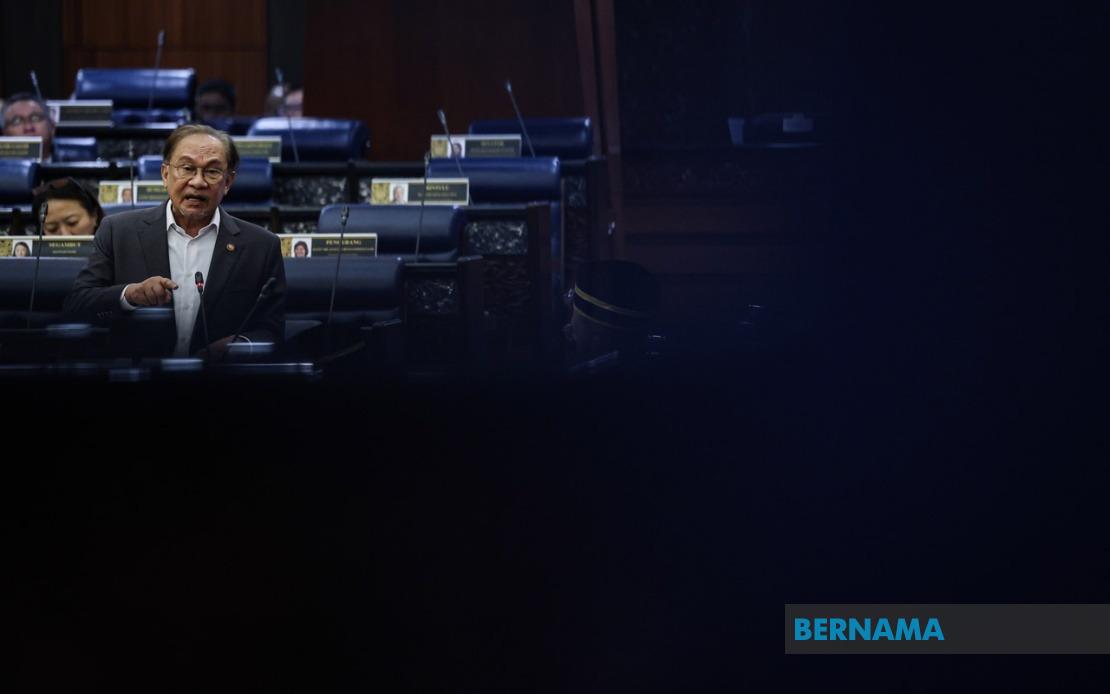
Prime Minister Datuk Seri Anwar Ibrahim has established a new procedural safeguard for journalists, declaring that complaints lodged against media practitioners from recognised organisations will no longer trigger automatic investigations or enforcement actions. Instead, all such complaints must first be examined by the Malaysian Media Council (MMM), which will serve as an independent gatekeeper to determine whether any formal action is warranted. This mechanism represents a significant shift in how press-related complaints are handled within Malaysia's regulatory framework, introducing an additional layer of scrutiny before the full weight of government machinery can be directed at individual journalists or news outlets.
The Prime Minister unveiled this policy during Minister's Question Time in parliament, responding to a query from Datuk Mohd Isam Mohd Isa of Tampin regarding Malaysia's existing legal provisions that permit the prosecution of journalists under laws such as the Sedition Act 1948 and the Official Secrets Act 1972. These statutes have long attracted criticism from media freedom advocates, press organisations, and international observers who contend they function as a de facto suppression mechanism that discourages robust reporting and holds journalists accountable to standards difficult to navigate, often in retrospect. The establishment of the MMM's gatekeeping role can be understood as an attempt to address these longstanding concerns while maintaining government authority over matters deemed sensitive.
Anwar emphasised that the new procedure reflects a commitment to ensuring that any disciplinary measures applied to media practitioners operate transparently, fairly, and with genuine independence. He stressed that journalists ought not to face investigations or prosecution merely because a complaint has been filed, a principle he framed as essential protection against weaponisation of legal mechanisms by government departments or officials who feel criticised by press coverage. The Prime Minister acknowledged that no jurisdiction worldwide grants unconditional freedom to the press, and that both media professionals and government figures remain bound by law, yet he argued that the existence of a complaint should not automatically transform into legal jeopardy.
The Malaysian Media Council is positioned as the crucial first checkpoint in this revised system. Before any government agency can initiate formal investigations or move toward prosecution, the matter must be referred to the MMM for preliminary assessment. This requirement fundamentally alters the previous process, which allowed for direct government action upon receipt of a complaint. By introducing the MMM as an intermediary body, the government has created space for specialised review by individuals with media industry expertise and understanding of journalistic practice and standards, rather than leaving such determinations entirely to law enforcement or bureaucratic machinery.
Understanding the context of this announcement requires recognising Malaysia's complex relationship with press freedom and government accountability. The country has experienced periods of tension between the state and media outlets, with journalists occasionally facing legal action under sedition and official secrets charges in contexts where the reporting in question touched on matters deemed sensitive by authorities. These incidents have sparked regional and international concern about the health of press freedom in Malaysia, affecting the country's standing in global media freedom indices and raising questions among foreign investors about the stability of the information environment. The Prime Minister's initiative can be read partly as an attempt to restore confidence in press freedoms while maintaining government prerogatives in defence of national security and public order.
The MMM itself represents a relatively recent institutional addition to Malaysia's media regulatory landscape, designed to provide an industry-oriented mechanism for addressing complaints and standards issues that might otherwise fall entirely within government jurisdiction. By elevating the Council's role to mandatory first reviewer of all complaints against journalists, the government has significantly enhanced its authority and visibility within the enforcement process. Journalists and media organisations may regard this development as protective, preventing casual or politically motivated complaints from ballooning into costly investigations, while critics may see it as formalising a filtering system that could shield problematic behaviour from external scrutiny.
The practical implications of this new protocol extend across Malaysia's media ecosystem. Independent news outlets, digital media platforms, and traditional broadcasters will all find themselves operating within this framework, where their journalists know that complaints against them will face review by a body with some industry representation before governmental response. This could encourage more adventurous reporting on matters that might previously have been considered too legally risky, or it might create a false sense of security if the MMM itself operates with insufficient independence or stringent standards. The effectiveness of this mechanism will depend heavily on how the Council comprises its membership, what criteria guide its decisions, and whether government agencies genuinely respect its determinations or find ways to circumvent the process.
For Malaysia's international standing, this development signals an attempt to address criticism about press freedom while preserving governmental capacity to manage information deemed threatening to national interests. Southeast Asian neighbours and international media freedom organisations will monitor how the MMM functions in practice, whether journalists actually experience fewer prosecutions, and whether complaints continue to flow into the system at previous rates. The announcement itself carries diplomatic value, demonstrating responsiveness to concerns about legal harassment of journalists, even as the underlying framework of restrictive statutes remains formally intact.
Looking forward, the success of this initiative will hinge on the transparency and credibility of MMM decision-making, the appointment of Council members with genuine media sector expertise, and the government's demonstrated willingness to allow the body to reject complaints or protect journalists. If the Council becomes merely a rubber-stamp body that rarely rejects government-initiated complaints, it will have failed in its protective function and may even entrench distrust. Conversely, if it proves genuinely independent and develops robust standards for evaluating complaints, it could substantially improve the operating environment for journalism in Malaysia and provide a model relevant to other Southeast Asian democracies grappling with similar tensions between national security imperatives and press freedom.

