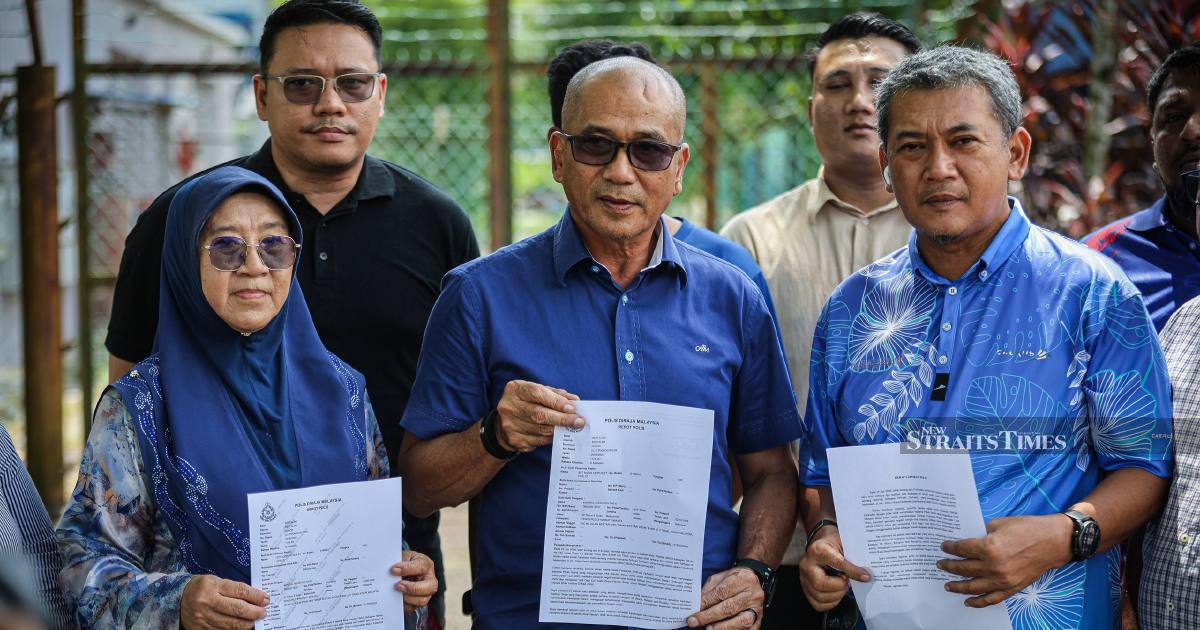
Tensions within Johor's political establishment have escalated following a series of police complaints filed by several Barisan Nasional members against Datuk Dr Mohd Puad Zarkashi, the former Umno supreme council member whose recent public statements have reignited controversy over the extent of palace influence in the state's political affairs. The reports, lodged in Johor Baru, represent a significant show of unified resistance from party members who view Puad's allegations as damaging to both institutional credibility and party stability.
Puad's commentary touched on sensitive terrain within Malaysian politics—the proper boundaries of royal involvement in state governance and party management. His claims specifically concerned what he characterised as unwarranted interference by the Johor palace in the affairs of state Umno, an assertion that strikes at long-standing questions about the relationship between traditional authority and democratic institutions. These allegations have clearly struck a nerve among Umno figures who depend on both palace support and public confidence in their leadership legitimacy.
The decision by Johor Barisan Nasional members to pursue formal police action indicates a coordinated strategy to discredit Puad's narrative and establish a counter-position defending palace autonomy and palace-party relations. By treating his statements as potentially actionable matters requiring police investigation, party leaders are signalling that such claims fall outside acceptable political discourse, effectively drawing a line around what can be publicly discussed regarding royal involvement in state matters.
For Malaysian observers accustomed to the delicate dance between monarchy and modern politics, the complaint filings underscore persistent tensions that rarely surface so openly. The Johor palace occupies a particularly prominent position within the state's political hierarchy, and suggestions of overreach—whether accurate or exaggerated—challenge the implicit understanding that guides royal-political relations across the country. This incident exposes how quickly such institutional relationships can become flashpoints when political actors disagree on fundamental questions of authority and influence.
Puad's background as a former Umno supreme council member lends weight to his allegations even as it may have motivated his critics to move against him more aggressively. As an insider with institutional knowledge, he possesses credibility that party newcomers could not match. Simultaneously, his rank within the party hierarchy means that his comments carry implications for how leadership genuinely functions, making them harder for officials to dismiss as mere factional grumbling.
The filing of police reports represents a calculated escalation that transforms what might have remained internal party debate into a matter of potential public interest and legal consequence. This shift to formal institutional channels signals that the disagreement has moved beyond reconciliation within normal party structures, suggesting fractures within Umno's Johor operations that run deeper than routine leadership disputes. The decision to go to police rather than resolve matters through party disciplinary mechanisms reflects a breakdown in internal consensus.
For Malaysian political observers, the sequence of events highlights the continuing centrality of palace relationships in state politics, particularly in territories with powerful traditional rulers. While Malaysia's federal system distributes authority between elected and hereditary leaders, the actual balance of power and legitimate influence in individual states remains subject to ongoing negotiation and occasional conflict. Johor's prominence as an economically important state with historically strong palace institutions makes such disputes particularly consequential for understanding how the system actually functions.
The complaints also reflect broader Umno dynamics following the party's experience in federal opposition and its fragmented state of party unity. As the party works to rebuild authority and consolidate support, internal disagreements about historical relationships with palace institutions surface tensions about how to move forward. Questions about whether past palace involvement was appropriate or excessive directly affect how current and future leaders should structure their relationships with rulers and their administrations.
Regional implications extend beyond Johor itself, as other states with significant palace influence may monitor how Malaysian institutions address Puad's allegations and the police complaints against him. The resolution of this matter—whether through police investigation, legal action, or political settlement—will establish precedent for how openly palace-politics relationships can be debated and what consequences critics face for raising such questions.
The incident also raises practical questions for Malaysian governance about transparency and institutional relationships. While the palace's advisory and ceremonial roles remain constitutionally defined, the informal mechanisms through which palace preferences influence political decisions often remain opaque. Puad's willingness to speak publicly about such dynamics, however contentious, addresses a genuine governance question that occasionally surfaces in Malaysian political discourse but rarely receives systematic public examination.
Moving forward, the situation will likely depend on what specific allegations police investigations might establish, what evidence Puad can present, and how Umno leadership ultimately decides to manage the dispute. The complaints themselves represent an attempt to reshape the conversation from substantive questions about palace influence to questions about whether Puad's statement method itself constitutes actionable wrongdoing.
For Johor's political stability and Umno's internal cohesion, the outcome carries significance. A prolonged conflict that pulls in palace institutions, police investigations, and multiple party factions could weaken both the state administration and the national party's recovery efforts. Conversely, quick resolution might suggest that powerful interests have moved to contain the controversy before it damages broader institutional relationships—a common pattern in Malaysian political management.

