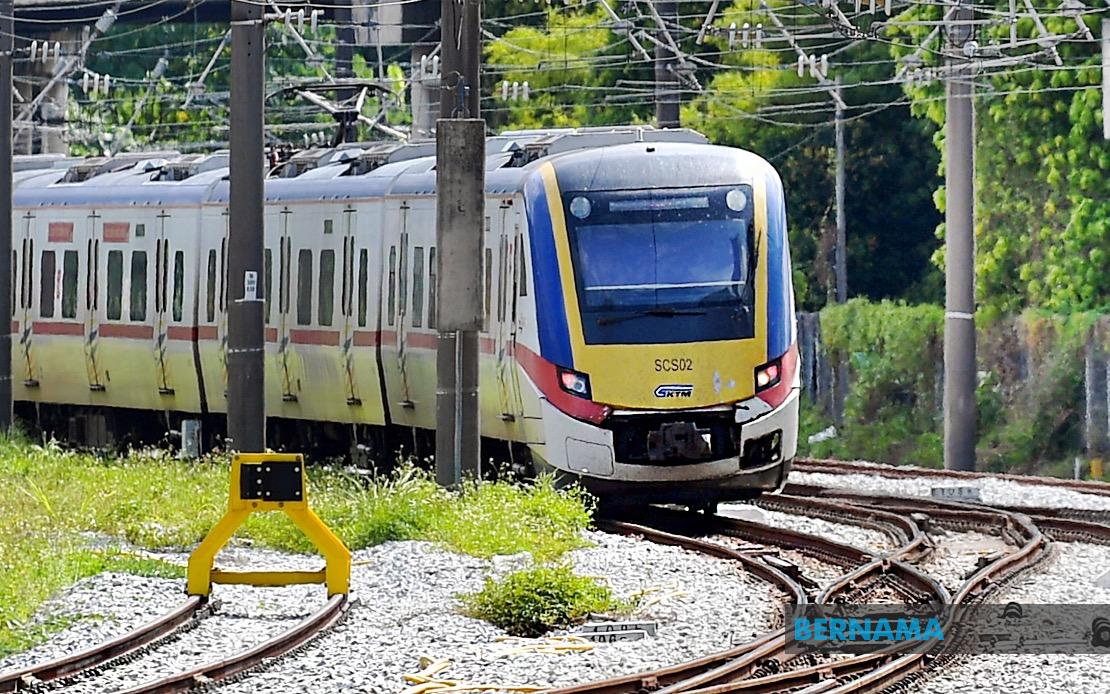
A wooden structure originating from a construction site collided with railway infrastructure near Batang Benar on July 23, triggering widespread disruptions to KTM Komuter Klang Valley and Electric Train Service operations across a critical section of the Kuala Lumpur rail network. The fallen material struck the overhead line system that supplies power to trains operating between Batang Benar and Labu stations, immediately cutting power to the affected corridor and forcing the suspension of train movements across the segment.
Keretapi Tanah Melayu Berhad (KTMB) responded by implementing significant service alterations to minimise passenger impact. Northbound KTM Komuter services originating from Pulau Sebang were rerouted to terminate at Seremban Station instead of continuing to KL Sentral, whilst trains heading toward either destination now operate exclusively from Bangi Station. The suspension of KTM Komuter services between Bangi and Seremban stations created a transport gap affecting commuters across one of Malaysia's busiest rail corridors, necessitating alternative travel arrangements for thousands of daily passengers whose journeys crossed the damaged section.
To mitigate the disruption's severity, KTMB deployed substitute transport capacity within hours of the incident. Three shuttle buses were stationed at Seremban, Tiroi, Batang Benar, Labu and Bangi stations to transport stranded KTM Komuter passengers, though this replacement system operated at a fraction of the capacity that train services normally provide. ETS passengers experienced similar complications, with KTMB positioning seven shuttle buses across KL Sentral, Bandar Tasik Selatan, Kajang and Seremban stations. The rail operator also extended a full refund entitlement to ETS passengers who opted not to continue their journeys from their departure stations, acknowledging the severity of service degradation and providing an exit option for affected travellers.
Investigators quickly identified systemic failures in safety compliance by the contractor responsible for the wayleave project administered by the Public Works Department (JKR). KTMB's preliminary findings revealed that the contractor had neglected fundamental procedural requirements established to prevent exactly such incidents. Most critically, the contractor failed to submit a comprehensive work schedule detailing planned activities, and more immediately problematic, provided no advance notification to KTMB regarding the timing of the bridge construction works executed on the day of the collapse, suggesting the work proceeded without the railway operator's knowledge of the specific construction methodology being deployed.
These omissions represented serious breaches of the Site Entry Permit Standard Operating Procedure, a protocol specifically designed to maintain safety oversight during construction activities near railway infrastructure. Under the established SOP, once full approval has been granted and all mandatory documentation submitted, KTMB requires three technical representatives stationed on-site to provide continuous monitoring. These representatives must include personnel from the Regional Engineer department, the Signalling and Communications division, and the Electrification department—three distinct technical specialisms essential for identifying risks that might compromise railway operations or safety. The contractor's failure to trigger this oversight mechanism meant that construction proceeded without expert railway personnel present to intervene when unsafe practices threatened critical infrastructure.
The incident carries implications beyond the immediate operational disruption. It exposes vulnerabilities in how third-party construction activities operating near railway assets are supervised, particularly when contractors work under government projects or partnerships. The Public Works Department's role in contracting raises questions about whether JKR's procurement and project management protocols adequately communicate safety responsibilities to contractors, or whether contractors understand the consequences of non-compliance with railway-specific procedures. For Malaysian commuters and transport planners, the collapse underscores how construction-related lapses can cascade through multiple transport systems simultaneously, as both the suburban KTM Komuter network and the express ETS service depend on shared overhead infrastructure.
KTMB's technical teams mobilised immediately to assess and repair the damaged overhead line system, recognising that restoring power to the corridor represented the critical path to reopening services. The railway operator's statement indicated that restoration efforts were proceeding with urgency, though no specific timeline was provided for when full operations would resume. Given the complexity of overhead line systems and the safety testing required before trains can safely operate, repairs typically require several hours minimum, potentially extending into the following day depending on the extent of structural damage and the availability of replacement components.
The incident reflects broader challenges facing Malaysia's transport infrastructure as rapid urban development and construction projects proliferate across the Klang Valley. Coordinating safety between railway operators and construction contractors requires robust communication protocols and genuine enforcement of compliance measures. The contractor's apparent ignorance of notification requirements—or deliberate disregard for them—suggests that penalties for non-compliance may be insufficiently serious to deter shortcuts that compromise safety. Future incidents might be prevented through strengthened accountability mechanisms that make contractors and supervising departments share responsibility for breaches.
For commuters depending on these services, the disruption reinforced the vulnerability of concentrated rail corridors to single-point failures. The segment between Bangi and Seremban carries substantial daily passenger volumes across multiple towns in Selangor, and the substitution of shuttle buses cannot match train capacity, leading to inevitable overcrowding and delays. This incident illustrated how third-party activities, properly managed, need not disrupt services at all—but when safety procedures are bypassed, consequences ripple across transport networks and affect hundreds of thousands of journey plans.
KTMB's public apology acknowledged the service failure while reaffirming passenger safety as the operator's priority, a message aimed at rebuilding confidence in rail services among affected commuters. The operator advised passengers to monitor official social media channels and consult station staff for real-time service updates, recognising that reliable information flow becomes crucial when services operate in degraded mode. The incident will likely prompt KTMB to review its oversight mechanisms for wayleave projects and consider whether existing penalties adequately incentivise contractor compliance with safety procedures that protect both railway operations and public safety.

