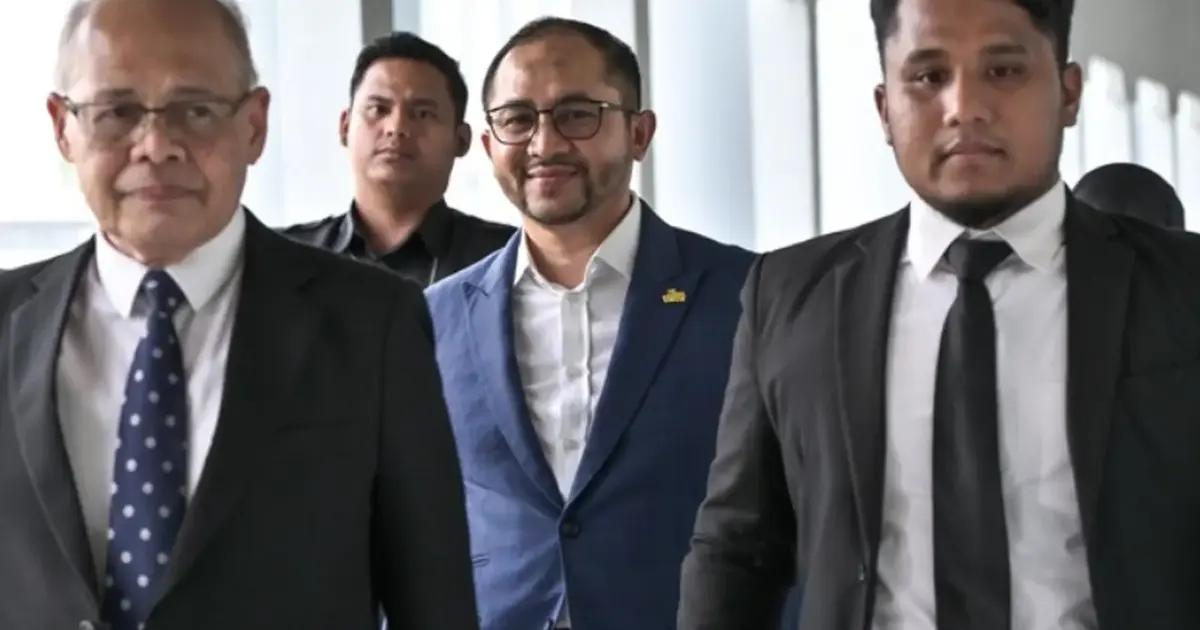
A managing director has testified in court that he faced pressure from a former political secretary to hand over a substantial portion of a lucrative consultancy contract secured through a police tender. Khairi Mat Jahya claims that Sayed Amir Muzzakkir Al Sayed Mohamad, who previously worked as a political secretary, demanded roughly RM9 million from the RM19 million fee after the consultancy arrangement was finalised.
The case shines a spotlight on the murky intersection between political connections and corporate procurement in Malaysia, an issue that has long troubled observers of governance and business practices. When individuals in political office or their close associates leverage their positions to extract financial benefits from business dealings, it undermines competitive tendering processes and distorts market conditions. This particular instance involves a police tender, a sensitive area where procurement integrity is essential to maintaining public confidence in law enforcement institutions.
According to Khairi's account, the pressure applied by Sayed Amir Muzzakkir occurred after he had successfully secured the consultancy engagement related to police operations. The nature of the demand and the circumstances under which it was made form crucial elements of the case. Such arrangements, where political figures or their associates are awarded fees without apparently delivering tangible services, raise fundamental questions about how public resources are allocated and whether competitive bidding processes are genuinely open or predetermined to benefit connected parties.
The RM19 million fee represents a substantial amount of public money, likely drawn from police budgets that could otherwise support core law enforcement activities. For Malaysian taxpayers and the broader public, the implications are significant. If political intermediaries are systematically extracting portions of government contracts simply by virtue of their access and connections, the cost of government services rises artificially while the quality may not improve. This is a hidden tax on government operations that reduces efficiency and inflates spending across numerous tenders and projects.
Sayed Amir Muzzakkir's role as a former political secretary is particularly relevant to understanding this case. Political secretaries occupy positions of significant influence, often serving as intermediaries between politicians and the business community. They develop extensive networks and wield considerable informal power, sometimes translating political proximity into personal financial advantage. When such individuals allegedly demand cut payments from businesses seeking to work with government agencies, it suggests a systematic pattern that extends beyond isolated incidents of corruption.
The testimony provided in court represents a rare glimpse into the mechanics of how such arrangements allegedly operate at the ground level. Khairi's willingness to come forward and testify about the pressure he faced indicates that someone involved in the chain decided that transparency and legal accountability were more important than maintaining confidential business relationships. This kind of disclosure is crucial for anti-corruption efforts, as it provides evidence of actual methods used rather than mere speculation or theoretical scenarios.
The police tender connection adds another layer of concern. Police procurement often involves sensitive equipment, technology, and services essential to national security and public order. If such contracts are compromised by political pressure and corrupt intermediaries, it affects not only financial accountability but potentially operational capability and the effective delivery of police services to communities across Malaysia. Additionally, contractors selected not on merit but on their willingness to pay kickbacks may lack the qualifications or experience needed to deliver quality services.
For businesses operating in Malaysia, this case illustrates the challenging environment they navigate. Companies seeking government contracts face a dilemma: they can either resist pressure from connected individuals and potentially lose opportunities, or they can comply with demands for financial arrangements that may not be legitimate. This creates a corrosive dynamic where business success becomes less dependent on innovation, efficiency, and quality, and more dependent on connections and willingness to make informal payments.
The RM9 million demand represents approximately 47 percent of the total consultancy fee, a proportion suggesting this was not a minor request but rather a substantial claim. This high percentage indicates that Sayed Amir Muzzakkir was not seeking a modest facilitator's fee but rather treating the arrangement as a means to extract significant personal wealth. It demonstrates the scale of financial benefit that political connections can command in Malaysian business relationships.
The case also raises questions about what services or value, if any, the political secretary provided to justify such a substantial claim. Did he actively facilitate the tender? Did he use his political influence to secure the contract? Or was the demand simply extraction based on political proximity and access? The answers to these questions would determine whether this represents straightforward corruption or a more complex arrangement that blurred lines between legitimate consultancy work and improper influence peddling.
For Malaysian policymakers and anti-corruption authorities, cases like this underscore the need for stronger transparency requirements in government procurement. Enhanced disclosure rules regarding consultant payments, restrictions on political figures' involvement in commercial activities, and robust mechanisms for reporting pressure and demands could help create a more level playing field. The testimony provided in court may serve as important precedent for how such cases are prosecuted and what standards of evidence are required.
The broader context includes Malaysia's ongoing efforts to improve governance standards and meet international anti-corruption benchmarks. High-profile cases involving alleged political interference in business dealings attract international scrutiny and affect Malaysia's reputation among foreign investors and development partners. Countries perceived as having significant corruption challenges often face higher costs for capital, more stringent compliance requirements, and reduced confidence from international business communities.
As this case progresses through the courts, the outcome will carry implications beyond the immediate parties involved. It will signal whether Malaysia's legal system can effectively hold politically connected individuals accountable for extracting financial benefits through their proximity to power. The testimony of Khairi Mat Jahya and any supporting evidence will be crucial in establishing whether patterns of such demands exist and how pervasively they affect government procurement processes across various agencies and departments.

