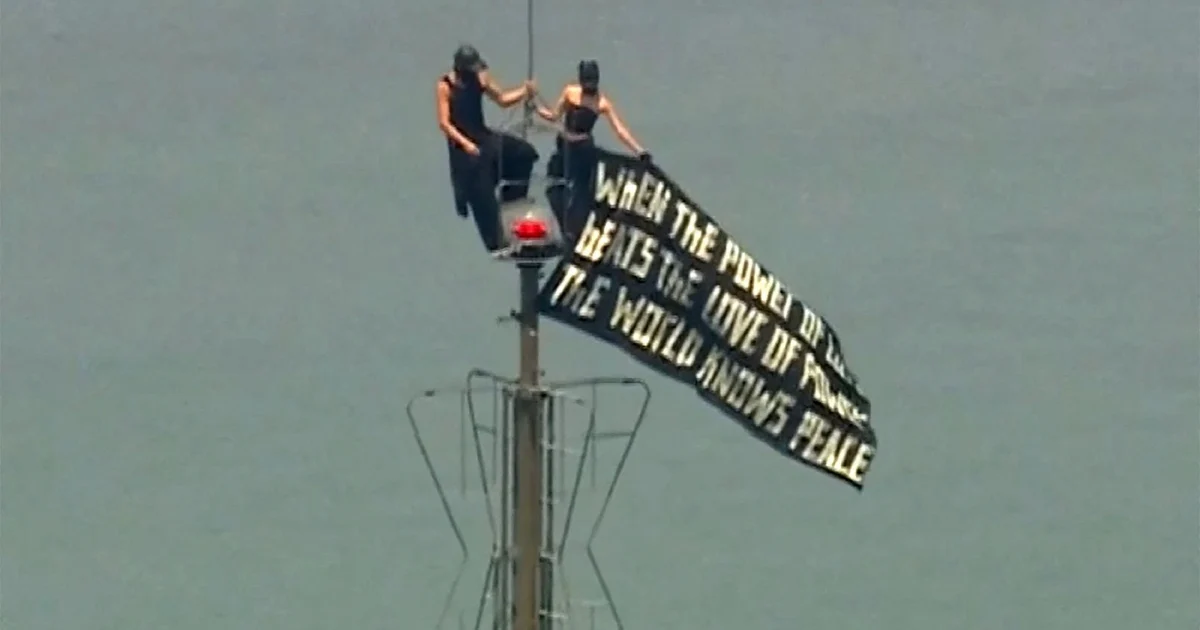
Two people found themselves in police custody on Wednesday following an unauthorized ascent of the antenna structure crowning Manhattan's Empire State Building, an incident that may have coincided with an unexpected marriage proposal at the rooftop's most elevated point. The daring climb caught the attention of onlookers and authorities alike, transforming what the pair apparently intended as a romantic gesture into a trespassing case that resulted in arrests.
The Empire State Building, one of the Western Hemisphere's most recognizable architectural landmarks, stands as a symbol of American engineering and ambition. Rising 380 metres to its roof, the structure's antenna extends the total height to over 440 metres, making it a destination that draws millions of visitors annually through its observation decks. The building's prominence in global culture—from King Kong to countless films and literature—has made it a site where people frequently seek memorable moments, though few attempt them through unauthorized routes.
New York's authorities maintain strict protocols around the building to ensure public safety and security. The antenna sections remain off-limits to visitors, protected by physical barriers and monitored surveillance systems designed to prevent exactly this sort of unauthorized access. Climbing the antenna constitutes criminal trespassing and creates liability concerns for building management, regardless of the climber's intentions or the momentous personal nature of the occasion.
The timing of this incident underscores a broader pattern of individuals attempting elaborate gestures in prominent locations to mark significant life moments. Social media has amplified expectations around such displays, with publicly documented proposals and romantic stunts becoming increasingly common across major cities worldwide. This cultural shift has created additional challenges for authorities managing public spaces and buildings, who must balance tolerance for expression with security and legal obligations.
What makes this particular incident notable is the combination of the climbing method and the probable engagement element. The pair apparently coordinated their effort to reach the antenna summit, suggesting premeditation and planning for a moment they hoped would be unforgettable. However, the execution bypassed legal channels entirely—the building offers designated spaces and pathways for significant celebrations, yet these climbers chose the riskier unauthorized route.
The arrest raises questions about enforcement consistency and the measures building authorities employ to prevent such breaches. The Empire State Building's popularity as a tourist attraction and symbolic location means it likely faces ongoing attempts at unauthorized access, though large-scale climbs with apparent romantic motivations remain relatively rare incidents. The building's management now faces the task of reviewing how breaches occur and what additional preventative measures might prove effective without compromising legitimate visitor experiences.
For visitors and residents in New York and beyond, this incident serves as a reminder of the consequences accompanying dramatic public gestures in restricted areas. The criminal charges faced by the pair will likely dampen any romantic sentiment surrounding their actions, turning a moment intended to celebrate their relationship into a legal complication requiring resolution through the court system. Whether their engagement—if it did occur—survives the subsequent legal proceedings remains unknown.
The incident also reflects broader tensions between individual expression and institutional security requirements that characterize modern urban environments. Major landmarks globally struggle with similar challenges, from tourists scaling barriers at historical monuments to individuals seeking to mark significant moments in ways that test or circumvent established safety protocols. Building and site managers must continuously adapt their approaches while recognizing that the desire to create memorable moments in iconic locations shows no signs of diminishing.
For Southeast Asian readers, this story carries particular resonance given the region's own iconic structures that attract similar attention. Cities throughout Malaysia, Singapore, Thailand, and Indonesia feature distinctive buildings and landmarks that face comparable challenges from visitors seeking dramatic backdrops for significant personal moments. The balancing act between allowing public celebration and maintaining security and safety standards represents a persistent challenge for facility managers across the region.
The Empire State Building incident ultimately highlights how the impulse to commemorate important life moments—particularly marriage proposals—intersects with urban security concerns and legal frameworks. While the pair's apparent intention to propose at an iconic location demonstrates romantic sentiment, their choice to pursue this through unauthorized climbing methods has transformed their story from one of celebration into one of legal consequence. As major cities continue evolving their approaches to managing public spaces and building access, incidents like this will likely prompt further conversations about balancing public safety with the human desire to create extraordinary memories in memorable locations.

