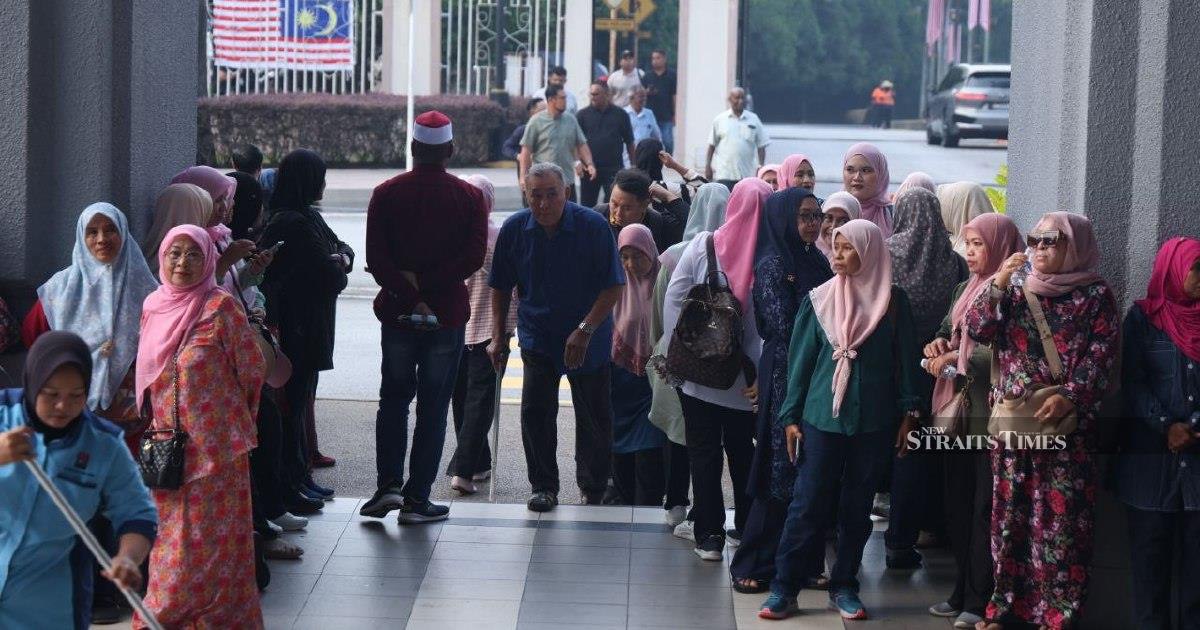
The Kuala Lumpur Court Complex has become a focal point of intense media scrutiny as former prime minister Datuk Seri Ismail Sabri Yaakob prepares to make a significant court appearance today. More than 30 media practitioners have positioned themselves in the lobby of the complex, awaiting the arrival of the prominent political figure who is expected to face formal charges. The gathering underscores the magnitude of this development within Malaysia's political landscape, reflecting the enduring public interest in accountability measures involving senior government figures.
The presence of such a substantial media contingent signals the gravity that Malaysian news organisations are placing on this proceeding. The anticipation at the court complex demonstrates how closely the nation's press is monitoring developments related to political accountability. For Malaysia's evolving judicial and political processes, this moment carries symbolic weight—it represents the visible functioning of investigative and prosecutorial mechanisms at the highest levels, where former holders of executive power face the same legal frameworks as other citizens.
Ismail Sabri's tenure as prime minister, which lasted from August 2021 to August 2022, was marked by considerable political turbulence. His arrival at the court complex today represents a noteworthy chapter in the ongoing narrative of Malaysia's post-2018 political transformation. The proceedings come amid a broader context of increased scrutiny directed toward political leadership across Southeast Asia, where questions of governance, financial propriety, and institutional accountability have become increasingly prominent.
The formal charging of a former prime minister carries profound implications for Malaysia's democratic institutions and the rule of law. Such occasions provide the judiciary with an opportunity to demonstrate its independence and commitment to impartial application of legal standards, regardless of the defendant's former standing. For international observers monitoring governance trends in the region, today's proceedings will offer insights into how Malaysia's legal system manages cases involving former high-ranking officials.
The court complex itself has become a symbolic venue for Malaysia's reckoning with political and administrative conduct. In recent years, it has hosted numerous proceedings that have captured public attention, reflecting a period during which questions about political accountability and institutional integrity have moved from peripheral to central within Malaysian discourse. The media's substantial presence today reflects genuine public demand for transparent observation of judicial processes affecting prominent figures.
For Malaysian citizens and regional observers alike, the unfolding events provide a window into how democratic and legal mechanisms function when applied to former leaders. The question of whether these processes operate consistently and fairly affects public confidence in institutions essential to Malaysia's long-term stability and development. Today's proceedings will contribute to the broader assessment of whether accountability mechanisms are credible and effectively functioning across the political spectrum.
The gathering at the court complex also highlights the significant role that media institutions play in contemporary Malaysian governance. By maintaining presence at key judicial moments, news organisations help ensure public access to information about proceedings affecting national leadership. This transparency serves an important democratic function, allowing citizens to understand and evaluate how their judicial system addresses allegations involving high-level officials.
Ismail Sabri's navigation through Malaysia's legal system comes at a time when the country continues processing numerous matters related to political conduct and administrative propriety. The cumulative effect of such cases is gradually reshaping expectations about political accountability within Malaysian society. His appearance today joins an accumulating body of precedents that may influence future standards regarding how Malaysia handles allegations directed at political leadership.
For supporters and critics alike, today's developments will likely resonate far beyond the court complex itself. Political movements across Malaysia will be observing the proceedings and their outcomes, as these will have implications for how various constituencies perceive the fairness and effectiveness of institutional mechanisms. The media's prominent presence ensures that these observations and interpretations will circulate throughout the country and across the region.
Looking forward, the handling of this case may establish important precedents for how Malaysia manages similar situations involving former political leaders. The proceedings occurring today at the Kuala Lumpur Court Complex represent not only a chapter in Ismail Sabri's personal legal journey but also a moment in Malaysia's broader institutional evolution. How the nation's judicial and political systems navigate these waters will reflect on their credibility and capacity to maintain public confidence during a period of significant democratic transition and institutional refinement.

