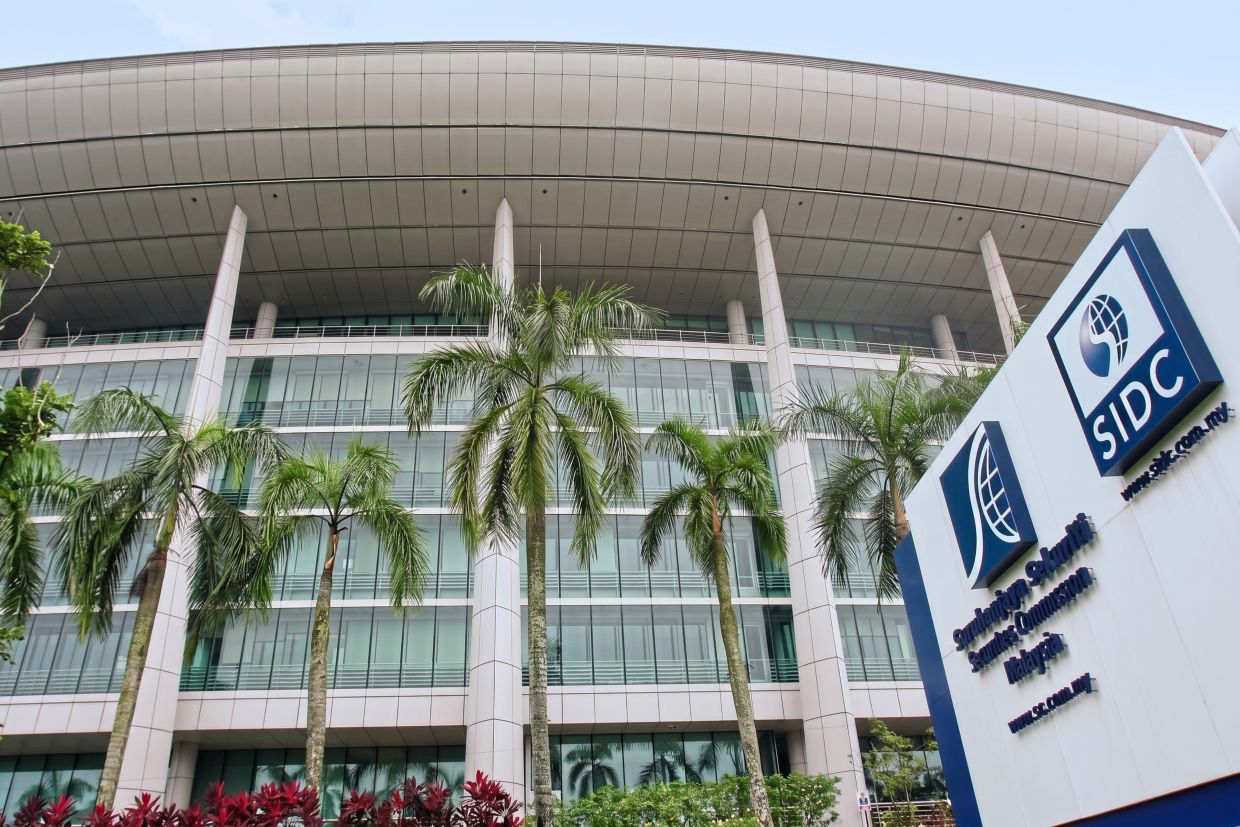
The Court of Appeal has delivered a decisive victory for Malaysia's Securities Commission in a high-profile insider trading case, unanimously upholding the High Court's 2022 judgment against two executives and ordering them to pay a combined RM5.83mil. The appellate court found no grounds to overturn the original decision, dismissing both defendants' appeals and awarding the SC an additional RM100,000 in costs from each appellant. The ruling underscores the judiciary's firm stance on market misconduct and provides the regulatory body with renewed legal standing to pursue recovery of the full judgment amount.
The case centred on former WCT Bhd deputy managing director Goh Chin Liong, who was found to have shared sensitive, non-public information with Ara Holdings director Leong Ah Chai regarding the cancellation of a major construction contract. The contract, initially awarded to a joint venture between WCT and UAE-based Arabtec Construction LLC for the development of a racecourse in Dubai, was set to be terminated. Armed with this material knowledge, Leong subsequently orchestrated the disposal of 1.64 million WCT shares held in Ara Holdings' trading account between January 2 and 5, 2009, capitalising on information unavailable to the broader market.
The Securities Commission originally initiated civil proceedings against both men in 2015, alleging breaches under sections 188(2) and 188(3) of the Capital Markets and Services Act 2007. These provisions specifically target the improper communication and use of material non-public information in securities transactions. The SC's investigation meticulously traced the flow of confidential information from Goh's position within WCT to Leong's subsequent trading activity, establishing a clear causal link between the insider knowledge and the share disposals that sought to avoid losses.
At the High Court level, the judge thoroughly examined the evidence and found the SC's case compelling, ruling in the commission's favour following a full trial. The original judgment imposed substantial penalties on both defendants: each was ordered to pay RM2.5mil as disgorgement of losses avoided through their illicit trading, RM300,000 as a civil penalty, and RM75,000 towards the SC's legal costs. The disgorgement component is particularly significant, as it represents the profits or losses avoided through insider trading rather than profits actually gained, reflecting the law's focus on removing any benefit derived from market misconduct.
When the defendants appealed, the Court of Appeal conducted a thorough review of the legal proceedings and evidence. Finding no appellate error that would justify intervention, the court unanimously affirmed every aspect of the High Court's judgment. This comprehensive endorsement carries substantial weight in Malaysian corporate law jurisprudence, as it confirms that the original tribunal's findings of fact, legal analysis, and penalty assessment all withstood appellate scrutiny.
A critical development occurred in May 2026 when the SC successfully appealed to the High Court to reinstate garnishee orders against both Goh and Leong. These orders are enforcement mechanisms that enable the SC to attach assets and recover the judgment sum directly from the defendants' bank accounts or other liquid assets, significantly strengthening the regulator's ability to collect the awarded damages. With the Court of Appeal's confirmation, the SC now possesses reinforced legal authority to proceed with asset recovery efforts.
The Securities Commission has made clear that this case exemplifies its commitment to prosecuting insider trading cases regardless of the time elapsed or complexity involved. Nearly two decades passed between the actual trading activity in 2009 and the initiation of civil proceedings in 2015, yet the commission pursued the matter through multiple levels of the judiciary. This persistence demonstrates that insider trading investigations in Malaysia are not subject to practical statute-of-limitations pressures that might discourage enforcement in other jurisdictions.
For Malaysian investors and market participants, the judgment carries important symbolic significance. Insider trading undermines the foundational principle that all market participants operate with access to equivalent information and trading opportunities. When executives exploit confidential corporate knowledge for personal gain through securities trading, they violate the trust essential to functioning capital markets. The SC's successful prosecution and the courts' unanimous support signal that Malaysia's regulatory framework and judicial system are equipped to identify, prosecute, and penalise such breaches.
The case also illustrates the practical mechanisms through which insider trading can be detected and proven. The SC demonstrated that by tracing communication between insiders, examining the timing of corporate announcements relative to trading activity, and analyzing transaction patterns, regulators can construct compelling evidence of market misconduct. The relatively large share disposal immediately following the contract cancellation announcement provided clear circumstantial evidence supporting the charge.
Moving forward, the SC has indicated it will focus on recovering the full judgment sum from the defendants. The reinstatement of garnishee orders provides multiple avenues for collection, including direct asset seizure and account attachments. Should the defendants lack sufficient readily available assets, enforcement could potentially extend to other remedies under Malaysian insolvency and execution law.
The regulatory environment surrounding Malaysia's capital market continues to evolve, with the SC increasingly deploying both criminal and civil enforcement tools. Civil cases such as this one carry distinct advantages for regulators, including lower evidentiary standards compared to criminal prosecution and the ability to seek specific remedies like disgorgement. The Court of Appeal's affirmation suggests Malaysian courts remain receptive to the SC's civil enforcement strategy.
This judgment arrives at a time when regional regulators across Southeast Asia are intensifying scrutiny of insider trading activities. Singapore, Thailand, and Indonesia have all prosecuted high-profile insider trading cases in recent years, creating pressure on Malaysian authorities to maintain comparable enforcement vigour. The unanimous Court of Appeal decision positions Malaysia favourably in this regional context, demonstrating that the country's courts and regulators take market integrity seriously.

