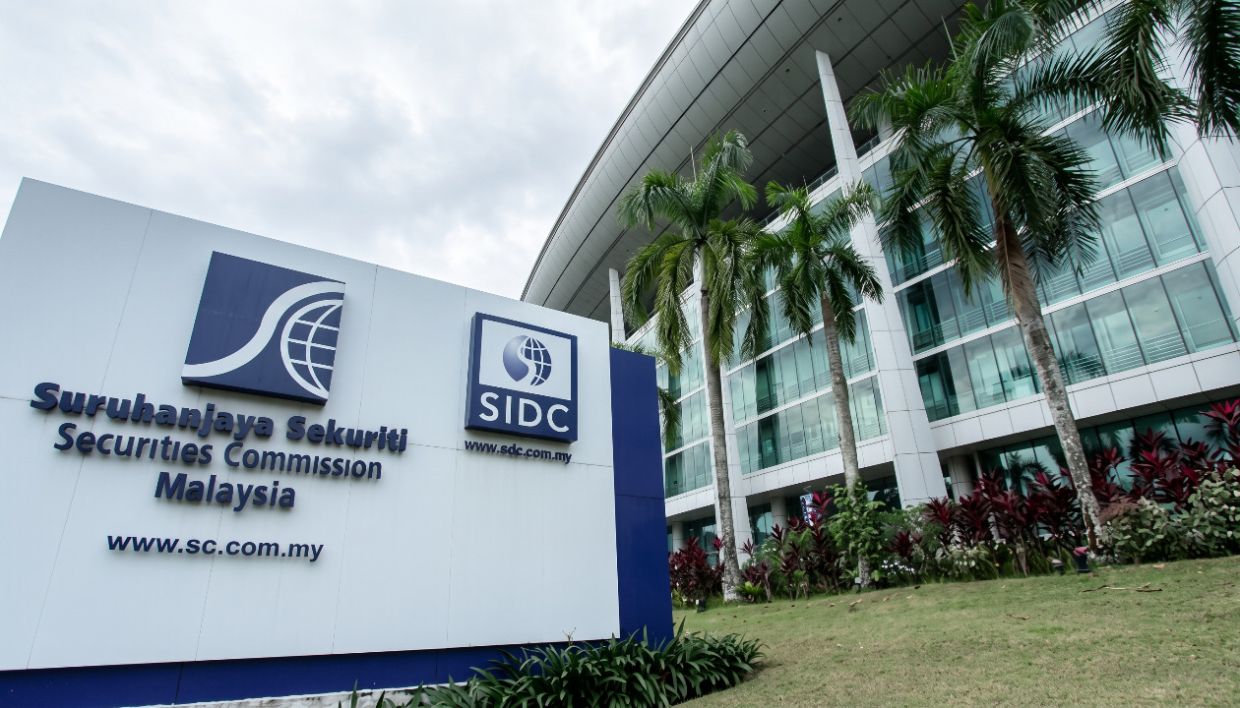
Malaysia's appellate courts have decisively backed regulatory action against prominent businessman Ricky Wong, with the Court of Appeal on Monday dismissing his challenge to a sweeping asset freeze worth RM169.2 million. The three-judge bench, comprising Justices Datuk Ravinthran N. Paramaguru, Datuk Dr Choo Kah Sing and Datuk Leonard David Shim, upheld the Securities Commission Malaysia's position entirely, rejecting arguments from Wong, his associate Teh Sew Wan, and their company Wong SK Holdings Sdn Bhd. The appellants were ordered to pay RM200,000 in costs to the SC, a financial penalty underscoring the seriousness with which the courts regard the regulator's case.
The asset freeze itself dates back to May 2020, when the High Court first granted an emergency ex parte injunction without the defendants present. This early order proved prescient given subsequent developments. That initial measure was subsequently fortified on April 28, 2022, when Justice converted it into a full inter partes injunction—a stronger legal position achieved after both sides had argued their case. The newer injunction remains binding throughout the course of the civil proceedings, which the SC initiated in 2020 to address what it characterises as significant breaches of the Capital Markets and Services Act 2007 under Section 179. Critically, the freeze extends beyond merely preventing Wong and his co-defendants from accessing the identified assets; it operates as a comprehensive prohibition on any third party knowingly facilitating transactions involving the frozen property.
The regulatory enforcement effort reflects mounting concern about securities violations within Malaysia's financial system. The SC's allegations centre on conduct that the regulator views as undermining confidence in capital markets integrity. By obtaining the asset freeze, the regulator has effectively neutralised the risk that assets could be dissipated or moved offshore before the substantive civil claim reaches resolution. This tactical positioning is crucial in complex fraud cases where alleged wrongdoers possess resources and sophistication to relocate funds. The fact that the Court of Appeal found no merit in Wong's arguments—neither procedural nor substantive—sends a clear message about judicial confidence in the SC's case foundation.
Wong's legal team, led by prominent lawyer Tan Sri Muhammad Shafee Abdullah of Messrs Shafee & Co, mounted a vigorous defence, as did Teh's counsel Tan Sri Cecil W. M. Abraham from Messrs Cecil Abraham & Partners. Despite their expertise and resources, the appellate judgment went entirely against their clients. The SC's legal representation, including appointed external counsel Datuk Lim Chee Wee and Kwan Will Sen alongside in-house prosecutors Mohd Hafiz Mohd Yusoff and Loo Kit Ming Keith, successfully defended the regulator's position across multiple fronts. The appellate dismissal means Wong and his associates cannot now seek further review of the asset freeze through ordinary appeal channels, though hypothetically they might pursue other extraordinary legal remedies—a prospect that appears increasingly remote given the appellate court's emphatic rejection of their arguments.
The underlying civil suit has entered a measured but demanding trial phase at the Kuala Lumpur High Court, with proceedings now scheduled to resume only on September 1, 2026. This extended timeline reflects the complexity of the allegations and the volume of evidence requiring examination. Securities fraud cases typically demand meticulous reconstruction of transaction chains, documentary analysis, and expert testimony concerning financial markets conduct. The six-year interval between the initial injunction and the trial's resumption, while potentially frustrating for claimants seeking swift resolution, allows comprehensive preparation and witness availability coordination. It also means the asset freeze will remain in place throughout, effectively immobilising the disputed properties during the entire adjudication period.
Significantly, the SC has signalled that Wong faces additional legal exposure beyond this civil matter. The regulator confirmed that Wong remains a fugitive from criminal charges under two statutes: the Anti-Money Laundering, Anti-Terrorism Financing and Proceeds of Unlawful Activities Act 2001 and the CMSA itself. This dual-track enforcement—simultaneous civil asset freezes and criminal prosecution—represents the regulator's comprehensive approach to addressing serious market misconduct. The fact that Wong remains at large adds an element of urgency to the SC's public appeal for information concerning his whereabouts, indicating that apprehension and prosecution remain pending objectives.
For Malaysian investors and market participants, this judgment reinforces that regulators possess effective legal tools to prevent wrongdoing and protect market integrity. The asset freeze mechanism, now upheld by appellate authority, demonstrates that those suspected of securities violations cannot simply deploy legal challenge as a delaying tactic to unfreeze assets. The SC's success here may embolden the regulator to pursue similar enforcement actions against other suspected wrongdoers, knowing that courts will respect the regulator's investigative findings and grant protective orders where the evidence supports such measures.
The broader regional implications merit consideration as well. Neighbouring jurisdictions across Southeast Asia maintain capital markets authorities with analogous powers and concerns. Malaysia's appellate affirmation of strong asset freeze authority—particularly the rejection of Wong's arguments that the measure was somehow excessive or procedurally flawed—may influence how other regional regulators approach parallel cases. Securities enforcement cooperation across ASEAN remains underdeveloped compared to other crime categories, yet cases like this establish legal precedents and institutional confidence that underpin future cross-border coordination.
For Wong personally, the appellate judgment closes off one avenue of defence while the criminal investigation and trial continue. The RM169.2 million freeze, now legally unassailable through the ordinary courts, represents an extraordinary constraint on his financial position and freedom of action. Whether he ultimately faces trial, and if so what the outcome might be, remains uncertain. What is now certain is that Malaysia's courts have determined the SC acted appropriately in seeking and obtaining the freeze, and that this protective measure will persist until the underlying civil case concludes. The SC's final statement inviting public assistance in locating Wong underscores that this enforcement matter remains actively pursued and far from resolution.

