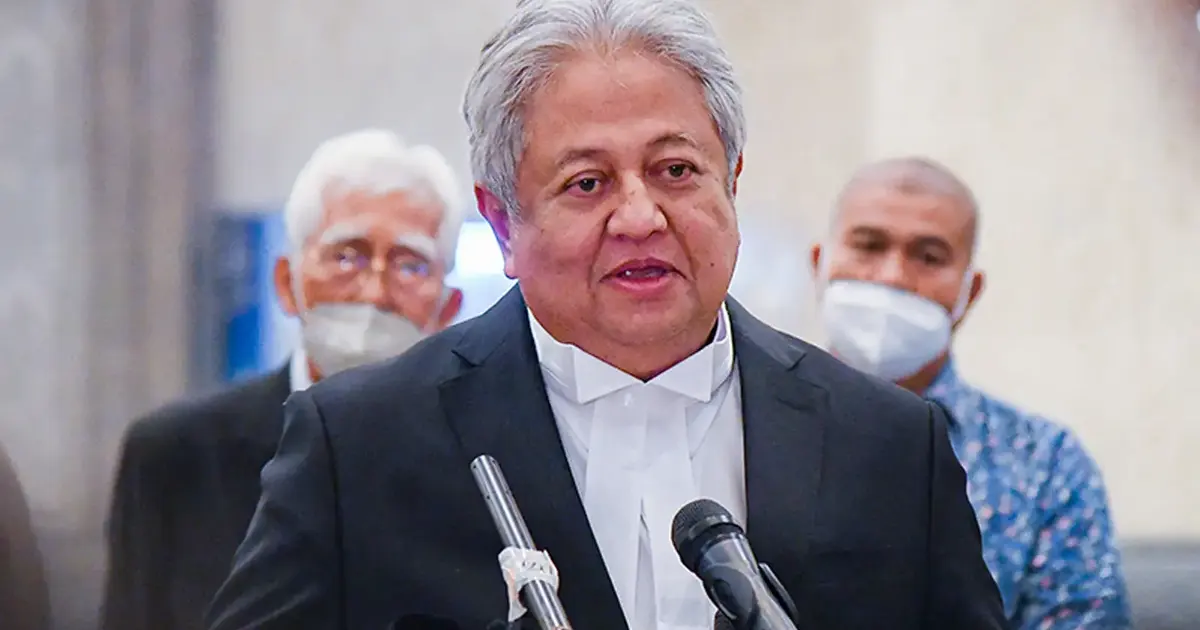
The Court of Appeal will convene on July 13 to manage proceedings and establish a new hearing timeline for a defamation dispute involving prominent lawyer Zaid Ibrahim and colleagues, following the withdrawal of Justice Latifah Tahar from the case. Her recusal means the matter will be assigned to a fresh judicial panel, requiring the court to reorganise its docket to accommodate the appeal's progression through Malaysia's higher courts.
This procedural development marks a significant juncture in a legal dispute that has involved multiple layers of Malaysian jurisprudence. The case concerns allegations linked to the Bar Council, the professional body governing legal practitioners nationwide. The complexity of the parties involved—spanning individual lawyers, their professional association, and questions touching on defamation law—underscores the sensitivity of matters intersecting legal ethics, professional standards, and personal reputation within Malaysia's legal fraternity.
Justice Latifah Tahar's decision to step aside from hearing the appeal does not publicly indicate specific grounds for her withdrawal. In Malaysian judicial practice, judges may recuse themselves on various bases, including potential perceived bias, conflict of interest, or circumstances that might reasonably appear to undermine impartiality. The absence of disclosed reasons preserves confidentiality while respecting the integrity of judicial proceedings. Such recusals, while procedurally necessary, invariably delay resolution and require courts to reallocate already-stretched dockets.
The July 13 case management session will serve as a crucial administrative checkpoint. During such hearings, the court typically confirms the parties' readiness, hears submissions on procedural matters, and tentatively reserves dates for substantive oral arguments. This framework allows all parties—legal representatives for Zaid Ibrahim and the other appellants, as well as counsel for the Bar Council—to prepare comprehensively before a fresh bench assumes responsibility for the merits of their arguments.
For the Malaysian legal community, the progression of this case carries implications extending beyond the immediate parties. Defamation litigation involving lawyers and their professional bodies touches on fundamental questions regarding the balance between professional accountability and individual rights to reputation. The Bar Council's regulatory role places it in a unique position where its actions may attract legal challenge, yet its institutional credibility depends on perceived fairness and procedural propriety. Courts must navigate these tensions while ensuring that legal practitioners, like all citizens, possess genuine access to remedy when aggrieved.
The involvement of multiple lawyers as appellants suggests this dispute may pivot on questions concerning the scope of permissible criticism directed at the Bar Council's operations or decisions. In jurisdictions across Southeast Asia, debates about professional regulation increasingly emphasise transparency and accountability, yet these objectives must coexist with the Bar Council's legitimate functions. Malaysia's position as a common law jurisdiction means such disputes inevitably rely on established principles of defamation while accommodating the particular professional context in which the statements were made.
The reassignment to a new judicial panel also reflects broader structural considerations within Malaysia's appellate system. The Court of Appeal manages hundreds of pending matters, and any recusal necessitates redistribution of judicial resources. Given the prominence of Zaid Ibrahim within Malaysian legal and political circles—he has held senior government positions beyond his legal practice—media and legal observers will likely monitor the case's progression closely. The selection of the replacement panel may therefore attract scrutiny regarding judicial independence and the appearance of impartiality, even though such concerns are invariably heightened in high-profile matters.
From a practitioner's perspective, the delay imposed by the recusal and reassignment creates additional uncertainty. Litigants pursuing appeals typically face extended timelines already, and procedural complications extend these periods further. For the lawyers involved, this hiatus represents additional costs and deferred resolution, illustrating why efficiency within appellate courts remains a persistent concern across common law systems in the region.
The Bar Council, as a party to these proceedings, operates under public scrutiny regarding how it defends itself in court. The legal profession's regulatory body must balance vigorous defence of its interests with recognition that it represents the profession collectively. This dual role occasionally creates perceptions of institutional advantage, particularly when the Bar Council employs sophisticated legal resources in disputes with individual practitioners, even prominent ones.
The July 13 hearing will clarify the timeframe for final resolution. Should the new panel confirm a hearing date within the next several months, the case may progress toward substantive oral arguments and judicial determination. Alternatively, if complexities demand additional case management, the matter could extend into 2024 or beyond. Malaysian courts, like appellate systems internationally, struggle with expanding dockets and competing demands on judicial time.
Ultimately, this procedural development underscores how Malaysian civil litigation, even at appellate level, remains subject to unpredictable delays and administrative contingencies. For Zaid Ibrahim and his co-appellants, securing a favourable outcome on the merits becomes inseparable from navigating procedural complexities and securing timely judicial attention—challenges facing many litigants within Malaysia's legal system.

