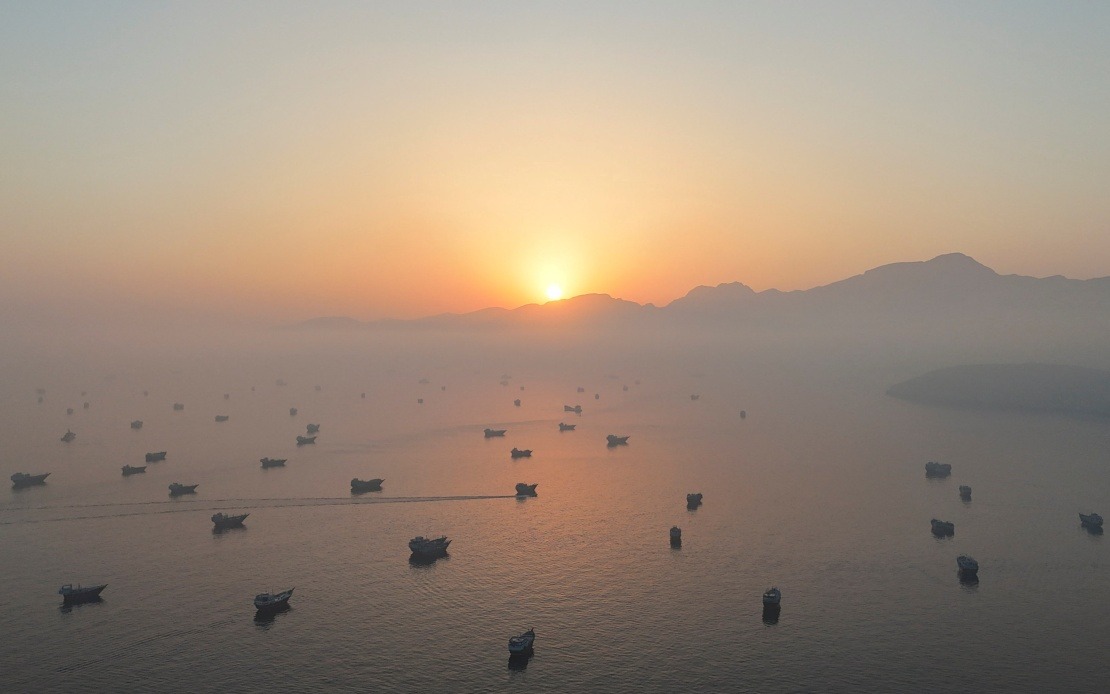
The Comprehensive and Progressive Agreement for Trans-Pacific Partnership (CPTPP), a grouping of 12 nations representing a combined economic powerhouse across the Pacific and beyond, has thrown its weight behind the recent US-Iran agreement, signalling broad international support for efforts to stabilise the geopolitically volatile Strait of Hormuz. The endorsement came through a joint ministerial statement released following a virtual meeting held on Friday, reflecting the trade bloc's concern about the potential cascading effects of maritime instability on interconnected global supply chains and energy markets.
The CPTPP's backing of the accord underscores a critical consensus among major trading nations that unimpeded access through the Strait of Hormuz—through which roughly one-third of seaborne traded oil passes—is fundamental to economic stability worldwide. For Malaysia and other Southeast Asian economies heavily reliant on energy imports and dependent on predictable shipping routes for trade, the statement carries particular resonance. Any prolonged disruption to this strategic waterway would ripple through regional ports, refineries, and petrochemical complexes that form the backbone of industrial activity across the region.
The ministers collectively emphasised the necessity of maintaining open and secure sea lanes, ensuring freedom of navigation and overflight, and guaranteeing safe, unimpeded and continuous transit passage through the Strait. This language reflects deep-seated anxieties within the trading community about the real economic toll that geopolitical tensions extract from everyday commerce. The statement deliberately invoked the United Nations Convention on the Law of the Sea (UNCLOS), anchoring the bloc's position in established international legal frameworks rather than unilateral assertions, a choice that carries weight in the rules-based trading order that underpins the CPTPP itself.
Particularly significant was the ministers' explicit acknowledgement of the commodities most vulnerable to supply disruption: crude oil, diesel and other petroleum products, natural gas, petrochemical goods, and fertilisers. These are not luxury items but essential inputs for modern economies. Malaysia, as both an energy producer and a major manufacturing hub dependent on stable petrochemical supplies, has direct stakes in the smooth flow of these resources. Agricultural economies across the region, including those in Southeast Asia, rely heavily on imported fertilisers to maintain productivity, making any shortage an immediate threat to food security and rural livelihoods.
The CPTPP members reaffirmed their commitment to promoting free and open markets and rules-based trade in energy and affected products, framing these principles as essential pillars of economic security and prosperity. This stance represents a deliberate counterweight to protectionist or unilateral approaches that might emerge in response to supply chain shocks. The bloc's collective voice carries weight precisely because it encompasses Australia, Brunei, Canada, Chile, Japan, Malaysia, Mexico, New Zealand, Peru, Singapore, the United Kingdom and Vietnam—nations spanning multiple continents and representing diverse economic interests, from commodity exporters to advanced manufacturing economies.
Critically, the ministers committed to refraining from imposing unjustified trade restrictive measures and called on others to follow suit. This language targets a specific anxiety: that crisis conditions might prompt nations to erect barriers or deploy tariffs ostensibly for national security reasons. For a region like Southeast Asia, where trade flows across borders at remarkable volumes, such protectionist drift would be deeply damaging. Malaysia's position as both a significant trader and a transit nation for regional commerce makes this commitment particularly relevant to national interests.
The statement also acknowledged regional initiatives aimed at building more resilient energy supply chains, notably the Partnership on Wide Energy and Resources Resilience Asia (POWERR Asia). This initiative represents an attempt to move beyond simple advocacy for open seas toward constructive coordination between energy-producing and energy-consuming nations. For Malaysia, which occupies both roles, the framework offers opportunities to strengthen relationships with major regional partners while diversifying sourcing strategies and reducing dependency on any single route or supplier.
The CPTPP notably recognised the particular vulnerabilities facing small-island developing countries, especially those in the Pacific region, whose geographic isolation and limited domestic energy resources make them acutely exposed to disruption and price volatility. This acknowledgement, while perhaps seeming tangential to larger economies, reflects the bloc's understanding that global supply chain resilience requires attention to weakest links. Trade diversification initiatives emerge as essential tools for reducing these vulnerabilities and building redundancy into international commerce.
The broader context underlying this statement involves the continuing fragility of global supply chains, which have been tested repeatedly by geopolitical tensions, the pandemic aftermath, and climate-related disruptions. The CPTPP's reaffirmation of determination to address current disruptions collectively and to accelerate cooperation on resilience represents an implicit acknowledgement that no single nation, however powerful, can manage these challenges unilaterally. For Southeast Asian economies integrated into regional and global supply networks, this multilateral commitment to rules-based trade offers reassurance that the fundamental architecture of economic cooperation remains robust, even amid ongoing tensions and uncertainties.

