Cuba's President Miguel Diaz-Canel has mounted a sharp rhetorical offensive against the United States, condemning a fresh round of sanctions imposed by the Trump administration and framing Washington's broader policy approach as a dangerous ideological crusade reminiscent of Cold War paranoia. Speaking from Hamilton, Canada, on Friday, the Cuban leader deployed historical analogies to characterise what he perceives as a concerted Western campaign to delegitimise progressive movements across the globe, drawing parallels to the anti-communist witch hunts of 1950s America and warning of what he termed a "new and more dangerous version of McCarthyism."
The Cuban president's critique extends beyond the immediate sanctions controversy to encompass a wider geopolitical narrative. On the social media platform X, Diaz-Canel asserted that transnational far-right coalitions are advancing ideologies and practices that evoke both Nazi-era fascism and Operation Condor, the notorious intelligence coordination programme that facilitated repression across Latin America during the 1970s and 1980s. His invocation of these historical reference points suggests a deliberate strategy to position Cuba's struggle as part of a broader pattern of authoritarian overreach by Western powers, though the comparison between contemporary political competition and fascism remains contested among analysts and observers of international affairs.
At the heart of Diaz-Canel's argument lies a fundamental question about whether ideological opposition to leftist movements can justify escalating economic and diplomatic pressure. He suggested that allegations directed against left-leaning governments and movements serve as convenient pretexts for justifying what Havana characterises as systematic aggression and abuse. This framing attempts to shift the discourse from Cuba's internal governance record to the external constraints imposed upon it, a rhetorical move designed to mobilise international sympathy and deflect scrutiny of domestic policies.
The Cuban leader pivoted his critique to identify what he calls the true menace confronting humanity: what he describes as the "philosophy of dispossession" guiding transnational far-right actors. Rather than engaging substantively with specific sanctions or policy disagreements, Diaz-Canel constructed a sweeping indictment encompassing Gaza, extrajudicial killings by security forces, persecution and deaths among migrants, an alleged bombing of an Iranian girls' school, and the enduring US embargo on Cuba itself. By conflating these varied issues, he attempted to present a panoramic portrait of Western hypocrisy, though the catalogue of grievances often involved circumstances where Cuba's own role or responsibility remains unclear or contested.
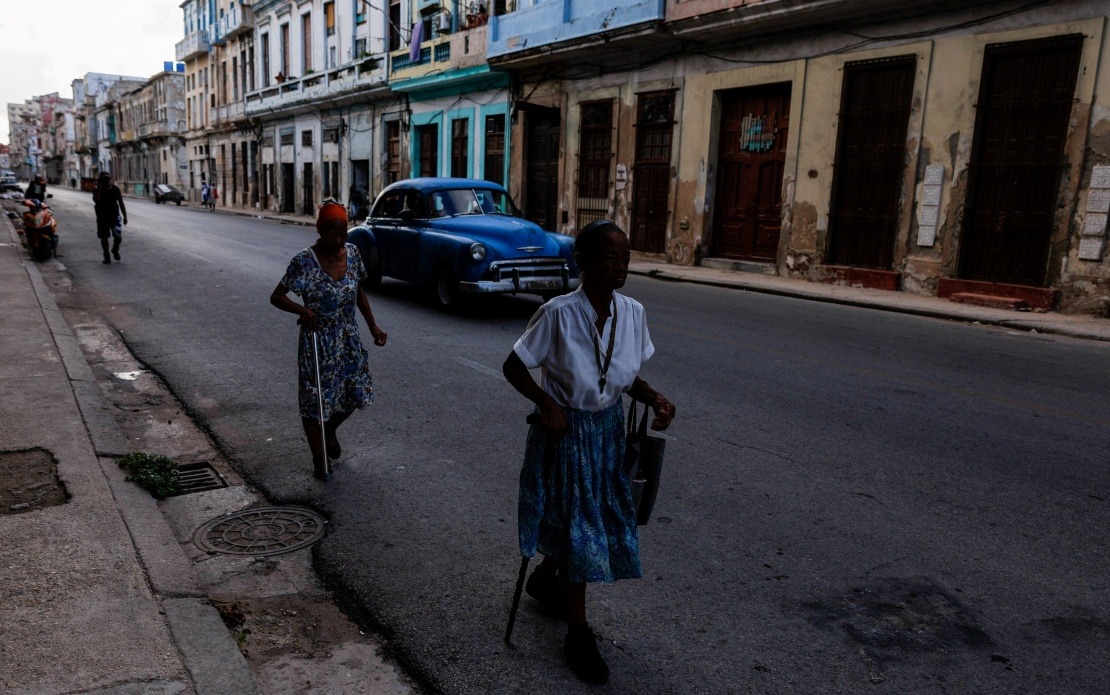
Understanding Diaz-Canel's unusually forceful rhetoric requires examining Cuba's contemporaneous economic collapse, which provides the underlying motivation for his public statements. The island nation is navigating its severest financial crisis since the Soviet Union's dissolution three decades ago, characterised by crippling fuel scarcities and infrastructure breakdown. Official government media disclosed that economic output contracted markedly during the first half of 2026, whilst residents endured an average of twenty hours of daily electrical outages, reflecting a megawatt deficit of nearly two thousand units.
Havana's authorities have consistently attributed this deterioration to intensified American pressure, alleging that the Trump administration has systematically obstructed petroleum deliveries, leveraged diplomatic influence to discourage international commerce with Cuba, and weaponised access to global financial markets. These claims, whilst disputed by Washington, reflect genuine constraints facing the Cuban economy as consequences of sanctions policy. The blockade, maintained by successive US administrations since 1962, imposes measurable costs on the island's development, though economists debate the relative weight of external constraints versus internal policy decisions in explaining Cuba's current predicament.
President Donald Trump's recent executive orders have tightened these constraints considerably. In May, Trump signed an order imposing fresh sanctions targeting Cuban officials and governmental entities, which the White House justified by citing alleged repression and purported threats to American security interests and foreign policy objectives. Earlier, in January, Trump declared a national emergency and established authority to impose tariffs on countries supplying petroleum to Cuba, demonstrating a deliberate escalation of pressure designed to further isolate the island economically and diplomatically.
For Malaysian and Southeast Asian audiences, Cuba's situation offers instructive parallels regarding the intersection of ideology, economics, and international pressure. Many nations in this region have experienced Cold War dynamics and foreign intervention, providing historical context for understanding Havana's grievances. Yet the analogy between McCarthyism and contemporary US policy remains imperfect; McCarthyism involved domestic persecution of citizens accused of communist sympathies, whilst current US-Cuba relations operate primarily through international sanctions and diplomatic isolation.
The broader geopolitical dimension of Diaz-Canel's critique reflects genuine anxieties among non-aligned and leftist governments about Western efforts to constrain alternative development models and political systems. Indonesia, Vietnam, and other Southeast Asian nations have similarly navigated pressures to align with Western preferences whilst maintaining strategic autonomy. However, Diaz-Canel's rhetorical strategy of attributing all Cuban difficulties to external aggression obscures legitimate policy questions about governance, economic management, and administrative effectiveness that merit serious examination independently of sanction regimes.
Cuba's economic emergency illustrates how sustained sanctions can inflict measurable hardship on civilian populations, complicating moral and practical assessments of such policies. Whether sanctions constitute appropriate foreign policy instruments when aimed at altering governmental behaviour remains contested among international relations scholars and policymakers. The humanitarian costs of Cuba's economic collapse—manifested in medical supply shortages, malnutrition, and deteriorating infrastructure—are genuine regardless of one's assessment of Havana's diplomatic rhetoric or political system.
Moving forward, the trajectory of US-Cuba relations under the Trump administration appears set toward further escalation rather than negotiation. Diaz-Canel's increasingly strident denunciations suggest Cuban leadership views diplomatic engagement as unlikely and is instead consolidating nationalist sentiment and international coalition-building among like-minded governments. This dynamic mirrors patterns observed elsewhere as authoritarian and non-aligned regimes respond to Western pressure through rhetorical offensives and closer alignment with alternative power centres, particularly China and Russia.
For regional observers, Cuba's experience underscores persistent tensions between liberal internationalism and state sovereignty, between sanctions as coercive instruments and their humanitarian consequences, and between ideological positioning and pragmatic statecraft. The island's ongoing struggle illustrates how historical grievances, contemporary power imbalances, and competing visions of legitimate governance continue shaping international relations in ways that defy simple categorisation or resolution.

