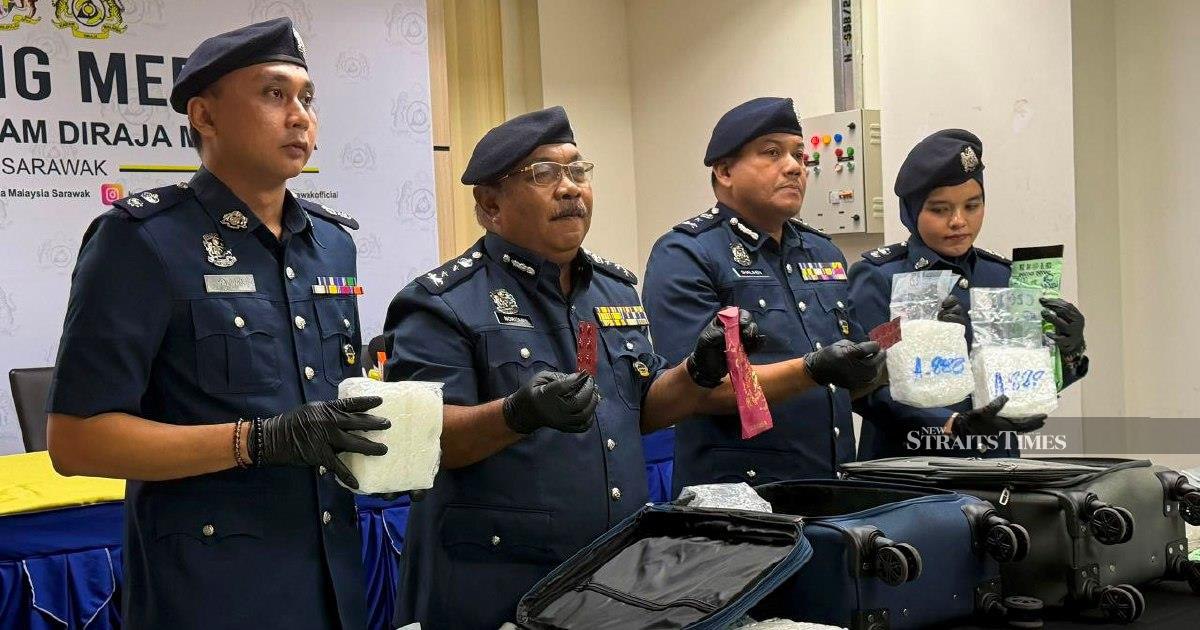
Authorities in Sarawak have dismantled a major drug smuggling operation after customs officials uncovered more than RM1.32 million in narcotics concealed within passenger baggage at Kuching International Airport. The interception, completed on July 9, represents a significant achievement in the region's ongoing efforts to combat transnational drug trafficking, with two men now in custody facing investigations.
The Sarawak Customs Department's success in this case underscores the critical role that vigilant border enforcement plays in disrupting illicit drug networks that rely on Malaysia's transport hubs to move contraband across international boundaries. Kuching International Airport, as one of Sarawak's key gateways, experiences regular passenger volumes that traffickers have historically exploited to move drugs into and through the region. The detection capability demonstrated by customs personnel indicates that intelligence gathering and inspection protocols remain effective deterrents against such attempts.
The two arrested individuals are now undergoing investigation to determine their roles in the trafficking scheme, whether as couriers, organisers, or links within a larger supply chain. Authorities typically examine financial transactions, communications, and connections between suspects to map out the broader network involved in sourcing, transporting, and distributing the seized drugs. Such investigations can take weeks or months as investigators trace the origin of the narcotics and identify other participants in the operation.
This latest seizure adds to a growing tally of drug interdictions across Malaysian airports and border crossings. Traffickers consistently adapt their methods, employing sophisticated concealment techniques and routing drugs through multiple transit points to evade detection. The variety of tactics—from false-bottomed luggage to parcels hidden within innocent-looking goods—requires customs authorities to maintain advanced training and updated scanning technology to stay ahead of criminal innovation.
For Sarawak and Malaysian authorities more broadly, the significance extends beyond the immediate confiscation of contraband. Each successful operation generates intelligence about trafficking routes, emerging drug types, and organised criminal networks operating in Southeast Asia. This information feeds into regional cooperation frameworks and helps law enforcement agencies across ASEAN member states coordinate counter-narcotics strategies, recognising that drug trafficking is inherently a transnational challenge.
The value of the intercepted drugs—RM1.32 million—reflects the substantial profit margins that drive trafficking organisations despite enforcement risks. Street-level distribution of this quantity would generate considerably higher revenue, making even significant law enforcement successes insufficient to eliminate trafficking incentives entirely. Nevertheless, each successful interdiction increases operational costs for criminal groups and disrupts their cash flow and supply chains.
Malaysia has consistently faced pressure from international drug trafficking networks seeking to exploit its geographic position and transportation infrastructure. The country's location along major trade routes and its modern airport and port facilities create both opportunities for legitimate commerce and vulnerabilities to illicit exploitation. The government has responded through strengthened customs procedures, intelligence sharing with international partners, and enhanced penalties for drug-related offences, though enforcement challenges persist across the country's extensive borders and ports.
The arrest of the two suspects will likely trigger legal proceedings under Malaysia's drug laws, which impose severe penalties including lengthy imprisonment and, for large quantities, potential capital punishment depending on the classification and quantity of narcotics involved. Such stringent consequences reflect the government's zero-tolerance approach to trafficking, though critics argue that supply-side enforcement alone cannot address the underlying demand factors driving the illicit drug market.
Regional cooperation remains essential in combating sophisticated trafficking operations that span multiple countries. Intelligence exchanges between Malaysian customs authorities and counterparts in neighbouring nations help identify patterns, track suspect movements, and dismantle networks operating across borders. The Kuching airport seizure exemplifies how effective enforcement at individual chokepoints contributes to broader regional security objectives.
Moving forward, the investigation into this specific case will provide valuable insights into current trafficking methodologies and may illuminate broader network structures. Customs authorities will likely share findings with regional partners through formal cooperation channels, strengthening collective defences against similar operations. For Sarawak residents and visitors, the successful interdiction provides some assurance that significant efforts are being invested in maintaining aviation security and preventing drug proliferation, though the persistence of smuggling attempts underscores that the battle against trafficking remains ongoing and demands sustained resources and vigilance.

