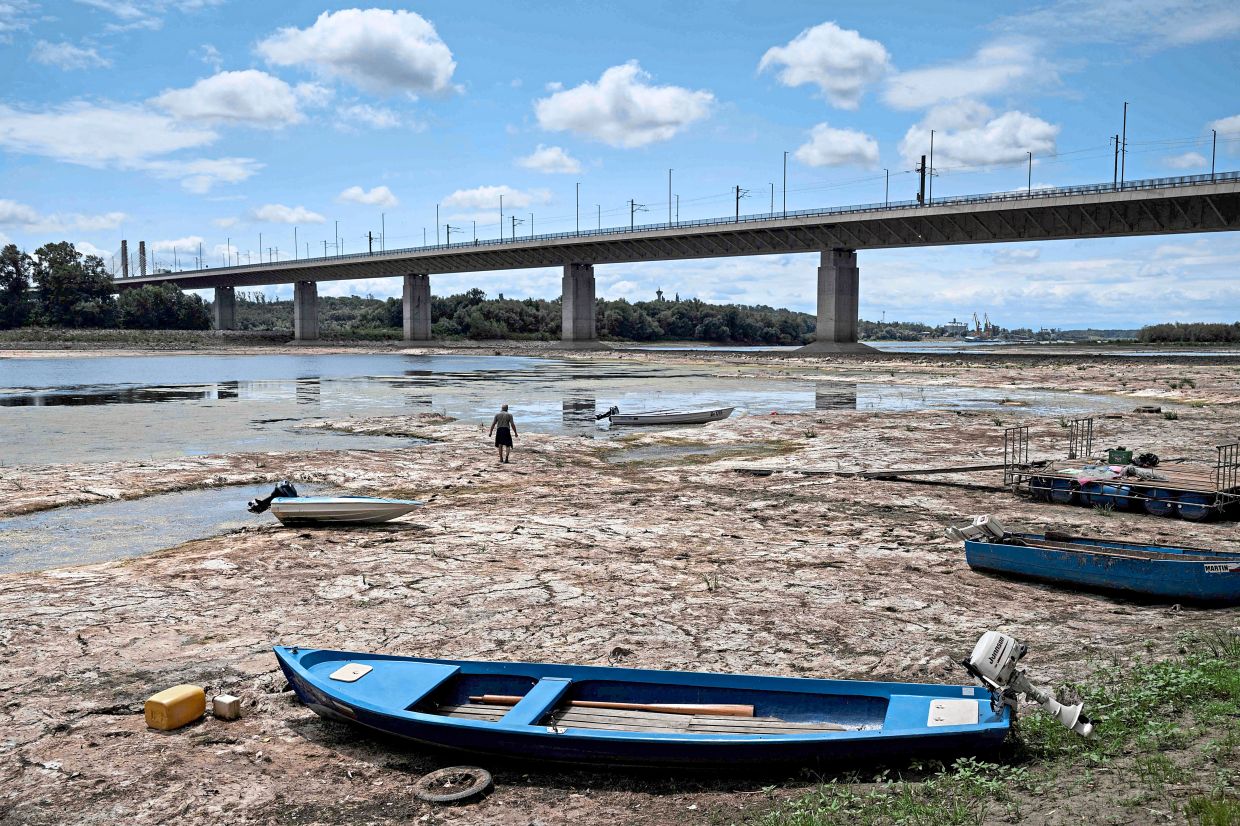
Central Europe faces an escalating water crisis as the Danube River has receded to historically low levels, creating cascading problems across ten countries from Germany to the Black Sea. The crisis, driven by a combination of prolonged drought and successive heat waves, has exposed long-buried hazards, upended regional commerce, and forced authorities to confront uncomfortable truths about climate vulnerability in one of Europe's most vital waterways.
Hungary has borne witness to the most dramatic manifestation of this environmental challenge. Budapest's water authority recorded the Danube at just 23 centimetres on July 29, shattering the previous record low of 33 centimetres established in 2018. This represents not merely a statistical decline but a fundamental transformation of a landscape that millions depend upon. The river, which typically defines the contours of Budapest's geography and identity, has withdrawn dramatically, leaving behind exposed bedrock, sandbars, and archaeological remnants that have remained submerged for generations. Meteorological data underscores the severity of the situation: precipitation across Hungary over the preceding 90 days fell between 80 and 130 millimetres short of historical averages across nearly the entire country, according to the Hungarian Meteorological Service.
The immediate economic ramifications extend across multiple sectors that depend on reliable water flow. The river transport industry has essentially ceased functioning. Popular cruise ships, which ordinarily anchor in Budapest to allow passengers to disembark for sightseeing, have been forced to dock kilometres upstream in shallow-water ports, rendering the tourist experience impractical. Cargo operations have deteriorated further, with commercial shipping along much of the Danube route suspended entirely. In Serbia's Novi Sad region, hundreds of small vessels and numerous cargo ships now rest immobilized on the exposed riverbed, their seasonal operations terminated prematurely. Boat operators who depend on summer navigation report that the water has withdrawn between 15 and 20 metres from its normal shoreline, effectively closing their businesses for the season.
The human consequences of this crisis crystallized dramatically on July 28 when Bulgarian police evacuated 186 tourists from the Viking Ullur cruise ship after it ran aground near Vidin. The vessel, grounded on a shallow shoal while attempting to reach port for provisioning, ran critically short of food and water. Its 52 crew members faced an indeterminate period onboard while authorities assessed options for refloating the ship and resuming navigation—a scenario that would have been inconceivable during normal water conditions. This incident illustrates how rapidly changing environmental conditions can create dangerous situations affecting thousands of travellers and workers simultaneously.
Beyond tourism and transport, the low water crisis threatens Europe's energy infrastructure in ways that demand immediate policy attention. The Danube provides essential cooling water for nuclear power plants across the region, and diminished flows have triggered emergency shutdowns that risk energy shortages heading into autumn. Romania's Cernavoda nuclear facility, situated along the river where flow rates have plummeted to approximately 1,630 cubic metres per second—roughly one-third of typical July volumes—has already shut down one reactor unit and announced imminent closure of another. Hungary's Paks nuclear plant, which generates nearly half of the country's electricity supply, initiated powering down operations on July 29 due to inadequate cooling water, following successive power reductions over the preceding two days. These cascading shutdowns expose the fragility of European energy markets and demonstrate how climate-driven water scarcity creates risks that extend far beyond tourism and shipping.
The exposed riverbed has also unveiled historical hazards dormant since World War II. Budapest authorities closed the iconic Margaret Bridge after discovering an unexploded bomb from the 1940s, revealed by receding waters that had concealed the ordnance for eight decades. This unexpected danger highlights how climate change can resurrect forgotten perils, creating security concerns that were previously managed through burial and time. Beyond official hazards, the extreme conditions have attracted treasure hunters and metal scavenging enthusiasts who exploit the exposed banks to recover relics from past conflicts, including amplifiers, bullet casings, and other military artefacts that remain embedded in the riverbed.
Meteorologists project continued deterioration in coming days, with forecasts indicating no significant rainfall and temperatures expected to exceed 38 degrees Celsius across the region. This trajectory suggests the water crisis will intensify rather than stabilize, potentially testing the resilience of infrastructure and economies across Central Europe's most vulnerable sectors. The Danube's predicament serves as a microcosm of broader climate adaptation challenges confronting the continent.
For Malaysia and other Southeast Asian nations, the Danube crisis offers instructive parallels regarding water security, energy resilience, and the economic cascades triggered by climate-driven hydrological changes. The region's dependence on rivers for power generation, shipping, and tourism mirrors vulnerabilities evident throughout Southeast Asia, where monsoon disruptions, extended droughts, and thermal stress increasingly threaten dams, hydroelectric facilities, and agricultural systems. Europe's difficulty in managing this unfolding crisis despite substantial technical and financial resources underscores the magnitude of adaptation challenges facing developing economies in Asia.

