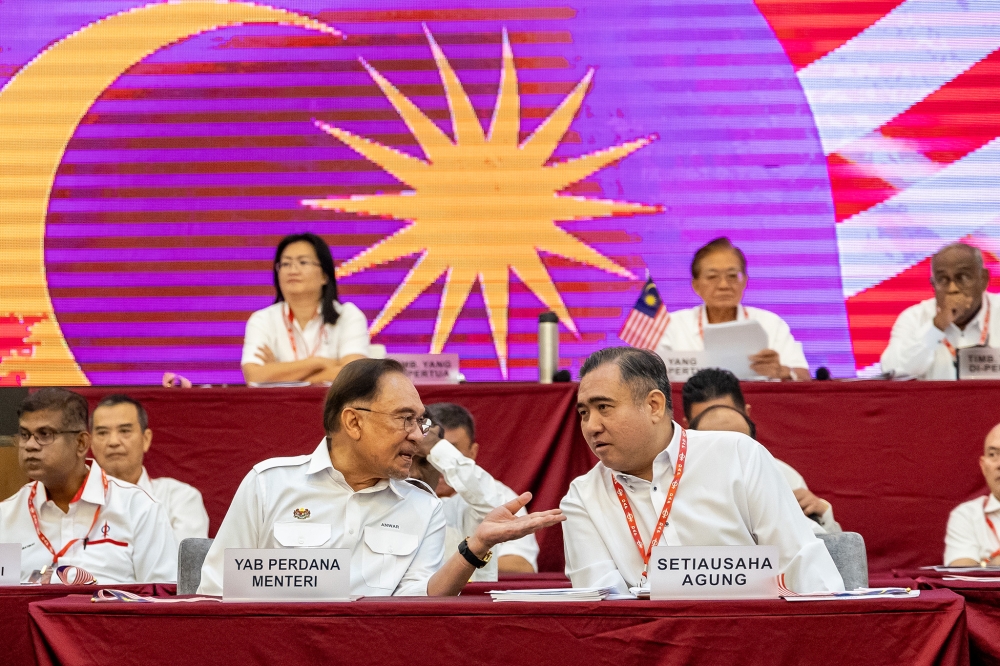
The Democratic Action Party will remain a committed member of Prime Minister Datuk Seri Anwar Ibrahim's Pakatan Harapan government despite mounting frustrations over the speed of policy implementation, according to Transport Minister Loke Siew Fook. His statement represents a significant moment in Malaysian coalition politics, as it directly addresses speculation about potential fractures within the ruling alliance at a time when PH faces pressure from both internal dissent and external political challenges.
Loke's positioning reflects a pragmatic acknowledgment of the realities facing Malaysia's ruling coalition. The DAP, historically a vocal advocate for rapid systemic change and anti-corruption measures, has had to recalibrate expectations since PH took office. This recalibration is not unique to Malaysian politics—governing coalitions across the region frequently discover that the demands of office impose constraints that were invisible during campaign periods. For DAP, which entered government with an ambitious reform agenda after winning in the 2018 election, the current pace of implementation represents a deliberate choice rather than an admission of failure.
The concept of reform velocity in coalition governments carries particular weight in Malaysia's context. The country has weathered multiple cycles of political transition, and each transition has tested the durability of governing alliances. PH itself was forged from disparate political forces—the DAP's urban-centred, reform-oriented membership sits alongside PKR's centrist positioning and, crucially, Amanah's more conservative base. These internal ideological tensions inevitably manifest in policy disagreements about timing and scope. Loke's comments essentially frame this tension as manageable rather than fatal to the coalition's survival.
What makes this statement particularly noteworthy is its timing and audience. By publicly confirming DAP's commitment while simultaneously acknowledging the reality of slower reforms, Loke is managing multiple political constituencies simultaneously. He signals to party activists that DAP remains strategically committed to the government while also signalling to coalition partners that DAP understands the constraints of collaborative governance. This is delicate political choreography that shapes perceptions of stability in a government that, despite its parliamentary supermajority, remains alert to potential defections or coalition breakdowns.
The Malaysian electorate has shown limited appetite for the perpetual instability that characterized politics in the decade following 2008. Voters punished both BN and PH in recent electoral contests partly due to perceived governmental chaos. Against this backdrop, Loke's reassurance about DAP's stability within PH carries implications beyond party management. Coalition stability directly affects Malaysia's capacity to address pressing national issues—economic diversification, skills development, and infrastructure modernization all require sustained policy focus rather than the distraction of political maneuvering.
DAP's implicit acceptance of constrained reform reflects broader Southeast Asian patterns. Across the region, political parties that champion rapid change frequently encounter the sobering realities of governing coalitions, where progress requires negotiation with partners whose priorities differ. Indonesia's complex coalition governments have faced similar dynamics, as has Thailand's fractured political landscape. Malaysia's relative institutional stability—despite its recent turbulence—means that coalition maintenance becomes strategically vital in ways it might not be in systems with more fluid political arrangements.
The transport minister's framing also contains an understated acknowledgment that DAP's original reform expectations may have been unrealistic in a Malaysian context. The party's urban-professional base expects swift action on governance issues, anti-corruption enforcement, and institutional reform. The reality of coalition politics, however, requires compromise on sequencing and scope. By accepting this tradeoff explicitly, DAP's leadership demonstrates the maturity required to sustain long-term political partnerships rather than pursuing short-term ideological purity.
For investors and business observers monitoring Malaysia's political trajectory, Loke's statement provides reassurance about near-to-medium-term stability. Malaysia's investment climate depends partly on predictability regarding policy direction and governmental continuity. Extended periods of coalition uncertainty typically correlate with cautious business sentiment and delayed major investments. DAP's public confirmation of commitment, even while acknowledging frustrations, reduces one category of political risk that overseas investors track closely.
The statement also reflects DAP's strategic calculation regarding alternatives. The party holds significant urban representation and parliamentary seats, but remains dependent on continued PH partnership to maintain government. Outside the coalition, DAP would face diminished influence over policy direction. This reality explains why even parties genuinely frustrated with reform pace often choose to remain within coalitions rather than exit toward opposition status. The governing position, despite its constraints, offers more leverage over long-term policy direction than opposition politics would provide.
Looking ahead, Loke's position establishes a baseline expectation for DAP's medium-term participation in government. This doesn't preclude future tensions or policy disagreements—such disputes are inevitable in any coalition—but it signals that DAP views these tensions as manageable within the existing framework. For Malaysian politics more broadly, this represents a modest but significant stabilizing force, suggesting that despite ideological diversity and tactical frustrations, the ruling coalition's core architecture remains intact. How long this equilibrium holds will depend substantially on Malaysia's economic performance and whether tangible policy achievements can satisfy at least portions of DAP's reform agenda before electoral pressures intensify.

