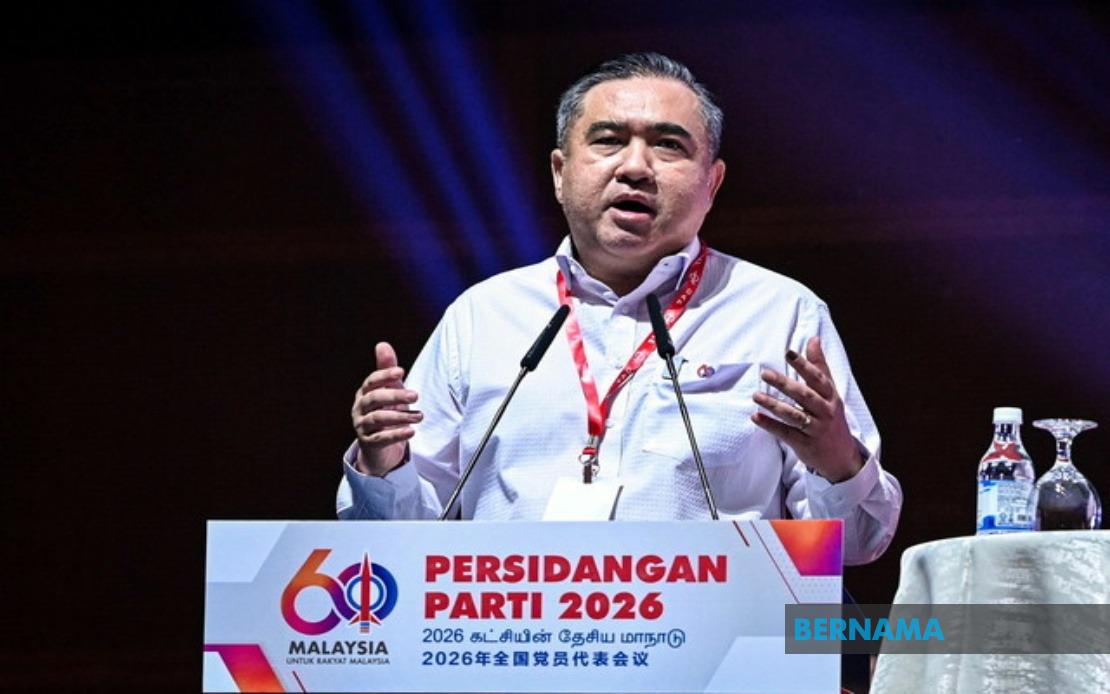
The Democratic Action Party has firmly committed to continuing its role within Malaysia's federal coalition government until the conclusion of the 15th Parliament's mandate. The landmark decision emerged from a special motion deliberated at the DAP's 2026 Party Conference held at the Putrajaya International Convention Centre, where the party's membership demonstrated overwhelming confidence in the party leadership's continued participation in the cabinet structure.
Party secretary-general Anthony Loke tabled the motion before delegates representing DAP branches across the country. The voting process itself reflected the party's emphasis on democratic governance, utilising a secret ballot mechanism rather than conventional voice or show-of-hands voting. This procedural choice underscored DAP's commitment to transparency and ensuring that individual delegates could express their preferences without social pressure, a particularly significant consideration within a party known for its internal democratic practices.
The numerical outcome left little room for ambiguity. Of the 2,106 ballot papers issued, 1,857 delegates voted to maintain the government partnership while 242 opposed continuation, with seven ballots rendered invalid. Conference Speaker Cha Kee Chin announced these results, noting that the 1,857 affirmative votes represented 88.2 percent of delegates present at the conference. The substantial margin indicates deep party consensus around maintaining the coalition arrangement, suggesting that broader party membership endorses the strategic positioning of DAP's leadership.
Currently, DAP holds considerable influence within the cabinet structure through five ministerial portfolios. Anthony Loke oversees the Transport Ministry, while Steven Sim manages the Entrepreneur and Cooperatives Development portfolio. The party also controls the Digital Ministry through Gobind Singh Deo, the Housing and Local Government Ministry led by Nga Kor Ming, and a portfolio within the Prime Minister's Department focused on Federal Territories under Hannah Yeoh. These positions represent significant responsibility across infrastructure development, economic empowerment, digital transformation, and urban governance.
Beyond cabinet-level appointments, DAP has secured seven deputy ministerial positions that extend the party's reach across multiple government functions. These include roles in Communications through Teo Nie Ching, Agriculture and Food Security led by Datuk Chan Foong Hin, Education managed by Wong Kah Woh, and Finance under Liew Chin Tong. Additional deputy ministerial posts held by M. Kulasegaran in the Prime Minister's Department handling Law and Institutional Reform, Lim Hui Ying in Women, Family and Community Development, and Mordi Bimol in Youth and Sports demonstrate the party's presence across diverse policy domains affecting Malaysian citizens.
The conference itself attracted substantial participation from DAP's organisational structure. Conference Speaker Cha disclosed that preliminary data indicated approximately 4,264 delegates representing 1,704 branches nationwide were eligible to participate in the voting process. This widespread delegate presence ensured that the decision reflected perspectives from DAP's organisational units throughout Malaysia, from urban centres to rural constituencies. The breadth of participation underscores that the commitment to remaining in government carries mandate from the party's grassroots membership.
For Malaysian governance and the stability of the coalition arrangement, DAP's decision carries implications extending beyond the party itself. The Democratic Action Party serves as a bridge between federal government authority and Chinese-Malaysian community interests, while also maintaining credibility among younger voters and urban professionals concerned with digital governance and constitutional matters. The party's continued participation signals stability within the cabinet and suggests that internal coalition tensions, if present, have not reached breaking points that would trigger premature government dissolution.
The strategic timing of this party conference decision, held well before the scheduled conclusion of the 15th Parliament, reflects deliberate planning by DAP's leadership. Rather than allowing speculation about the party's long-term commitment, the definitive party conference mandate provides clarity to coalition partners, opposition parties, and international observers regarding government continuity. This preemptive decision-making prevents unnecessary political uncertainty and allows the government to focus on policy implementation rather than managing coalition survival questions.
DAP's commitment also reflects calculations about Malaysia's political landscape and the party's position within it. Remaining in government allows the party to advance Chinese-Malaysian concerns through cabinet influence, maintain patronage networks essential for political survival, and demonstrate tangible accomplishments to constituents in DAP-held constituencies. Withdrawal from government would require the party to rebuild opposition credentials while competing with other opposition actors, a potentially difficult repositioning given DAP's long history within the coalition structure.
The overwhelming delegate support carries significance for DAP's internal dynamics. The 88.2 percent affirmative vote suggests that potential critics within the party lack sufficient organisational strength to challenge the leadership's strategic direction. Any party members harbouring reservations about coalition participation appear to constitute a distinct minority, allowing the leadership to proceed without fear of immediate challenge or factional disruption. This consensus-building exercise through democratic voting consolidates leadership authority while maintaining the appearance of grassroots democratic input.
Looking forward, DAP's commitment through the end of the 15th Parliament extends to approximately 2028, when the current parliamentary term concludes. This timeline provides the government with reasonable predictability regarding coalition composition and ministerial portfolios for over a year, allowing longer-term policy planning around infrastructure, economic development, and institutional reforms. For Malaysian voters in DAP-held constituencies, the decision means continued representation within the federal government structure, potentially facilitating resource allocation and policy attention to DAP-represented areas.
The decision also reflects DAP's assessment that remaining in government serves party interests more effectively than opposition positioning would. This calculus differs markedly from DAP's historical role as opposition watchdog, representing a fundamental shift in the party's relationship with Malaysian governance structures. Whether this transition proves permanently beneficial or generates long-term frustration among DAP's activist base remains uncertain, but the party conference vote provides clear evidence that current party members and delegates support continued coalition participation as the preferred strategic position.

