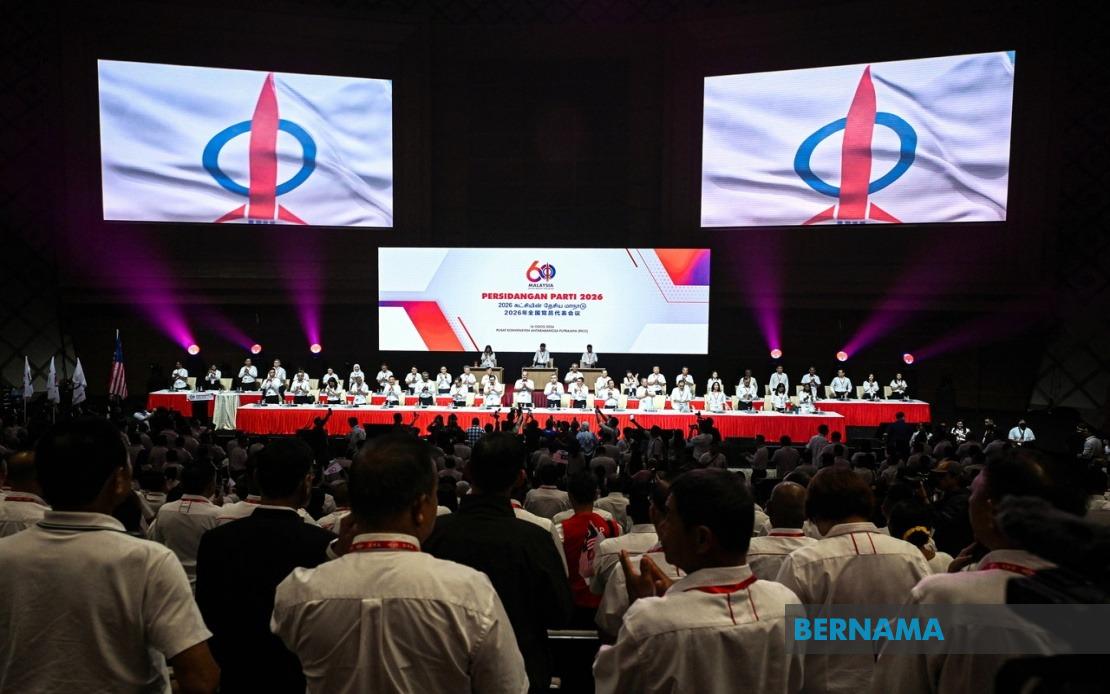
The Democratic Action Party's 2026 National Conference at Putrajaya International Convention Centre witnessed strong backing for the party to remain part of the federal Unity Government, with fourteen state-level delegates voicing their support during a motion debate on August 16. Their position reflects a strategic calculation that remaining in the coalition offers DAP a better platform to implement institutional reforms and deliver on commitments made to voters, rather than risking a return to opposition benches.
The motion debated before 4,264 delegates from 1,704 eligible branches centred on whether DAP should stay in government until the end of the current 16th parliamentary term. Beyond the practical consideration of fulfilling election promises, delegates emphasised that maintaining the coalition serves Malaysia's broader interests by preserving policy continuity and reducing the likelihood of an early general election. This argument carries particular weight in a region where political volatility can unsettle investors and complicate long-term economic planning—a concern for a trade-dependent economy like Malaysia's.
Jason Ng Thien Yong, the Perak delegate, articulated a pragmatic perspective that acknowledges DAP's recent electoral setbacks in several state contests. Rather than viewing these defeats as justification for abandoning the federal government, he argued the party must remain in power to implement effective reforms and rebuild voter confidence ahead of the next general election. This reflects a broader understanding that electoral fortunes can be reversed through demonstrated good governance, particularly when the party can show tangible results in addressing voter concerns.
The cost of living and anti-corruption efforts emerged as key reform areas that delegates believe require DAP's continued involvement in government. In Malaysia's context, where rising household expenses have become a persistent political flashpoint, delegates viewed the party's presence in cabinet as essential to pushing policies that address affordability. Similarly, institutional corruption remains a defining challenge for Southeast Asia, making this reform agenda particularly significant for Malaysia's regional standing and domestic legitimacy.
Leong Ngah Ngah, a veteran from Pahang, framed the decision in terms of party maturity and responsibility. He highlighted the Unity Government's three-year track record under Prime Minister Datuk Seri Anwar Ibrahim, suggesting that voters can recognise genuine progress when delivered. This argument carries implicit weight given Malaysia's history of coalition governments; the ability to work constructively within a diverse political alliance, while maintaining pressure for reforms, represents a delicate balance that experienced politicians understand comes with long-term credibility costs if abandoned lightly.
Selangor delegate Muhammad Shakir Amerr Mohideen connected DAP's participation in government to a broader recovery strategy. He contended that demonstrating competent governance in federal administration could restore voter confidence in constituencies where the party suffered recent losses. This logic suggests that opposition status might actually entrench voter skepticism, whereas visible performance in delivering services and reforms offers a pathway back to electoral relevance. For a party that has experienced significant setbacks, this represents a calculated bet on redemption through demonstrated capability.
The geographic spread of supporting delegates—ranging from Perak and Selangor in the peninsula to Sabah and Sarawak in East Malaysia—underscores that the pro-government position enjoys broad-based support across the party's state organisations. Notably, Yap Wui Lip from Sabah specifically linked DAP's continued participation to advocating for Malaysia Agreement 1963 rights, demonstrating how the party frames its role as guardian of East Malaysian federalism interests. This adds another dimension to the calculus: DAP remains positioned as a safeguard for devolved powers and regional concerns.
Secretary-General Anthony Loke's concluding remarks introduced an important caveat to the delegates' decision. He emphasised that remaining in government carries no presumption of uncritical support for the Prime Minister or the Central Supreme Committee's decisions. Instead, Loke reframed the motion as a commitment to pursue reforms and renewal from within the coalition structure. This distinction matters considerably because it signals DAP's intention to retain its identity as a reform-oriented party rather than becoming a passive coalition partner—a concern that might otherwise alienate the party's base of progressive supporters.
The eventual secret ballot vote would determine whether DAP's decision-making body formally approved continued participation in the Unity Government. The conference itself was held during the party's 60th anniversary, lending historical weight to the decision. As one of three major Pakatan Harapan component parties alongside PKR and Amanah, DAP's continued role shapes the broader opposition coalition's trajectory and the government's capacity to implement its legislative agenda in parliament.
For Malaysian politics more broadly, the DAP conference debate reflects a wider tension playing out across the region: whether opposition parties can exercise greater influence through participation in coalition governments, or whether staying in government inevitably compromises their reform agenda. DAP's delegates opted for engagement, betting that they can push institutional change, anti-corruption measures, and social policies from within the cabinet structure. This choice has implications extending beyond party politics, as it signals the government's ability to maintain legislative support and the electorate's potential appetite for stability over continued political contestation ahead of the next general election.

