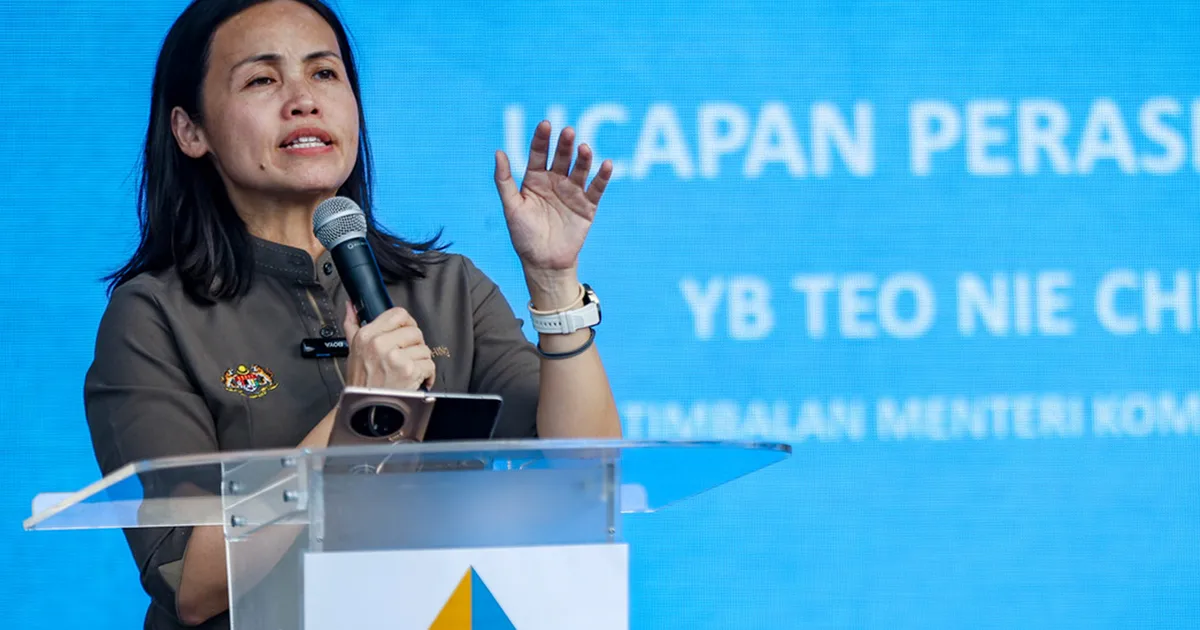
A prominent DAP leader serving as deputy minister has brought to light a troubling development in Malaysia's political landscape: the creation of multiple social media accounts seemingly designed with the singular purpose of targeting her reputation through baseless allegations. Teo's disclosure represents a notable escalation in the use of coordinated digital tactics aimed at discrediting political opponents, a phenomenon that has become increasingly visible across Southeast Asia's political sphere.
The allegations in question, according to Teo's account, falsely linked her to gang-related criminal activities—charges she categorically denies. The specificity of such accusations, combined with their dissemination through newly created accounts, suggests a deliberate strategy rather than spontaneous criticism. This pattern of targeting has raised concerns about the sophistication of coordinated disinformation campaigns that have begun infiltrating Malaysian political discourse at higher levels.
The timing and nature of these attacks reflect broader tensions within Malaysia's political establishment. As social media continues to reshape how political narratives develop, the capacity to rapidly manufacture false personas and amplify misleading content has become a potent tool for those seeking to undermine opponents without engaging in substantive policy debate. The creation of dedicated accounts for this specific purpose indicates a level of planning and coordination that transcends casual online bickering.
For Malaysia's political ecosystem, such developments carry significant implications. The nation has experienced periodic waves of online political harassment, but attacks targeting high-ranking government officials through fabricated criminal allegations represent a new threshold of intensity. When deputy ministers and party leaders become subjects of coordinated smear campaigns, it raises questions about the vulnerability of democratic institutions to digital manipulation and the rules governing acceptable political conduct in the online sphere.
The DAP, as Malaysia's primary Chinese-based political party and a key component of the federal government coalition, has faced intermittent criticism and online challenges. However, systemic attacks on individual members through false allegations suggest something more organized and potentially harmful to the integrity of governance. Such campaigns can distract policymakers from their responsibilities and create an environment where substantive political dialogue becomes increasingly difficult.
Teo's public disclosure of this campaign serves an important function: it draws attention to tactics that might otherwise operate in obscurity, gradually shaping public perception through false narratives. By naming the phenomenon directly, she has effectively highlighted how social media platforms can be weaponized to spread misinformation about political figures, a challenge that extends far beyond her individual case.
The broader Southeast Asian context makes this development particularly significant. Across the region, coordinated social media campaigns have emerged as a favoured instrument for political actors, foreign entities, and organized groups seeking to influence public opinion and destabilize political actors. Thailand, Indonesia, and other neighbouring nations have documented sophisticated disinformation operations. Malaysia's emergence of similar tactics at the federal level suggests the country is not immune to these regional trends.
The responsibility for addressing such campaigns extends across multiple stakeholders. Social media platforms face pressure to identify and remove coordinated fake accounts before they can gain traction. Malaysian authorities must balance free speech protections with the need to combat deliberate disinformation that could undermine public trust in government institutions. Political parties themselves must establish norms and demonstrate commitment to ethical online conduct, refusing to participate in or amplify attacks based on false allegations.
Teo's experience also underscores the gender dimension of online political attacks. Female politicians across Asia have reported elevated levels of personal and defamatory attacks compared to their male counterparts, with allegations of criminal association or moral impropriety serving as particularly effective tools for delegitimization. This gendered pattern of harassment raises concerns about whether women are being systematically discouraged from political participation through targeted digital intimidation.
Moving forward, the incident serves as a catalyst for broader conversations about digital governance and political ethics in Malaysia. As the nation grapples with modernizing its regulatory frameworks to address contemporary challenges, the need for clear standards regarding coordinated inauthentic behaviour on social media platforms has become acute. The challenge lies in crafting policies that protect political speech and allow for legitimate criticism while simultaneously preventing organized disinformation campaigns designed solely to damage individual reputations through false allegations.
The deputy minister's willingness to publicly confront this campaign signals that high-ranking officials are beginning to recognize the need for transparency and collective action against coordinated online attacks. Whether this moment catalyzes systemic changes in how Malaysia addresses digital disinformation remains to be seen. What is clear, however, is that the political landscape has fundamentally shifted, and responding effectively to coordinated social media campaigns has become an essential aspect of modern governance in the country.

